The Ultimate Guide to Choosing SEO Software for Small Businesses
Published December 22, 2025
SEO software is essential for small businesses to improve local search visibility, save time, and manage online reputation effectively. Here's why it matters:
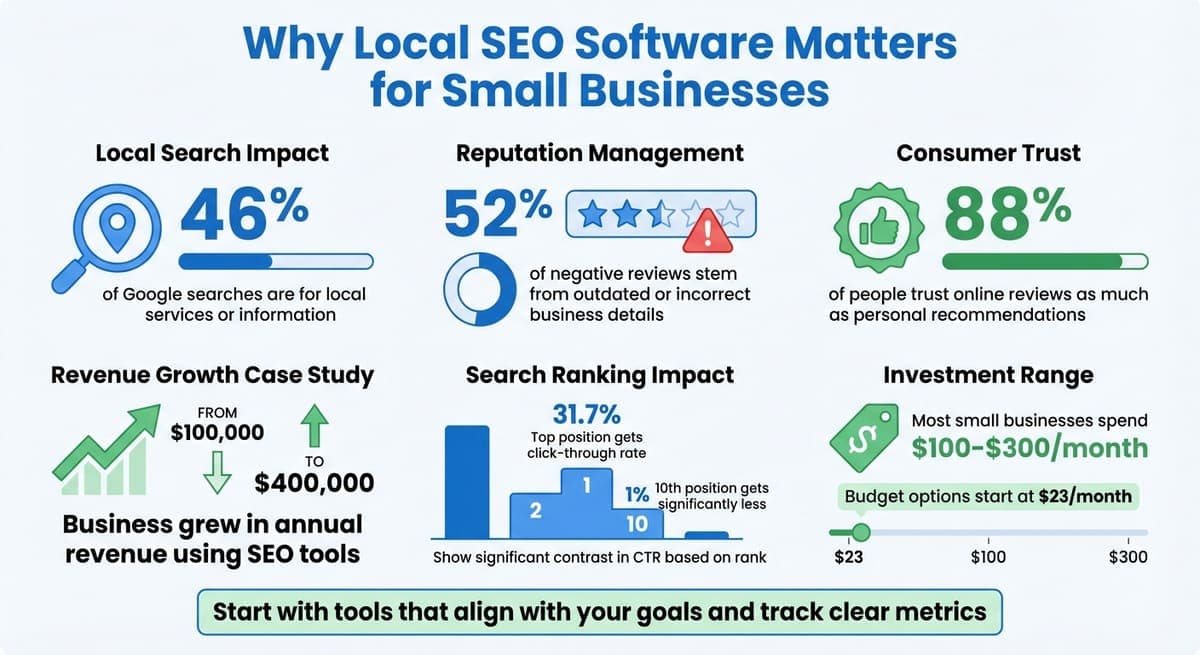
- 46% of Google searches are for local services or information. If your business isn't visible, you're missing potential customers.
- Tools simplify tasks like updating business details, managing reviews, and tracking local rankings, ensuring your information is accurate across platforms.
- 52% of negative reviews stem from outdated or incorrect business details, which can hurt your rankings and frustrate customers.
- Case study: A small business grew revenue from $100,000 to $400,000 using SEO tools for keyword analysis and site auditing.
What to Look for in SEO Software:
- Local SEO Tracking: Monitor visibility in Google Maps and local search results, with geo-grid tools to identify ranking gaps.
- Citation Management: Keep business details consistent across platforms to improve rankings and reduce customer confusion.
- Keyword Tracking: Track localized keywords and competitor rankings to refine your strategy.
- Google Business Profile Optimization: Manage posts, reviews, and profile completeness from a single dashboard.
- Automated Audits and Review Management: Quickly identify technical issues, monitor reviews, and respond effectively.
Local SEO Bot Overview:
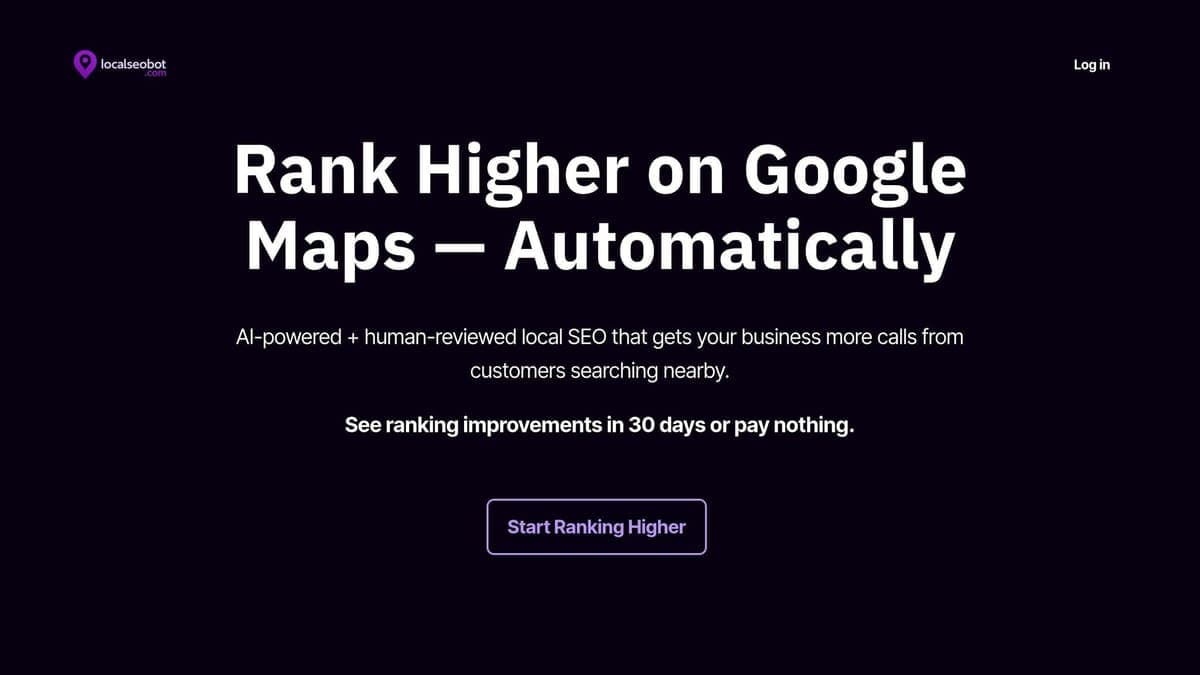
- Features: Citation building, review management, ranking tracking, and Google Business Profile tools.
- Pricing: Starts at $49/month, with a 30-day ranking improvement guarantee.
- Ease of Use: Simple setup, no long-term contracts, and email support included.
Takeaway: Invest in SEO software tailored to small businesses to improve local visibility, attract customers, and grow your revenue. Start with tools that align with your goals, test them during free trials, and track results using clear metrics like rankings, traffic, and conversions.
What to Look for in SEO Software
Not all SEO tools are created equal. If you're running a small business, you need software that saves you time, protects your reputation, and helps improve your local search rankings. Here's what to keep in mind.
Local SEO Tools
For small businesses, tracking local rankings is critical. Tools that monitor your visibility in the Google Local Pack, Google Maps, and organic search results can make a big difference. Local rankings can vary dramatically depending on location, and that's where geo-grid tracking comes in. This feature shows how your business ranks across specific ZIP codes and neighborhoods. Why does this matter? Because someone searching for "plumber near me" a few miles away might get completely different results than someone searching right next to your shop. Geo-grid scanners create a heatmap of your service area, helping you spot gaps where competitors might be outranking you. This is especially useful for businesses with a limited service radius. Once you've got a handle on rankings, the next step is ensuring your business details are consistent everywhere.
Citation Management
Your business name, address, and phone number (NAP) need to match across every platform - Google, Yelp, Facebook, and industry directories. When there's conflicting information, search engines can get confused, which can hurt your rankings. SEO software simplifies this by centralizing your data: you update your details once, and the software pushes those changes to hundreds of directories at the same time. It also removes duplicate listings that could send mixed signals. Consistent NAP details not only help your rankings but also prevent customer confusion and reduce negative reviews. Some tools even monitor for unauthorized edits and automatically fix any changes made without your approval. With your citations in order, it’s time to focus on how customers are finding you.
Keyword Tracking and Reporting
Tracking localized keywords is a must for small businesses. You need to know what terms people are searching for and whether your business is showing up for those searches. Local keyword tracking is different from general SEO. Instead of looking at how you rank across an entire city, you need to see how you're performing for searches like "pizza delivery" in your specific neighborhood. Make sure the software tracks both mobile and desktop rankings, as most local searches happen on mobile devices. It should also monitor your presence in key search features like the Local Teaser Pack and Google's emerging AI-driven overviews. Additionally, competitor rank auditing can reveal where rivals are outperforming you, giving you the insights needed to refine your strategy.
Google Business Profile Optimization
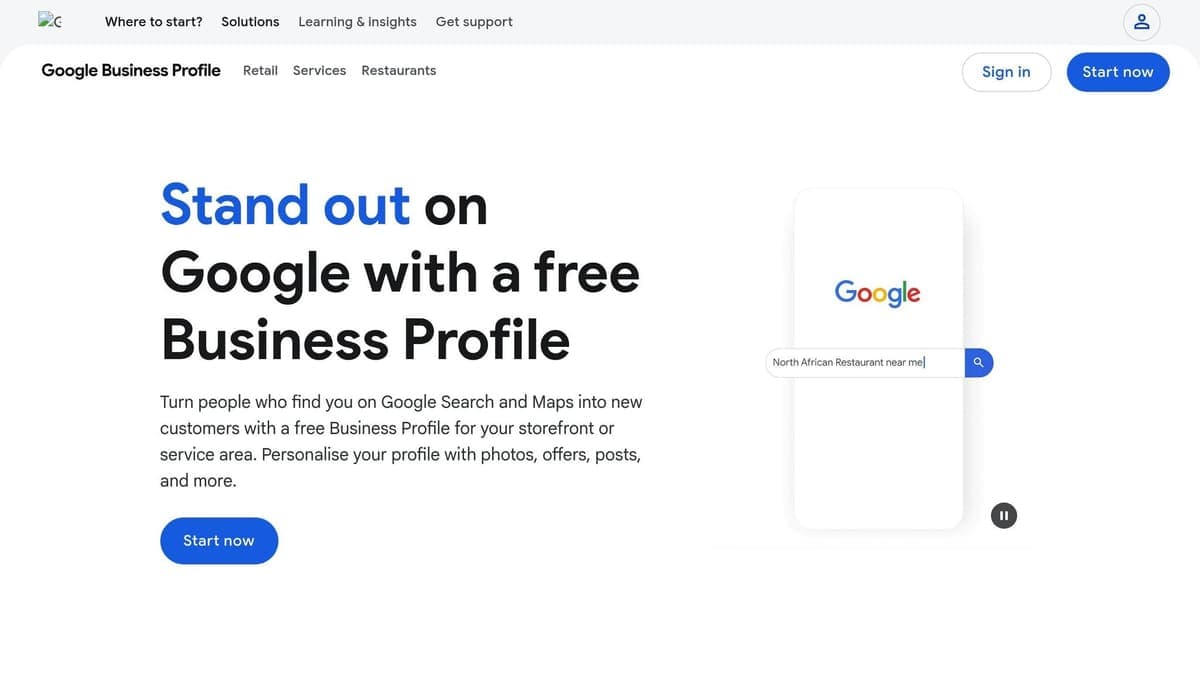
Your Google Business Profile (GBP) is a cornerstone of local visibility. SEO software should make it easy to manage your GBP by letting you schedule posts, upload photos, manage Q&A, and audit your profile's completeness - all from one dashboard. Google evaluates 11 specific GBP fields that influence search rankings, so keeping your profile complete is non-negotiable. Some tools even use AI to automate GBP post creation. You can also find platforms that generate QR codes and SMS templates to quickly request reviews from happy customers. Since high star ratings are one of the top factors affecting Local Pack rankings, automating review requests can help you boost your reputation with less manual effort.
Automated Audits and Review Management
Automated auditing tools are a game-changer for small businesses. These tools can scan hundreds of data points in minutes, flagging technical issues, NAP inconsistencies, and gaps where competitors are listed but you’re not. Review management features are equally important, consolidating feedback from platforms like Google, Facebook, and Yelp into one interface. From there, you can monitor customer sentiment, respond to reviews (some tools even offer AI-generated replies), and track how reviews impact your rankings. With 88% of people trusting online reviews as much as personal recommendations, managing your online reputation isn’t optional. The best tools also integrate with Google Analytics 4 and Google Search Console, allowing you to connect improved local visibility to real business results like website traffic and conversions. Without this data, you’re essentially guessing whether your efforts are paying off.
How Local SEO Bot Works for Small Businesses
Local SEO Bot simplifies the process of improving local search rankings by automating key tasks. Forget overwhelming dashboards - this platform focuses on essentials like building citations, managing reviews, and optimizing profiles. It blends human expertise with AI-driven automation to strengthen local SEO efforts.
Getting started is quick. In just about 60 seconds, you can connect your Google Business Profile. From there, a team member conducts a manual audit of your profile to identify any inaccuracies and uncover ranking opportunities. After this initial review, the AI steps in to expand your local search presence.
"At Local SEO Bot, our team does a manual audit of your profile. Then, we use AI and automations to provide everything you need to rank higher on Google Maps - no marketing agency required."
Once the audit is complete, the platform gets to work. It automates the creation of 500 citations across trusted directories, ensures timely responses to customer reviews, and continuously scans map rankings. The results? An updated dashboard that shows your growing local visibility.
Another highlight is its straightforward pricing. Plans start at $79 per month and come with a 30-day ranking improvement guarantee. If your goals aren’t met, you get a full refund - no strings attached. With no long-term contracts, small businesses can focus on their day-to-day operations while letting Local SEO Bot handle their online optimization.
Local SEO Bot Pricing and Plans
Local SEO Bot keeps things simple with a single flat-rate plan tailored for small businesses. For just $49 per month, you get access to a comprehensive suite of tools, including:
- One-click SEO optimization
- Google Business Profile management
- Automated review responses
- Citation building
- Ranking tracking
- Local SEO audits
- Email support
This straightforward pricing model eliminates the hassle of comparing multiple plans, making it easier for businesses to focus on improving their local search presence.
Pricing Table Comparison
| Plan Name | Price | Description | Features | Limitations |
|---|---|---|---|---|
| Basic | $49/month | Simplified local SEO for small businesses | One-click SEO, Google Business Profile management, review responses, citation building, ranking tracking, audits, email support | None |
Another key benefit? There are no long-term contracts. You can cancel anytime without penalties, offering flexibility that’s especially helpful for small businesses working within tight budgets.
Up next, we’ll explore how you can select and implement the right SEO software to achieve the best results.
sbb-itb-0e6533f
How to Choose and Implement SEO Software
When selecting SEO software, start by identifying your business's unique needs. Are you aiming to improve local map visibility, manage multiple locations, or address technical SEO issues? The tools required for a single-location coffee shop will differ greatly from those needed by a regional chain with 15 storefronts. Defining your goals upfront will help narrow down your options.
Think about who will be using the software. If your team lacks technical expertise, prioritize tools with user-friendly dashboards and straightforward instructions. On the other hand, advanced users might prefer software that offers raw data exports and extensive customization options. Before committing to a long-term plan, take advantage of a free trial, typically 7 or 14 days. Use this time to audit your website, track a handful of core keywords, brainstorm new keyword ideas, and analyze a competitor's domain. This hands-on experience will help determine if the software's workflow aligns with your needs.
"If a $200 per month tool helps you land one new client worth $3,000, it has already paid for itself many times over. The return on investment can be substantial when you choose the right marketing tools for your business." - Nick Quirk, COO & CTO, SEO Locale
Once you've tested the software, take a closer look at its metrics to ensure accuracy. Compare its data with Google Search Console, a free and reliable resource, and confirm that it integrates seamlessly with Google Analytics via API. To get a sense of real-world performance, check user reviews on platforms like G2 or Capterra.
After selecting the right software, ensure your NAP (Name, Address, Phone number) information is accurate and consistent across all platforms before rollout. Set up real-time alerts for new reviews so you can respond promptly - 88% of consumers trust online reviews as much as personal recommendations. Finally, establish clear success metrics, such as increasing phone inquiries by 25% or boosting your star rating from 3.5 to 4.5 within six months. These benchmarks will help you measure the impact of your investment.
Tracking Results with Your SEO Software
Once you've chosen and set up your SEO software, the real work begins: measuring its impact. To see how well your efforts are paying off, focus on metrics that directly affect your business goals. Start by keeping an eye on organic traffic from search engines like Google and Bing. This metric reveals how many visitors are finding your site through non-paid search results. Also, track keyword rankings for your most important terms. Here's why this matters: the top spot in Google's organic search results gets an average click-through rate of 31.7%, which is a staggering ten times higher than the rate for a page ranked 10th. Even a slight boost in rankings can lead to a noticeable increase in traffic.
If you're running a local business, your Google Business Profile (GBP) insights are a treasure trove of data. Instead of just looking at how many times your profile was viewed, focus on actions like phone calls, direction requests, and clicks to your website. Moz advises prioritizing data around "Queries, Actions, and Discovery" over simple "Views", as the latter may include unrelated impressions from sections like "people also search for". To get a clearer picture of how much traffic and how many conversions are coming from your GBP, use UTM parameters on your website links and analyze this data in Google Analytics. This approach ties local listing performance directly to your overall engagement metrics.
Beyond traffic and rankings, it's essential to measure how users interact with your site. Engagement metrics like time on page and average session duration can reveal whether visitors are finding what they need. For instance, low dwell time might signal that your content isn’t meeting their expectations. Conversion rates are another critical metric, as they connect organic traffic to actual business results.
To ensure your data is accurate, compare the insights from your SEO software with Google Search Console. Set up alerts for Google core algorithm updates so you can quickly adapt to any ranking changes. If your business serves a local area, geo-grid tracking can be incredibly useful. This tool shows how your rankings vary across different parts of your service area, even down to specific blocks. Take inspiration from KuchyneValent, a local kitchen manufacturer that used keyword analysis and audits to grow their annual revenue from $100,000 to over $400,000 by applying these SEO insights.
Don’t forget to monitor your site’s technical health. Regularly check for broken links, crawl errors, and Core Web Vitals to keep your site optimized for search engines. Additionally, measure your share of voice - the percentage of visibility you hold across tracked keywords - to understand your competitive standing. These technical checks and metrics are vital for strengthening your local search strategy and maintaining a strong online presence.
Conclusion: Choosing the Right SEO Software for Your Business
When selecting SEO software, focus on tools that align with your local business goals. If your main objective is to appear in local map searches and attract nearby customers, prioritize software designed for local SEO. Look for features like Google Business Profile optimization and citation management as key components. For businesses managing multiple locations or planning to expand, choose platforms that can scale without breaking the bank. Always compare these features against your budget to find the best fit.
Keep in mind the total cost - not just the monthly fee. Watch out for hidden charges, base plan limitations, and optional add-ons. Most small businesses spend between $100 and $300 per month on SEO software, though budget-friendly options can start as low as $23. Before committing, take advantage of free trials to ensure the software meets your needs. Striking the right balance between features and cost is key to making a smart investment.
Start with essential tools like keyword tracking, site audits, and competitor analysis, then expand as needed. The ideal software should streamline your efforts through automation and provide actionable data to guide your marketing strategy.
To get the most out of your investment, cross-check your software's data with free tools like Google Search Console to ensure accuracy. Make use of customer support and training resources to master the platform. With consistent use, the right tool can improve your local rankings and drive measurable growth.
Related Blog Posts
Frequently asked questions
- What key features should small businesses look for in SEO software?
- When choosing SEO software for your small business, it's important to focus on tools that boost local visibility and simplify day-to-day management. Features like Google Business Profile optimization and citation management are key for ensuring your business details stay consistent across online directories. This consistency is crucial for building trust with both search engines and potential customers. Keyword research and rank tracking are also must-haves. These tools help you uncover the search terms your local audience is using and keep tabs on how your business performs in search results. This insight is invaluable for tailoring your strategy to meet customer demand. A site audit tool is another essential feature. It can pinpoint technical issues - like broken links or slow-loading pages - that might hurt your rankings. Pair that with backlink analysis and competitor insights, and you'll have a clear roadmap for earning valuable links and staying ahead of nearby competitors. Finally, an easy-to-use dashboard with automated reporting and review monitoring ties it all together. This setup allows you to track your progress, manage reviews, and respond to customer feedback - all in one place. By combining these features, you’ll have a streamlined SEO solution designed specifically for the needs of small businesses in the U.S.
- How can SEO software enhance my local business's online reputation?
- SEO software plays a crucial role in helping small businesses maintain a solid online reputation by ensuring their business information is consistent and accurate across major directories. It automatically updates key details like your business name, address, and phone number (NAP), minimizing errors that could confuse potential customers or lead to unfavorable reviews. Accurate listings not only make your business easier to find but also build trust with your audience. Another powerful feature of this software is its ability to gather and organize customer reviews from platforms such as Google Business Profile, Yelp, and Facebook. This makes it easy to monitor feedback in real time and respond quickly when needed. Some tools even take it a step further by automating review requests through email or text after a purchase, making it simpler to collect positive reviews. Features like sentiment analysis and alerts for sudden changes in ratings help you tackle issues early, strengthening customer trust and loyalty. By handling these tasks efficiently, SEO software saves you valuable time and ensures your local business maintains a strong, reliable presence online.
- How much does SEO software typically cost for small businesses?
- The cost of SEO software for small businesses typically falls between $15 and $100 per month, depending on the features and tools offered. Pricing often varies based on the software's primary focus, whether it's local SEO, keyword tracking, or citation management. For small businesses, selecting a plan that aligns with both your budget and specific goals is key. This approach ensures you're investing in tools that effectively enhance your local search performance.