BrightLocal is a popular platform for local SEO, offering tools for citation tracking, review management, and Google Business Profile optimization. However, its pricing and some feature limitations may lead businesses to explore alternatives. Here are six comparable tools to BrightLocal, each with unique strengths:
- Semrush Local: Part of the larger Semrush suite, this tool offers citation management, review monitoring, and geo-grid tracking. Plans start at $20 per location/month.
- Whitespark: Focuses on manual citation building and à la carte pricing. Offers services like citation tracking and review management starting at $1/month per location.
- Synup: Designed for multi-location businesses, it provides citation syncing, review monitoring, and CRM integration. Plans begin at $79/month for up to 25 locations.
- Moz Local: Automates listing distribution via data aggregators, with features like review monitoring and GeoRank tracking. Pricing starts at $16/month (annual billing).
- Yext: Provides real-time syncing across 200+ platforms, review management, and analytics. Plans start at $199/year per location.
- Birdeye: Uses AI for review management, sentiment analysis, and customer engagement. Pricing starts at $299 per location/month.
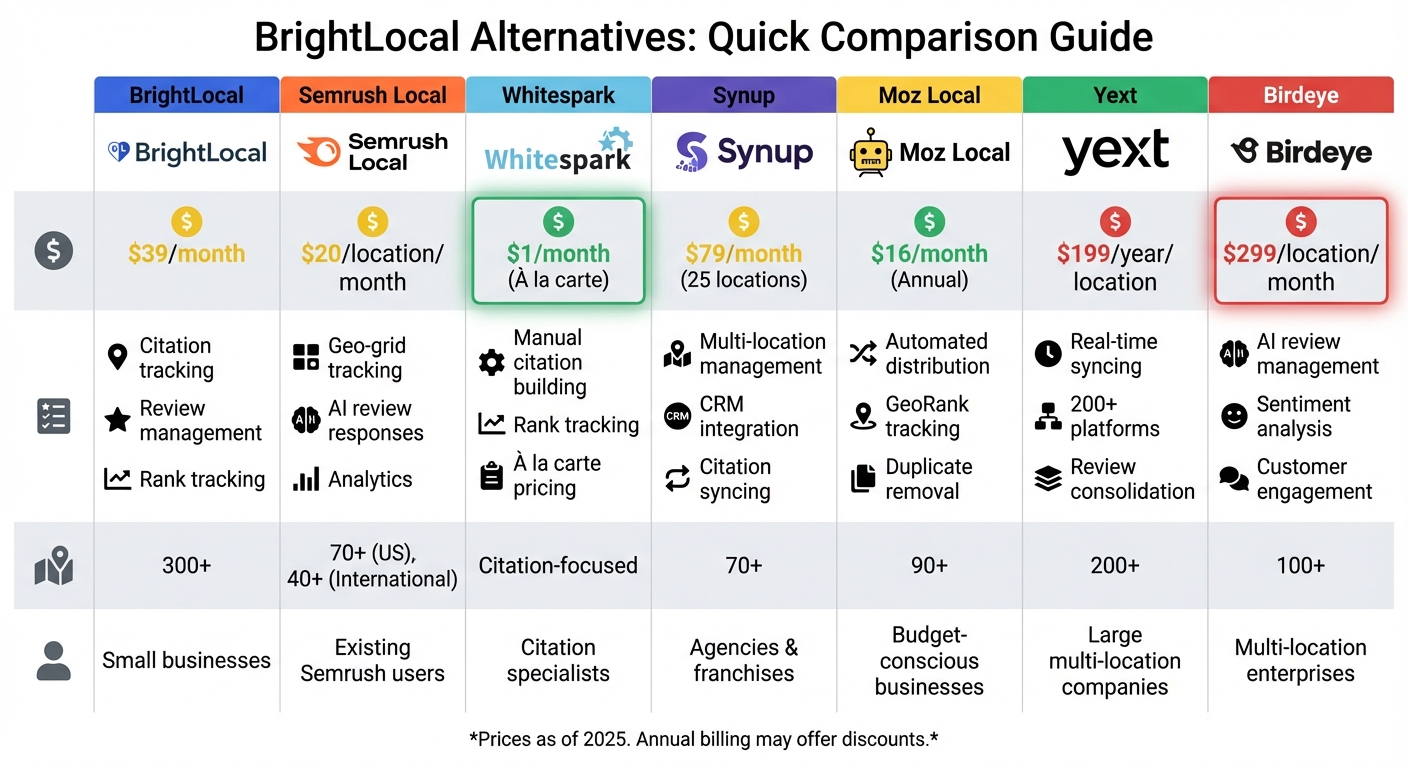
Quick Comparison
| Tool | Starting Price | Key Features | Best For |
|---|---|---|---|
| BrightLocal | $39/month | Citation tracking, review management, rank tracking | Small businesses |
| Semrush Local | $20/location/month | Geo-grid tracking, AI review responses, analytics | Existing Semrush users |
| Whitespark | $1/month (à la carte) | Manual citation building, rank tracking | Citation specialists |
| Synup | $79/month (25 locations) | Multi-location management, CRM integration | Agencies, franchises |
| Moz Local | $16/month (annual) | Automated citation distribution, GeoRank tracking | Budget-conscious businesses |
| Yext | $199/year/location | Real-time syncing, review consolidation | Large multi-location companies |
| Birdeye | $299/location/month | AI-driven review management, customer engagement | Multi-location enterprises |
Each platform has its strengths, making the right choice dependent on your business size, budget, and specific needs.
BrightLocal Alternatives Comparison: Features and Pricing Guide
5 Best Local SEO Software Tools (Full Demo)
1. Semrush Local
Semrush Local is an all-in-one solution that seamlessly integrates local SEO capabilities into the larger Semrush suite. It’s designed to simplify local SEO management without requiring multiple tools or platforms.
Local Citations
The Listing Management tool ensures your business information is automatically distributed to over 70 trusted directories in the U.S. and more than 40 internationally. This includes voice search platforms like Amazon Alexa, Apple, Bing, and Google, helping your business appear when customers ask their devices for recommendations. From a single dashboard, you can maintain NAP (Name, Address, Phone) consistency, eliminating the hassle of manual updates. As Alex Muller, Marketing Director at Pinnacle Treatment Centers, explains:
How much time does Listing Management save me? Probably weeks of work so far
Additionally, the platform offers duplicate suppression, which protects your Google Business Profile from unwanted edits or third-party suggestions.
Review Management
Semrush Local brings all your reviews from major directories into one place, making it easy to monitor customer sentiment and respond promptly. The Review Generation feature automates the process of requesting feedback by sending SMS or email invitations right after a transaction, helping you build social proof effortlessly. Meanwhile, the GBP AI Agent suggests automated replies to customer reviews, saving time while maintaining consistency. Becky Lane, Director of Marketing at Sam The Concrete Man, highlights its impact:
Semrush has 100% helped us rank our local franchises. It all comes back to credibility
You can also analyze competitors’ review profiles, tracking their total reviews and response rates to identify areas where you can gain an edge.
Analytics and Reporting
The Map Rank Tracker uses a heatmap to show your Google Maps rankings across your target area. This visual tool makes it easy to pinpoint neighborhoods where your visibility needs improvement, so you can focus your local SEO efforts strategically. Semrush Local also provides up to 24 months of historical Google Business Profile data, far exceeding what the standard GBP interface offers. This extended timeline helps you identify trends and measure the long-term success of your strategies.
Pricing
Semrush Local offers two plans: Basic for $20 per location per month and Premium for $40 per location per month. The Premium plan includes advanced features like the Map Rank Tracker and AI-powered review responses. You can either add this toolkit to an existing Semrush subscription (such as the Guru plan at $129.95/month) or purchase it as a standalone service. Rated 4.5/5 by over 2,000 users on G2, Semrush Local is praised for its functionality, though some users mention that the interface can be overwhelming for beginners and costs can add up when managing multiple locations.
Next, let’s take a look at Whitespark, another local SEO solution with its own distinctive features.
2. Whitespark
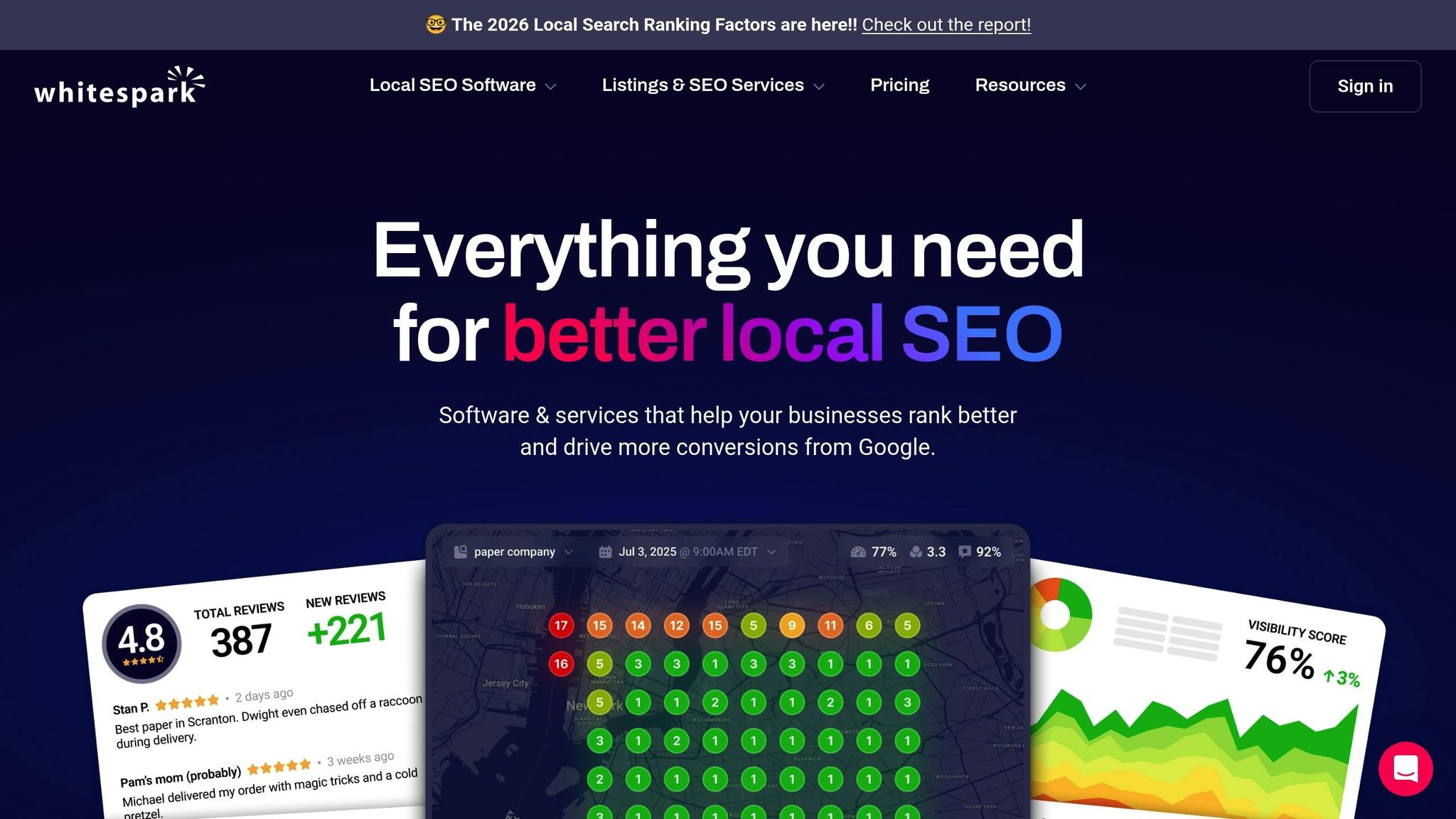
Whitespark operates on an à la carte model, meaning you only pay for the services you actually need. Over the past 20 years, it has served more than 150,000 users across 100,000+ businesses [20, 21].
Local Citations
Whitespark's Local Citation Finder is a tool designed to help you identify citation opportunities by analyzing where your competitors are listed and tracking your current citations [20, 24]. On top of that, Whitespark offers a manual citation-building service, where actual people submit your business details to directories. This hands-on approach achieves a 70% live rate and provides login credentials for each listing. Dan Shure, Owner and SEO Consultant at Evolving SEO, praises this service, saying:
"I can't think of a bigger 'no-brainer' local optimization service to utilize than Whitespark's Citation Building Service."
However, manual submissions come at a premium - costing $4–$5 per listing compared to $2–$3 for automated services, making it about 33% to 66% more expensive per citation [22, 25]. For businesses looking to move away from subscription-based models, Whitespark also offers a Yext Replacement Service for $399 per location [20, 21].
Review Management
Whitespark's Reputation Builder simplifies the process of gathering and managing reviews. It automates review requests through email or SMS, tracks reviews in real time, and offers customizable widgets to display customer feedback on your website [20, 26]. With a 95% customer retention rate and 90% of users recommending the service, it’s clear that many businesses see tangible benefits. Users often report increased foot traffic and more client inquiries.
Additionally, Whitespark includes free tools like a Review Checker and a Google Review Link Generator to supplement its paid offerings. The platform has earned impressive ratings, including a perfect 10.0/10 on TrustRadius for its Local Citation Finder and a 4.6/5 on G2 [22, 23].
Analytics and Reporting
For tracking local search performance, Whitespark's Local Rank Tracker delivers map-based, visual ranking reports that showcase your presence in local searches. Greg Gifford, Chief Operating Officer at SearchLab, has high praise for the tool:
"If you do Local SEO, the Local Rank Tracker will be one of your 'I can't live without this tool' tools. It's flat out gorgeous and by far the best visual representation of rankings of any tool on the market."
To complement this, the Local Ranking Grids tool provides a detailed view of your visibility across 225 points on a map, helping you pinpoint gaps in your local SEO strategy [20, 26].
Pricing
Whitespark’s à la carte pricing ensures you only pay for what you use. For example:
- The Local Platform for Google Business Profile management starts at just $1 per month, per location.
- The Local Citation Finder ranges from $33 to $149 per month.
- The Reputation Builder costs $79 per month per location.
- The Local Rank Tracker is available for $14 to $200 per month.
- One-time citation services range from $20 to $999, depending on the volume required.
In 2025, Paul McIntyre, owner of Broadmead Physiotherapy, shared that switching to Whitespark's SEO services significantly boosted his business rankings, after previously spending thousands of dollars monthly on other solutions. Similarly, Vince Gilkey, SVP of Marketing & Sales at Gilkey Window Company, reported increased sales and reduced ad spend, which improved profitability. While costs can add up, the à la carte model allows small businesses to scale services based on their individual needs [3, 24].
Whitespark’s flexible pricing and proven track record make it a strong contender in the local SEO space. Up next, we’ll take a closer look at Synup’s unique approach to local SEO management.
3. Synup
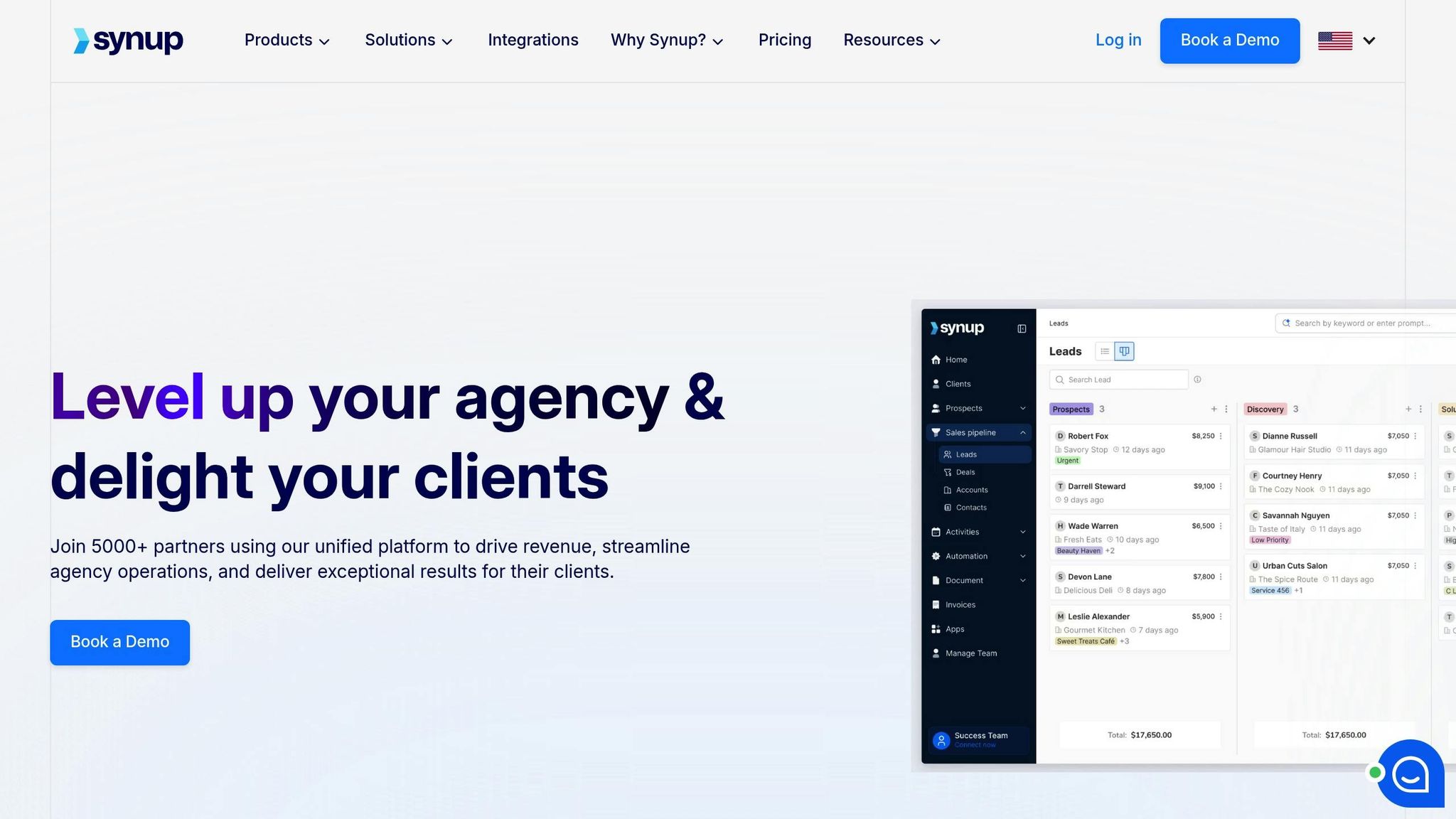
Synup stands out by branding itself as an "operating system" tailored for marketing agencies, rather than just another local SEO tool. It’s built to handle the complexities of managing businesses with multiple locations, offering not just citation and review tools but also sales workflows, prospecting features, and project management capabilities. Eldar Cohen, Founder of Local Dominator, sums it up well:
"Synup positions itself as a complete 'operating system' for marketing agencies, with a strong focus on managing multi-location businesses and franchises."
Let’s dive into how Synup ensures consistency across directories and strengthens your local presence with its advanced tools.
Local Citations
Synup uses an API-based system to keep your business details synced across over 70 directories in real time. This includes major platforms like Google, Bing, Facebook, Apple Maps, and Yellowpages. This automation ensures your NAP (Name, Address, Phone) information remains accurate everywhere, while bulk editing and automated indexing help search engines find your listings faster.
One feature worth noting is Synup’s voice search optimization, which fine-tunes your listings for voice assistants like Alexa, Siri, Cortana, and Google Assistant. Given that nearly 50% of "near me" voice searches lead to in-store visits within 24 hours, this can be a game-changer for local businesses.
Review Management
Synup simplifies review management by tracking feedback across platforms like Google, Facebook, and Yelp. You’ll get real-time alerts and weekly updates, making it easier to respond quickly. It also offers automated response options, which can be customized based on star ratings or keywords, using templates or AI-generated content to keep your engagement consistent.
Beyond monitoring, Synup helps you actively gather reviews. It automates feedback requests via email and SMS and integrates with your CRM to send review prompts after specific actions, like completed purchases. A built-in sentiment analysis tool provides a quick overview of customer opinions across locations, helping you spot trends and areas for improvement instantly.
Pricing
Synup’s pricing is structured to meet the needs of agencies managing multiple locations. Here’s a breakdown of its tiered plans:
- Startup Plan: $79/month (annual) or $99/month (monthly) for up to 25 locations
- Agency Plan: $199/month (annual) or $249/month (monthly) for up to 100 locations
- Scale Plan: $799/month (annual) or $999/month (monthly) for up to 500 locations
You can also enhance Synup’s functionality with optional add-ons:
- Listings Pro: $35 per location/month to expand your directory network to 75+ sites and suppress duplicates
- Reviews Pro: $20 per location/month for monitoring across 20+ sources and AI-assisted responses
- Reviews Gold: $50 per location/month adds review generation, CRM integration, and sentiment analysis
- SEO Pro: $5 per location/month for hyper-local grid rank tracking
While Synup offers a robust suite of features, some users have raised concerns about billing practices and auto-renewal terms. Be sure to review the contract details carefully before signing up.
Next, we’ll take a look at Moz Local and its unique approach to local SEO, focusing on data aggregators and duplicate removal.
4. Moz Local
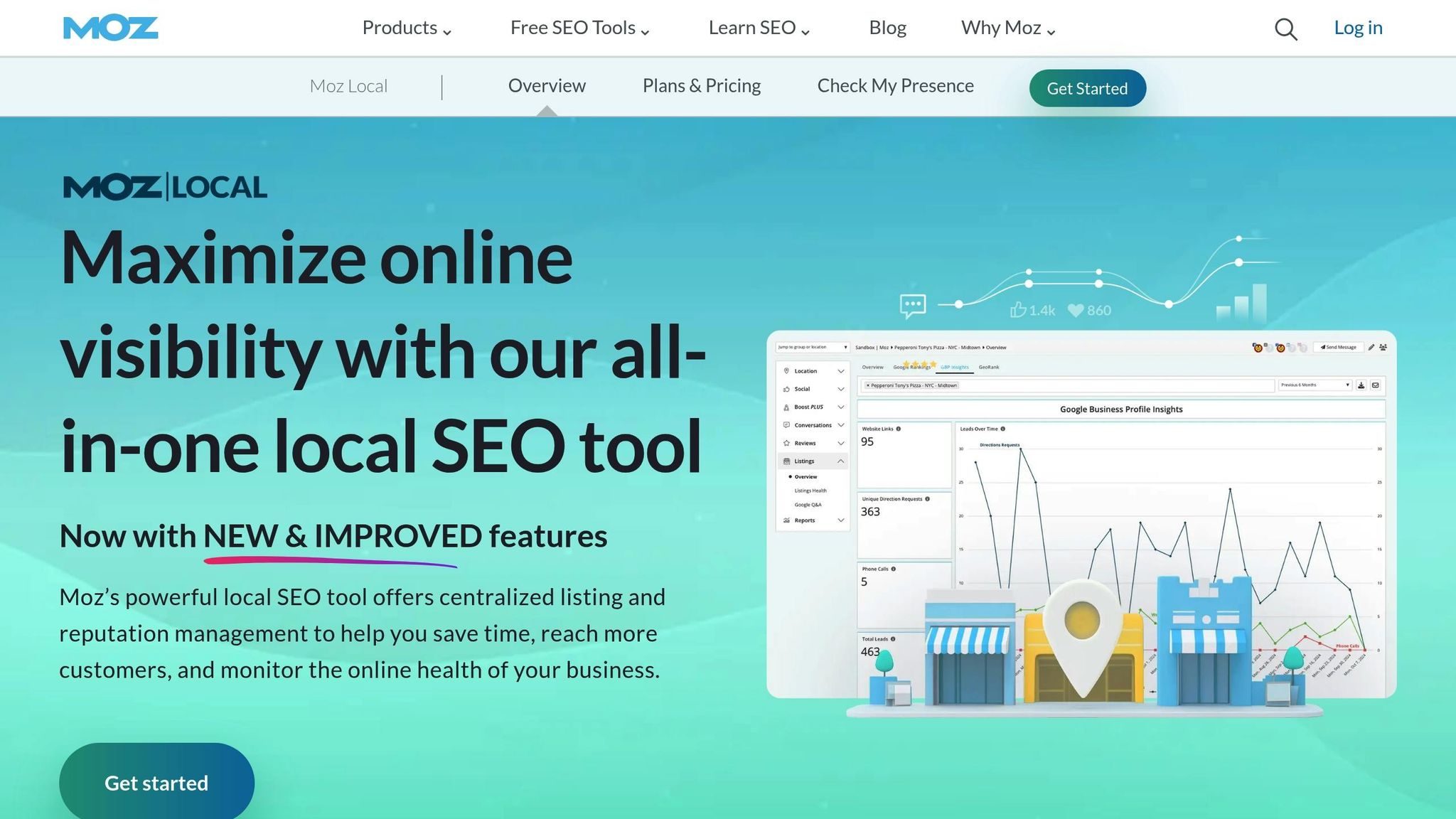
Moz Local takes a different approach to managing business listings. Instead of submitting information directly to individual directories, it relies on automated distribution through data aggregators. This "set it and forget it" model makes it especially appealing for small businesses aiming to keep their NAP (Name, Address, Phone) details consistent without constant manual effort. Blake Denman, President & Founder of RicketyRoo Inc, highlights the convenience:
"Moz Local helps us streamline our process by automatically syncing business information and pushing it out to those directories."
The platform distributes your business data to major search engines, social media platforms, and aggregators like Data Axle and Neustar. This ensures your information remains consistent across more than 90 directories. Additionally, Moz Local automatically detects and removes duplicate listings, reducing confusion for search engines and improving your rankings. This hands-off, automated system makes Moz Local stand out for efficient listing management.
Review Management
Moz Local simplifies review management by consolidating everything into a single dashboard. With AI-powered response templates, businesses can maintain a consistent brand voice while meeting customer expectations - 60% of consumers expect a reply within two days. The platform also includes sentiment analysis to track trends in feedback, giving businesses valuable insights into customer perceptions. Real-time alerts notify you of new reviews, and the dashboard monitors your average response time, helping you stay on top of customer interactions.
Analytics and Reporting
In addition to listing distribution and review tools, Moz Local offers advanced analytics. One key feature is GeoRank, which tracks your local rankings at specific coordinates instead of just city-wide averages. This provides a more precise understanding of how you rank for certain keywords in targeted areas. The platform also calculates a "listing health score", pinpointing missing or inconsistent information that could impact your visibility in search results.
These insights have delivered measurable results for businesses. Sean Pomory, Digital Media Specialist at Chesapeake Regional Healthcare, shared:
"Our Google My Business traffic has increased drastically over the past three years. Moreover, all of our practice managers have noticed an increase in calls to the office and appointments scheduled. Moz Local is the perfect solution for us."
Pricing
Moz Local combines its automated tools with flexible pricing options. Annual plans offer discounts, saving up to $81 per year on the Elite plan:
| Plan | Monthly Price | Annual Price | Key Features |
|---|---|---|---|
| Lite | $20/mo | $16/mo ($199/yr) | 90+ directories, review monitoring, GeoRank, Google Q&A |
| Preferred | $30/mo | $24/mo ($299/yr) | All Lite features plus review responding, sentiment analysis, social posting |
| Elite | $40/mo | $33/mo ($399/yr) | All Preferred features plus Listings AI, advanced social (Instagram, TikTok, LinkedIn), full reporting |
| Enterprise | Custom | Custom | For 50+ locations with dedicated account management |
Optional add-ons include Listings AI ($14/month or $119/year, free with Elite) and Reviews AI ($10/month or $69/year). While the platform boasts a strong 4.38/5 rating based on 3,883 reviews, some users have noted delays in listing updates across the network.
Next, we'll take a closer look at Yext and its expansive directory network, which spans more than 100 platforms.
sbb-itb-0e6533f
5. Yext

Yext leverages its "Knowledge Graph" to distribute your business data instantly across more than 200 digital platforms via direct API integrations. Instead of relying on manual updates or third-party data aggregators, Yext ensures that your information is synchronized in real-time across platforms like Google Maps, Apple Maps, Facebook, and Amazon Alexa. Madison Hendrix, Senior SEM Specialist at Abstrakt, highlights this advantage:
"Its strength lies in the ability to push accurate business data instantly to over 200 digital services, ensuring consistency and reducing the risk of outdated or conflicting information."
This automation is especially useful for multi-location businesses - such as franchises, healthcare networks, and financial services - that require consistent branding across numerous locations. Yext also identifies and suppresses duplicate listings automatically, ensuring data remains clean and accurate. John Dillon, CMO of Denny's, underscores the importance of this precision:
"Missing phone numbers, incorrect addresses - that is unacceptable in this day and age. Yext provides a platform to address that."
Beyond maintaining consistent data, Yext also simplifies customer engagement through its review management tools.
Review Management
Yext consolidates reviews from over 80 sites - including Google, Facebook, Yelp, Healthgrades, and Tripadvisor - into a single, easy-to-manage dashboard. Using AI, the platform generates response templates and automates replies based on star ratings, helping businesses maintain a consistent brand voice while responding quickly to customer feedback. Its sentiment analysis feature identifies recurring themes and keywords in reviews, allowing businesses to spot trends without manually reading every comment.
The platform also automates review generation by sending requests via email, SMS, or QR codes. Using a "smart balancing algorithm", it directs customers to the platforms where their reviews will have the most impact. Businesses using Yext have reported a 374% increase in 5-star reviews and a 57% reduction in response time. Additionally, Yext offers competitive intelligence tools that benchmark your reputation against local competitors using a "rolled-up reviews score", which factors in ratings, review recency, and response times.
Now, let’s take a look at how Yext’s pricing structure supports its services.
Pricing
Yext requires an annual commitment and bills its plans on a 12-month basis. Here’s a breakdown of its pricing:
- Emerging Plan: $199 per year, covering around 30 niche directories.
- Essential Plan: $449 per year, including major platforms like Google, Yelp, Bing, and Facebook.
- Complete Plan: $499 per year, which includes analytics and PowerListings+ features alongside the platforms covered in the Essential plan.
- Premium Plan: $999 per year, which adds review monitoring capabilities.
While Yext offers robust automation, its pricing may be a hurdle for smaller businesses. For instance, a 2024 case study by BrightLocal revealed that Arkansas Baptist Children & Family Ministries saved $6,000 annually by moving away from Yext, as Assistant Director of Communications Bryce Paxon prioritized gaining permanent ownership of their Google Business Profile locations. Another factor to consider is that if you cancel your Yext subscription, the platform stops updating your data across its network, and your listings may revert to their pre-Yext state - a practice some users liken to "renting" your listings.
Analytics and Reporting
Yext also offers analytics tools to track how your business information performs across its network. These tools monitor the accuracy of your listings, track customer actions like clicks and calls, and measure the impact of your online presence. However, users often note that the reporting dashboards can be challenging to interpret without proper onboarding or technical support.
6. Birdeye
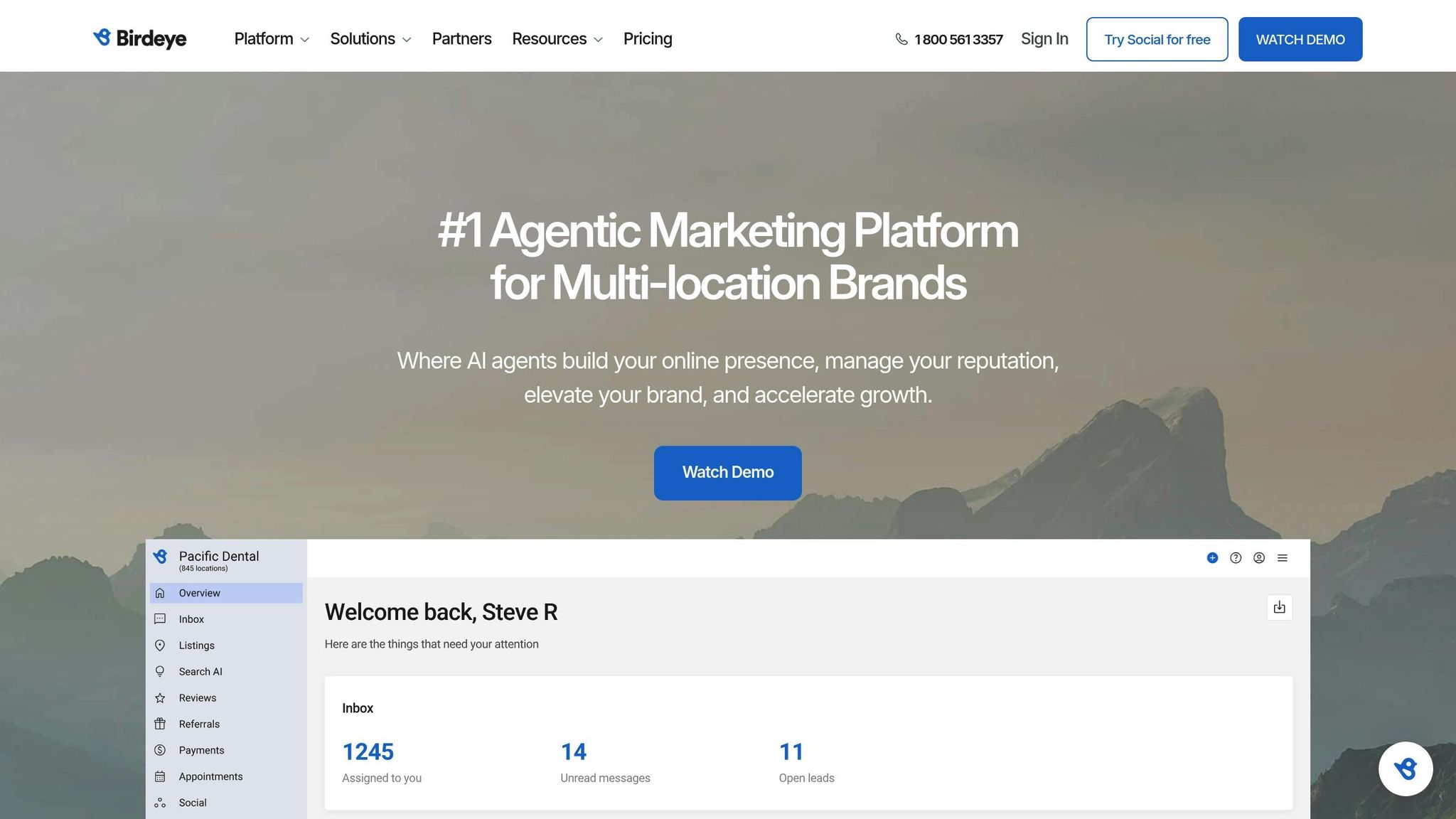
Birdeye takes automation to the next level by using AI to simplify every aspect of customer interaction. Tailored for multi-location brands, it focuses on improving local SEO through automated customer engagement. But Birdeye doesn’t stop there - it covers the entire customer feedback journey, from sending review requests to crafting personalized responses and promoting positive reviews on social platforms.
Review Management
With BirdAI Agentic Automation, Birdeye handles review requests, personalized responses, and social sharing with minimal effort. The tool drafts responses that align with your brand’s tone and automatically shares glowing 5-star reviews on your website and social media. By pulling feedback from over 100 review platforms - like Google, Facebook, and Yelp - into a single dashboard, managing your online reputation becomes a breeze.
For instance, American Pacific Mortgage used Birdeye to automate review requests and monitoring, collecting an impressive 131,000 reviews with an average 4.9-star rating. Melissa Wright, Chief Sales & Marketing Officer, shared:
It's foundational to have something easy to automate review requests, monitor incoming feedback, and organize it in a way that works for us.
Similarly, Fairlawn Real Estate saw outstanding results, generating 1,600 new reviews across various platforms. Allison Ross, Senior Marketing Specialist, said:
Using Birdeye AI to respond to reviews has saved us so much time while ensuring we maintain a professional and personal connection with our residents.
On average, businesses experience a 128% increase in review volume within the first 90 days of using Birdeye. The platform also employs natural language processing to analyze feedback, identify trends, and flag potential churn risks. Valley Veterinary Care, for example, achieved a 400% boost in social publishing reach by using Birdeye’s bulk-posting tools to maintain a consistent brand voice.
Pricing
Birdeye’s pricing starts at $299 per location per month for the Starter Plan, which includes features like Reviews AI, Listings AI, and Messaging AI. More advanced plans, such as the Growth Plan and Dominate Plan, add tools like Social AI and Chatbot AI. Initial setup costs around $600, and listings management adds about $50 per month per location.
Analytics and Reporting
Birdeye’s Reports AI transforms raw data from search, social, and reputation channels into actionable insights. The platform also features Insights and Competitors AI to benchmark your performance and analyze competitors. For a comprehensive view, the Birdeye Score evaluates overall performance for multi-location businesses.
Superior Storage saw an 86% increase in Google Maps direction requests after using Birdeye’s listing management tools. Meanwhile, Pacifica Senior Living reported a 25% rise in digital interactions within six months by streamlining its social media monitoring. Carly Dodd, Content Manager, commented:
Having a platform where everything is monitored in one place makes such a difference and has streamlined our approach to social media.
While the sentiment analysis tool is powerful, some users mention it may need manual fine-tuning for complete accuracy. Additionally, the social listening tool occasionally flags unrelated terms. With integrations for over 3,000 CRMs and POS systems, Birdeye is a strong choice for businesses looking to automate and optimize their customer experience workflows.
Comparison: Strengths and Weaknesses
When choosing a local SEO tool, it's important to weigh the balance between automation and manual oversight. Each platform shines in different areas, so the right choice often depends on your business size, budget, and specific needs.
For small businesses, BrightLocal stands out with its hybrid citation approach, blending automation with manual citation building for better quality control. Plans start at $39 per month, offering a solid option for businesses that prioritize accuracy and oversight.
Moz Local is a budget-friendly choice, with pricing starting at $16 per month (billed annually). It provides automated features like listing health monitoring and AI-suggested templates for responding to reviews. This makes it a great fit for single-location businesses that want affordability without sacrificing functionality. Brian Rutledge, President of GPO, shared:
Moz Local is one of the most important tools in our arsenal. With Moz Local Distribution and Search Insights, we can improve our clients' local citations and gain a clear picture of how their business listings appear across the web.
For larger enterprises, Yext offers real-time syncing across over 100 directories, making it a robust tool for managing brand consistency and analytics. However, its lack of human verification and higher price point - $199 per year per location - can make it less appealing for smaller businesses. BrightLocal claims to update four times as many listings as Yext while maintaining stricter quality control.
Whitespark and Synup also deliver strong citation management solutions. Whitespark focuses on citation building but lacks features like white-label reporting, which some agencies may need. Meanwhile, Synup caters to mid-sized businesses with a platform that combines automation and multi-platform capabilities.
Ultimately, the main trade-off across these tools is speed versus accuracy. Automation can save time, but manual quality control ensures precision - a crucial factor considering that 52% of consumers have left negative reviews after encountering incorrect business information. The table below highlights the key differences among these tools:
| Tool | Starting Price | Directory Coverage | Human Verification | Ease of Use Rating | Best For |
|---|---|---|---|---|---|
| BrightLocal | $39/month | 300+ | Yes | 4.6/5 | Small businesses needing accuracy |
| Moz Local | $16/month (annual) | Major engines & apps | No (automated) | 4.6/5 | Budget-conscious single locations |
| Yext | $199/year per location | 100+ | No | 4.1/5 | Large multi-location enterprises |
| Semrush Local | Varies by location | Integrated network | No | Not specified | Existing Semrush users |
| Whitespark | Varies | Citation-focused | Manual research | Not specified | Citation building specialists |
| Synup | Varies | Multi-platform | Automated | Not specified | Mid-sized businesses |
This table provides a clear overview to help you select the right tool for your local SEO strategy.
Conclusion
Choosing the right local SEO tool depends on your specific needs and budget. For small businesses operating on tighter margins, Moz Local provides automated listing management, making it a practical choice. Meanwhile, Whitespark's pay-as-you-go model (ranging from $2–$5 per listing) is ideal for one-time citation cleanups without requiring ongoing subscriptions. These options emphasize that there’s no one-size-fits-all solution.
For home service businesses, BrightLocal offers an all-in-one solution that includes rank tracking, citation management, and review monitoring, starting at $39 per month. This bundled approach can often save money compared to piecing together multiple tools. As Susan Hallam MBE, Managing Director at Hallam Internet, puts it:
If you want to save time and save money, then BrightLocal must be part of your local SEO toolkit.
Larger businesses may find Yext and Birdeye particularly effective, thanks to their real-time syncing across directories. In fact, Birdeye users have reported an average review growth of 128% within just 90 days, showcasing the power of automation at scale.
Before committing to any platform, take the time to evaluate your needs. Consider factors like the number of locations, essential features, and required integrations. Many tools, such as BrightLocal, offer free trials (e.g., a 14-day trial), allowing you to test the interface and ensure it aligns with your team’s workflow.
FAQs
What sets BrightLocal apart from other local SEO tools?
BrightLocal has made a name for itself in the local SEO space, but there are several alternatives that shine by offering simpler pricing models, faster automation, and more modern, user-friendly designs. One common concern with BrightLocal is its credit-based pricing system, which can quickly become costly as your business grows. On the other hand, many competitors provide flat-rate pricing or pay-as-you-go plans, making budgeting far easier.
Another drawback users often mention is BrightLocal’s somewhat outdated interface, which can make navigation a bit of a challenge. In contrast, newer tools prioritize sleek, intuitive dashboards and efficient workflows. These features make it quicker and easier to handle tasks like managing citations, tracking reviews, and optimizing your Google Business Profile. Many of these alternatives also incorporate advanced automation and real-time integrations, cutting down on manual work while ensuring you have access to the most up-to-date and accurate data.
For businesses that value affordability, ease of use, and automation, exploring these alternative tools could be a smarter choice.
What is the best local SEO tool for small businesses on a tight budget?
For small businesses aiming to cut costs, Semrush offers free local SEO tools that can make a big difference. These tools include helpful features like a Google Business Profile description generator, a review link generator, and QR code templates to encourage customer reviews and enhance your profile. The best part? They also cover crucial tasks like citation building and review management - all without costing a dime.
If you're working with a limited budget, these tools can help boost your local search visibility without the need for subscription fees, making them a smart choice for businesses looking to save.
What’s the difference between manual and automated citation building?
Manual citation building allows you to personally manage your business listings, ensuring every detail - like your name, address, and phone number (NAP) - is absolutely accurate. This method reduces the chance of errors and keeps your information consistent across platforms. The downside? It can be a bit of a time sink, especially if you're juggling multiple locations or directories.
On the other hand, automated citation building streamlines the process by submitting your business details to numerous directories all at once. It's a major time-saver, keeps your listings consistent, and frees you up to tackle other priorities. The trade-off is that it offers less room for customizing individual entries, as it typically relies on pre-set templates.