Marketers: Replace Google Business Messaging with RCS and Preserve Calls
Published October 2, 2026
Marketers: Replace Google Business Messaging with RCS and Preserve Calls

Google Business Messages as a brand-managed API was retired, and the active business messaging surface today is RCS for Business delivered through Google Messages. If your brand still relies on a legacy widget, you need to check it, update your alternative contact channels, and understand the features that now carry customer conversations. This guide covers what changed, how RCS works, and the migration steps to take now.
TL;DR:
- Brands relying on custom chat widgets had to remove or update them before July 15, 2024, as the Business Messages platform ended on July 31, 2024.
- RCS for Business now supports rich media, carousels, and up to four suggestions per card, but fallback to SMS/MMS is necessary where RCS isn’t available.
- Verification and branding in Google Messages build customer trust, with best practices including concise suggestions and plain-text fallbacks.
- Setting up a verified agent requires gathering specific business details and may involve carrier review, so plan ahead for campaign timelines.
- Maintaining accurate contact details and visibility across directories helps prevent customer drop-off during the messaging transition.
Table of Contents
- What Google Business Messaging was and what changed
- RCS for Business and Google Messages: features marketers should know
- How messages appear to customers: verification, privacy, and UX expectations
- How businesses enable RCS and submit agents
- Marketing use cases and design best practices for RCS messages
- Migration checklist for brands that used Business Messages or brand-managed widgets
- Preserving discoverability and alternative contact channels
- What this quarter should actually prioritize
- How Local SEO Bot helps you preserve visibility and calls
- FAQ
- Sources
What Google Business Messaging was and what changed
Business Messages let brands run rich, asynchronous conversations with customers who tapped a chat entry point on Search, Maps, or a business website. It supported images, suggested replies, and persistent chat threads tied to a business profile rather than a phone number.
Google wound the product down on a firm schedule. According to the official release notes, brands using brand-managed entry points needed to remove or replace them by July 15, 2024, and the Business Messages platform ended fully on July 31, 2024.
- Brands with custom, brand-managed chat widgets had to act before the July 15, 2024 deadline.
- Brands using only Google-hosted entry points on Search and Maps needed no manual removal, since those surfaces moved to current messaging channels automatically.
For most small businesses, the practical result is simple: any marketing plan built around the old Business Messages API now needs to point at RCS for Business and Google Messages instead.
RCS for Business and Google Messages: features marketers should know
RCS for Business is the feature set that now carries branded chat. It supports photos, video, audio, and PDFs, plus rich cards and carousels that combine media, text, and suggested replies in a single message, as described in the feature gallery.
One limit to plan around: card suggestion caps. A single rich card supports up to four suggestions, and a chip list can hold up to 11. That cap forces you to prioritize the one or two actions that actually move a customer toward a booking or a call, rather than listing every option you offer.
- Rich card titles can run up to 200 characters, and descriptions up to 2,000, per the rich cards guide.
- Carousels render in a full-screen, expandable view so multiple offers display consistently across devices.
- Supported card actions include opening a URL, dialing a number, viewing a location, creating a calendar event, and sharing a location.
Where RCS isn’t available, on an older device, a different carrier, or outside supported regions, Google Messages falls back to SMS or MMS. That means your core call to action, whether it’s a phone number or a short link, needs to read clearly as plain text, not just inside a rich card.
How messages appear to customers: verification, privacy, and UX expectations
Google Messages shows verified businesses with a branded display name and logo inside the chat thread, which gives customers a visual cue that they’re talking to the real business rather than an unknown number. This verification and branding, along with suggested actions that cut down on typing, are the mechanics that build trust and move a conversation toward a conversion, according to Google’s support documentation.
- RCS availability depends on carrier, device, and region, and the app falls back to SMS/MMS automatically when RCS isn’t supported.
- Customers can unsubscribe from non-essential messages at any time, and your business is responsible for honoring that opt-out.
- Reporting a conversation as spam moves it out of the main inbox and can send recent messages to Google and the carrier for review.
Pro Tip: Design every suggested action so it still makes sense if the customer only ever sees the plain-text fallback.
How businesses enable RCS and submit agents
Turning on RCS messaging means setting up a verified “agent,” the entity that represents your business inside Google Messages. The agent information guide lays out what you need before submission.
- Gather required agent details: display name, business description, logo and banner images sized to spec, a contact phone number, and links to your privacy policy and terms of service.
- Submit and manage the agent through the RCS for Business Developer Console, which is where your developer or messaging partner configures the profile and tests conversation flows.
- Expect carrier review on some changes. Updates to agent information after launch may require carrier approval, so build in lead time before a campaign date.
- Hand developers your creative limits, correctly formatted phone numbers, and a short testing checklist covering multiple devices before any message goes live.
Marketers rarely touch the console directly, but knowing these steps helps you brief a developer accurately and avoid last-minute delays tied to carrier sign-off.
Marketing use cases and design best practices for RCS messages
The highest-value uses for RCS tend to be transactional and time-sensitive: order tracking updates, appointment reminders, catalog browsing through carousels, and booking actions completed inside the chat thread itself.
Design for the worst case, not the best one. Rendering varies by device and screen size, so the launch guidance recommends testing on your actual target devices and keeping essential offers and calls to action available in plain text as a backup.
- Keep card titles and suggested actions short, since longer text gets truncated differently across devices.
- Limit suggestions to the one or two actions that matter most for that message.
- Always include a plain-text version of your core offer in case the rich card fails to render.
Pro Tip: Tag every link inside a rich card with its own campaign parameter so you can separate conversation-starts from Search or Maps from clicks that came through a direct message.
Track conversation-starts, link clicks, and downstream conversions separately. That split tells you whether RCS is driving new contact or just reformatting conversations you’d have gotten anyway.
Migration checklist for brands that used Business Messages or brand-managed widgets
If your business ever ran a custom chat widget tied to the old Business Messages API, treat this as a short project, not a background task.
- Remove or replace any brand-managed widget that references the retired API, since it stopped functioning after the documented deadline.
- Export any conversation history you need for records before old data access windows close.
- Update your Business Profile’s contact details so phone, chat, and website links point to current, working channels.
- Add a short notice or welcome message in your current chat channel directing returning customers to the right place.
- Map new messaging events into your CRM, test every fallback channel personally, and watch support volume for a spike in misdirected contacts.
Preserving discoverability and alternative contact channels
A messaging change is also a visibility check. If a widget breaks or a contact link goes stale, customers who find you on Maps may stall out right at the moment they’re ready to call. Consistent, accurate citations across directories and an optimized Google Business Profile keep your phone number and chat entry points correct everywhere a customer might encounter them, not just on your own site.

Review your listings for outdated contact details, promote your phone number and web chat prominently, and track Maps ranking with a tool like Maprank so a drop in visibility shows up before it shows up in your call volume.
What this quarter should actually prioritize

Get verification and a lean set of suggested actions in place first. Everything else, carousels, rich media, clever card copy, only pays off once customers trust the sender and can act in one tap.
Confirm your core offer reads clearly in plain SMS/MMS fallback, since that’s what a meaningful share of customers will still see. Treat messaging as one channel in a broader multichannel marketing strategy, and measure where conversations start, Search, Maps, or direct, rather than assuming messaging alone drives the result.
— Local
How Local SEO Bot helps you preserve visibility and calls
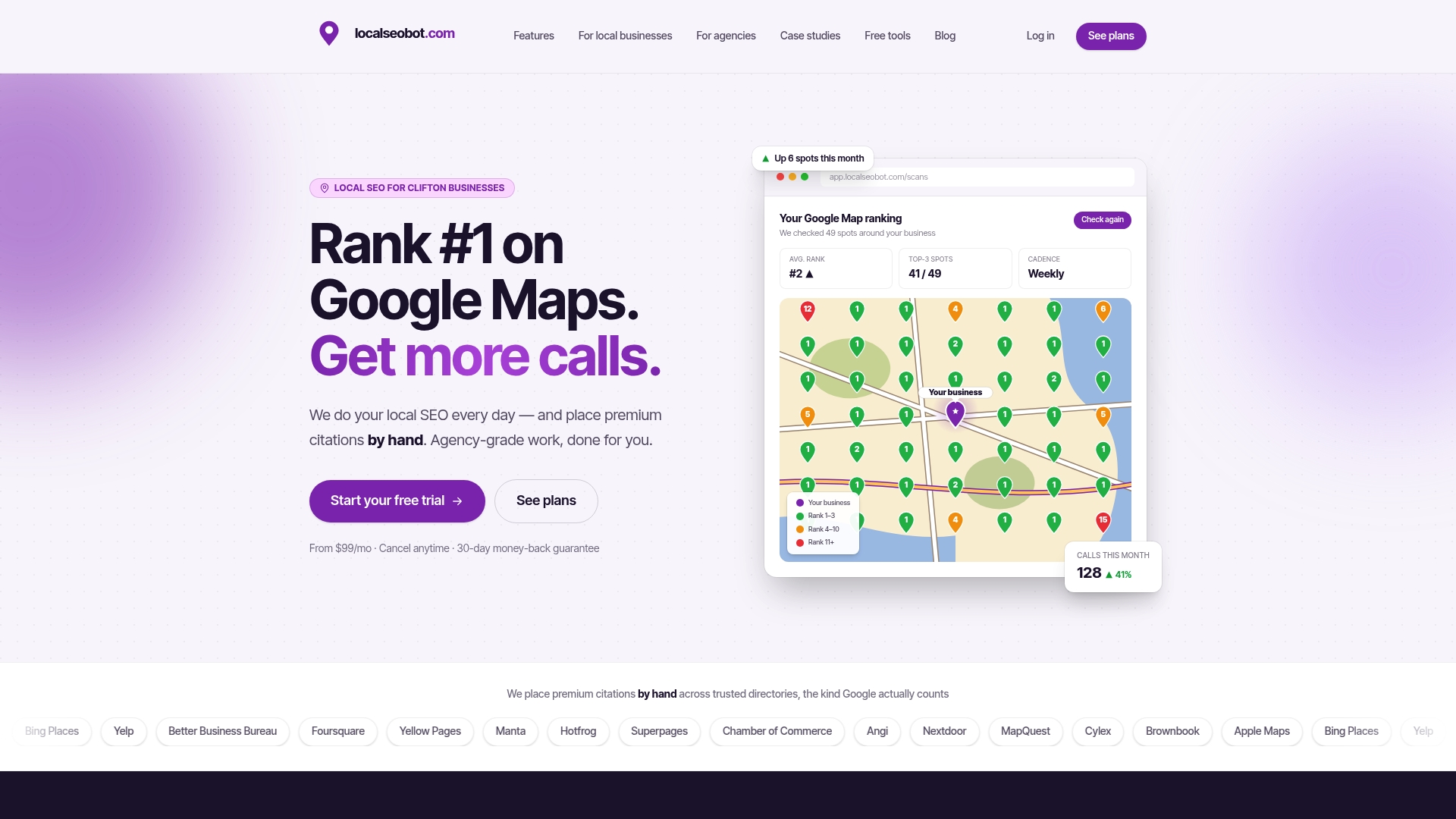
A messaging shutdown is a good moment to check whether customers can still find and reach you at all. Local SEO Bot builds premium citations manually across high-authority directories, rather than relying on automated blasts, so your phone number and contact details stay accurate everywhere a customer searches.
- Manual premium citation building keeps your business name, address, and phone number consistent across directories.
- Maprank tracks your Google Maps ranking with geo-grid scans, so you catch visibility drops early.
- Google Business Profile optimization keeps your listed contact channels current after any platform change.
If calls or Maps visibility drop after a messaging transition, check your current standing and compare plans on the pricing page, including Foundation at $99 per month per location and Growth at $199 per month per location. Agencies managing multiple locations can review Pro pricing at $399 per month per location, and any business backed by Local SEO Bot’s 30-day money-back guarantee can test the impact on rankings with low risk.
FAQ
Can you message a business on Google?
Yes. Many businesses support RCS chats inside Google Messages, where verified senders show a branded name and logo, and the app falls back to SMS or MMS when RCS isn’t available on a given device or carrier, according to Google’s support page.
What is Google RCS business messaging?
RCS for Business is the current feature set for branded chat, supporting rich media, rich cards, and carousels with suggested replies and actions, as detailed in the feature gallery. It replaced the retired Business Messages API as the active channel for brand-to-customer conversations.
Is Google messaging the same as Google Chat for business?
No. Google Messages is Google’s SMS, MMS, and RCS client used for one-to-one and business conversations, while Google Chat is a separate workspace collaboration product. The two serve different purposes and are not interchangeable for customer messaging.
Is Google messaging the same as Messenger?
No. Google Messages is Google’s own SMS/MMS/RCS app, distinct from Meta’s Messenger product, even though both support rich media and suggested actions in similar ways.
What happened to brand-managed Business Messages widgets?
Brands using brand-managed entry points were required to remove or replace them by July 15, 2024, and the Business Messages platform ended fully on July 31, 2024, per the official release notes. Any widget still referencing the old API should be replaced with a current RCS or standard contact channel.
Sources
- Update on Google Business Messages | Google for Developers
- RCS chats with businesses - Google Messages