Fix Maps in 5 Steps: Local Link Building for Small Biz & Agencies
Published October 5, 2026
Fix Maps in 5 Steps: Local Link Building for Small Biz & Agencies

Local link building, in the sense that matters for Google Maps, means manual premium citation building and consistent listing management rather than traditional backlink outreach. When you build and maintain accurate, high-authority citations, you directly strengthen the prominence signal Google uses to rank local businesses. The rest of this guide walks through the audit, build, and measurement steps that make it work.
TL;DR:
- Building citations on high-authority directories with consistent NAP data significantly boosts local prominence signals for Google Maps rankings.
- Focus on niche and relevant directories over mass submissions to ensure citation quality and minimize the risk of profile suspensions.
- Citation information updates can propagate within 10 minutes to 30 days, influencing local rankings, impressions, and call volume during that period.
- Avoid virtual addresses and duplicate profiles, as they can harm visibility and trigger suspensions, especially if not verified properly.
- Manual, targeted citation building with ongoing management outperforms automated tools by prioritizing accuracy, verification, and relevance for sustainable ranking improvements.
Table of Contents
- The citation consistency checklist every listing needs
- How to build and maintain premium citations step by step
- What Google’s Business Profile rules mean for your rankings
- Measuring whether your citation work is paying off
- Mistakes and vendor red flags that waste your budget
- Why manual citation work still beats automation
- Get your listings built right the first time
- FAQ
- Sources
The citation consistency checklist every listing needs
Before you touch a single directory, standardize your business data on one reference sheet. Every listing you create or fix should pull from that single source, not from memory or an old template.
- Name, address, and phone (NAP): use the exact legal or storefront name, suite number, and local phone number on every listing, since “123 Main St Suite 4” and “123 Main Street, Ste 4” read as two different businesses to directory algorithms.
- Categories: pick the fewest, most precise categories available rather than stacking five loosely related ones, since over-tagging dilutes relevance instead of expanding it.
- Website and phone numbers: link your real domain, and use a local number as the primary listing while a call-tracking number stays secondary or goes in a secondary field.
- Service-area vs storefront: storefronts need a full, visible street address and pin; service-area businesses should hide the address and define coverage by city or zip code instead.
- Photos and attributes: add current exterior and interior photos, accurate hours, and attributes like wheelchair access or outdoor seating where they apply.
Pro Tip: Keep a master NAP document in a shared spreadsheet so every team member or vendor copies the same formatting, down to abbreviations like “St.” versus “Street.”
How to build and maintain premium citations step by step
Treat citation work as a recurring project, not a one-time cleanup, and consider advanced learning at the Local SEO + AEO + GEO Academy to deepen your expertise. A simple five-stage workflow keeps it manageable for a single location or a multi-location portfolio.
- Audit existing listings. Search your business name and phone number across major directories and note every mismatch in name, address, category, or hours; a tool built for this, like our Local Citation Finder, speeds up discovery across dozens of directories at once.
- Prioritize high-authority sources. Target industry-specific directories, local chambers of commerce, and major data aggregators before chasing smaller sites, since one listing on a trusted, niche directory often carries more weight than a dozen low-quality ones.
- Create or claim each listing. Enter your standardized NAP exactly as documented, verify ownership through the method each platform offers (postcard, phone, or email), and only pin an exact location for storefronts, never for service-area businesses.
- Track gaps and changes over time. Monitor new citation opportunities and watch for data drift using a GBP Rank Tracker alongside citation-auditing tools, so you catch inconsistencies before they compound.
- Maintain on a schedule. Set quarterly check-ins to refresh photos, confirm hours around holidays, and re-verify any listing that shows a pending or unverified status.
Pro Tip: Build your citation list once in a spreadsheet with login credentials for each directory, so renewals and audits don’t require rebuilding access from scratch.
Agencies managing several client locations benefit from batching this workflow by industry or region, since directory requirements tend to repeat within a niche.
What Google’s Business Profile rules mean for your rankings
Google ranks local results on relevance, distance, and prominence, and Google’s own guidance notes that information from business listings and citations contributes directly to that prominence score. Accurate, active profiles with complete information, photos, and review replies are more likely to surface in local search results.
Several platform rules shape how citation work translates into ranking movement:
- Represent your business exactly as it appears in the real world, matching your storefront signage and official name.
- Use the fewest categories that accurately describe your business, and maintain one profile per physical location.
- Expect address and pin changes to show up in about 10 minutes, though some edits take up to 30 days to fully propagate.
- Avoid duplicate profiles and virtual office addresses, both of which can trigger suspensions or filtered listings.
Complete, actively managed profiles with accurate citations are more likely to appear in local search results, according to Google’s own ranking guidance.
Measuring whether your citation work is paying off
Citation building only matters if it moves numbers you can see. Set a baseline before you start fixing listings, then track the same metrics on a consistent schedule afterward.
- GBP rank position: track your local pack placement for target keywords using a dedicated tracker rather than manual spot checks, which vary by location and device.
- Search impressions and actions: watch for changes in how often your profile appears and how often people call, request directions, or visit your website from it.
- Phone calls: compare call volume before and after major citation fixes, ideally with call tracking isolated from other marketing changes.
- Propagation timing: expect small edits to reflect quickly, but budget up to 30 days for larger changes to fully settle across Google’s index.
Correlate ranking movement with the specific weeks you completed citation fixes rather than judging results immediately, since some changes take the full propagation window to show up.
Mistakes and vendor red flags that waste your budget
Inconsistent NAP data and duplicate listings actively hurt visibility rather than sitting neutral, since they split the trust signals Google would otherwise consolidate around one profile.
- Low-quality, automated citation blasts often create more duplicates than they fix, unlike manual premium listing work on vetted directories.
- Virtual office addresses and category stuffing can trigger profile suspensions rather than ranking gains.
- A vendor with no verification evidence, no reporting cadence, or a flat promise of guaranteed rank increases is worth questioning before you sign a contract.
Pro Tip: Ask any vendor to show you screenshots of completed, verified listings before paying for a renewal, not just a spreadsheet of submitted URLs.
Why manual citation work still beats automation

The SEO industry’s rush toward fully automated citation tools has quietly lowered the bar for what counts as “local link building.” Submitting the same business data to hundreds of directories through a bot produces volume, not prominence, and Google’s own guidance ties prominence to accurate, verified information rather than raw listing counts.
Our approach relies on manual premium citation building across high-authority directories, supported by our Local Citation Finder and Maprank tracking tools, and we back it with a 30-day money-back guarantee if rankings don’t move. A single-location owner with time to spare can run the checklist above directly. A business juggling several locations, or an agency managing dozens of client profiles, tends to get more consistent results handing the ongoing verification and maintenance to a managed service.
— Local
Get your listings built right the first time
We handle manual premium citation building and ongoing listing management so you don’t have to track directory logins, verification codes, and renewal dates yourself. Our plans cover individual locations with citation building, Google Business Profile optimization, and review management, and additional features are available for teams managing multiple client locations.
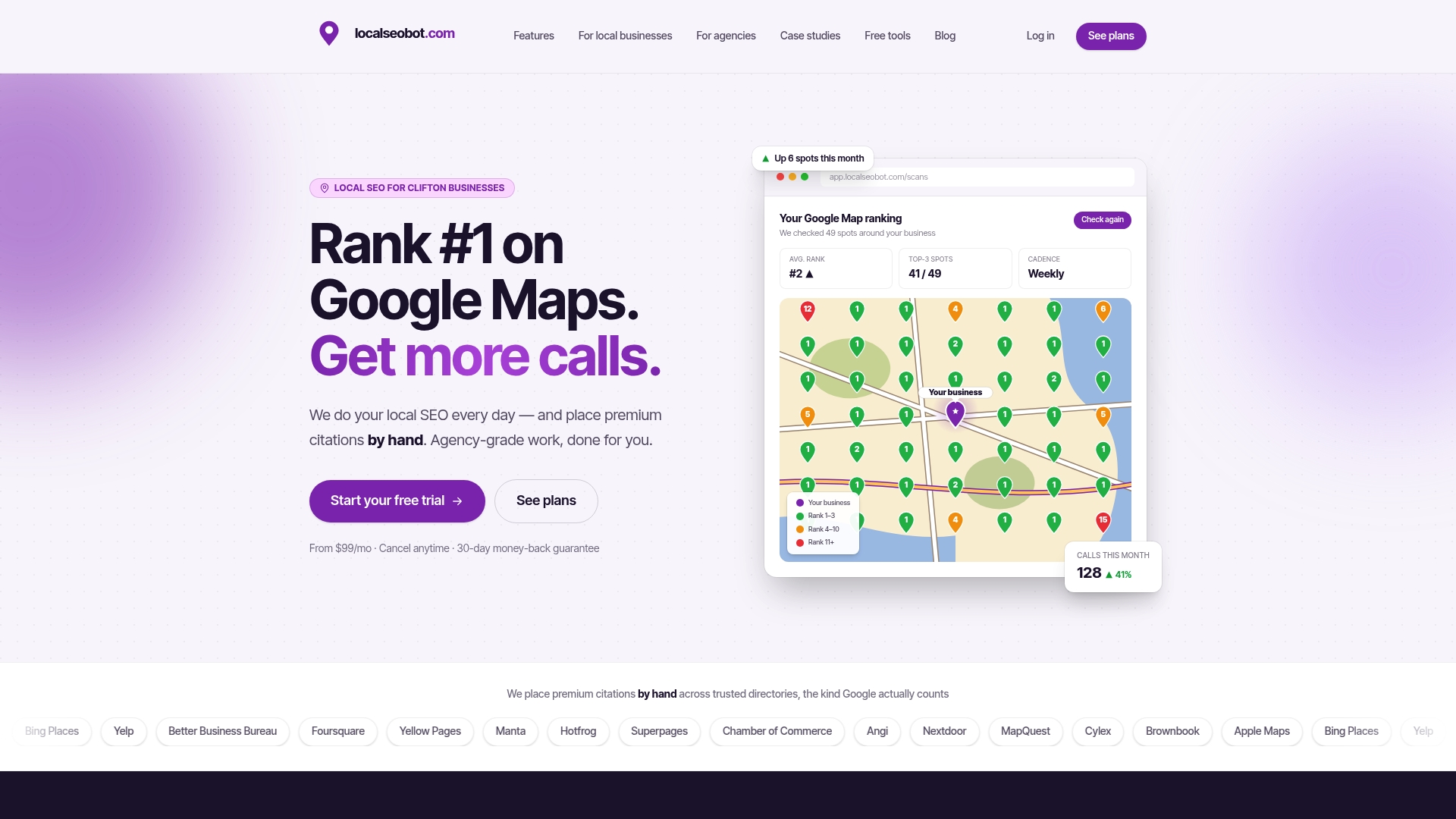
A rank tracking tool tracks your local pack position over time so you can see the impact of each listing fix as it happens, and some plans come with a 30-day money-back guarantee if your Google Maps ranking doesn’t improve. Check current plans and pricing to find the right fit, or review the Pro plan for agencies if you’re managing client locations at scale.
FAQ
What counts as local link building for Google Maps?
In this context, local link building means manually creating and maintaining accurate, consistent business citations on high-authority directories rather than acquiring backlinks from local websites. Consistent NAP data across directories supports the prominence factor in Google’s local ranking system.
How long does it take for citation changes to affect rankings?
Address and pin changes to your Google Business Profile can appear in about 10 minutes, but some edits take up to 30 days to fully propagate across Google’s index. Broader ranking shifts tied to citation consistency typically follow that same propagation window.
Should a service-area business list a street address?
No. Google’s guidance recommends that service-area businesses hide their street address and instead define coverage by city, zip code, or region. Listing a visible address when you don’t serve walk-in customers can create accuracy problems that hurt your profile.
How many citation directories should a small business target?
Quality matters more than volume: a handful of niche, high-authority directories relevant to your industry or region carries more weight than a long list of generic ones. Our Local Citation Finder helps identify which directories are worth prioritizing for a given business.
Does Local SEO Bot guarantee ranking improvement?
Yes, our plans include a 30-day money-back guarantee if your Google Maps ranking doesn’t improve after we complete citation building and listing management. Pricing for Foundation, Growth, and Pro plans is listed on our pricing page.
Sources
- Tips to improve your local ranking on Google - Google Business Profile Help
- Guidelines for representing your business on Google - Google Business Profile Help
- Manage your business address - Google Business Profile Help