Claim, Verify, and Win Apple Maps in 30–60 Days for Local Businesses
Published October 6, 2026
Claim, Verify, and Win Apple Maps in 30–60 Days for Local Businesses

Apple Maps SEO means claiming and completing your Apple Business place card so it surfaces in relevant local searches across Maps, Siri, and CarPlay. The single highest-impact move is claiming and verifying that listing first, since Apple states that claimed businesses get 30 percent more views once their place card is customized. Everything else, from categories to photos, builds on that foundation.
TL;DR:
- Claiming and verifying your Apple Business listing increases visibility by 30 percent and serves as the foundation for all other optimization efforts.
- Regularly updating core fields, categories, attributes, images, and Action links significantly improves search presence and engagement, especially for action-based conversions.
- Maintaining citation consistency, gathering reviews, and analyzing Insights helps improve relevance and identify local demand trends over time.
- Ads on Apple Maps are limited to the US and Canada, and should only be used as a supplement after organic optimization reaches a plateau.
- A structured 30 to 60 day plan focusing on claiming, optimizing, and ongoing maintenance ensures sustained visibility growth and can be outsourced for multi-location businesses.
Table of Contents
- Top Actions to Improve Apple Maps Visibility
- How Apple Maps Surfaces Businesses and Why It Matters
- Claiming, Verifying, and Structuring Your Apple Business Listing
- Optimizing Your Place Card: Categories, Attributes, Images, and Action Links
- Reviews, Citations, and Engagement That Actually Move the Needle
- Using Insights to Measure and Improve Your Apple Maps Performance
- Ads on Apple Maps: Eligibility, Setup, and When to Bother
- A Practical 30 to 60 Day Plan
- What Hands-On Listing Work Actually Delivers
- Where Apple Maps Fits in Your Local Marketing Priorities
- A Managed Alternative When You’d Rather Not Do This Yourself
- FAQ
- Sources
Top Actions to Improve Apple Maps Visibility
Once your listing is claimed, a short list of tasks drives most of the early gains. We recommend working through them in roughly this order over your first month.
- Claim and verify your business in Apple Business, Apple’s free platform for managing place cards.
- Set a precise primary category before touching anything else, since it determines which searches your card can match.
- Complete name, address, phone, hours, website, and accessibility attributes in full.
- Upload a logo, a cover photo, and a gallery that represents the space or product accurately.
- Publish a Showcase and plan to refresh it monthly to keep the card looking active.
- Add Action links for reservations, ordering, or booking so searchers can convert without leaving Maps.
- Run a citation audit to confirm your name, address, and phone number match across directories that feed Apple’s data.
- Ask customers for reviews and respond to the ones you get, good or critical.
- Check Insights regularly to see which fields and photos are earning taps.
- Test a small Apple Maps ad campaign only after the organic basics are in place and reach still falls short.
None of these steps requires technical skill, but they do require consistency and benefit greatly from structured training in local SEO techniques provided by resources like the Local SEO + AEO + GEO Academy. A place card that’s claimed once and ignored for a year tends to drift out of date on hours and photos, which quietly erodes the trust signals Apple and searchers both rely on.
How Apple Maps Surfaces Businesses and Why It Matters
Apple Maps ranks place cards using a mix of relevance to the search term, distance from the searcher, and engagement signals like taps and direction requests. A complete, accurate listing matches more searches, and a nearby business with a thin profile can still lose to a slightly farther one with better data.

What makes this worth the effort is reach. A single place card appears across Maps, Siri voice search, Messages, and CarPlay, so one optimization pass pays off in several places at once. Apple Maps has also kept expanding past the phone, including a web version launched in 2024 that extended its reach beyond the Apple device ecosystem.
Apple pulls business data primarily from Apple Business submissions, supplemented by third-party aggregators and partner data feeds. That mix means your own claimed listing carries more weight than secondhand data, but it also means stale citations elsewhere can still confuse the picture. Because fewer businesses actively manage their Apple Business presence compared to Google Business Profile, a well-maintained place card often faces less competition for the same search terms.
Claiming, Verifying, and Structuring Your Apple Business Listing
Getting set up starts with creating an Apple Business account, verifying your organization, and then claiming each physical location tied to it. Apple asks for proof that ties the account to a real, operating business before it hands over control of a place card.
- Sign up at Apple Business with an Apple ID tied to your organization, not a personal account you might lose access to later.
- Expect to confirm your legal entity name, business address, and tax details as part of Apple’s verification flow.
- Decide early how organization-level settings (like brand assets and user permissions) differ from location-level settings (like hours and local phone numbers), since multi-location businesses need both configured correctly.
- Assign at least one additional admin so verification and daily updates don’t depend on a single person’s access.
Verification can stall for a few predictable reasons: a business name that doesn’t match tax records exactly, a registered address that differs from the storefront address, or a suspended Apple ID. If verification sits pending for more than a few business days, checking that your legal name matches public records exactly is usually the fastest fix. For businesses managing several locations under one brand, claiming the organization once and adding locations incrementally avoids duplicate submissions that can create conflicting place cards later.
Optimizing Your Place Card: Categories, Attributes, Images, and Action Links
The fields you fill in after claiming determine how often your card shows up and how often it converts a view into a visit or a call. Apple expanded its categories and location attributes in 2026, giving businesses that once settled for a generic label room to pick something far more specific.
- Choose the most precise primary category available, then add relevant optional categories rather than stacking broad ones.
- Prioritize attributes that match how customers actually search, such as accessibility features, parking, or specific amenities.
- Keep your logo, cover photo, and gallery current, following Apple’s photo and text standards for place cards.
- Publish a Showcase, a temporary visual promotion module that runs for about 30 days, and treat it as a recurring monthly task rather than a one-time setup.
- Configure Action links for reservations, ordering, or booking wherever your business model supports them.
Pro Tip: Revisit your primary category every few months, since Apple’s 2026 expansion means a category that didn’t exist last year might now be a better fit.
Action links matter more than they might seem to. Apple’s partner marketing guidelines cite roughly a 31% uplift in clickthroughs when businesses configure them, which makes them one of the few place-card fields with a direct line to bookings rather than just visibility. Restaurants, salons, and anything appointment-based should treat this as a near-mandatory field, not an optional extra.
Reviews, Citations, and Engagement That Actually Move the Needle
Reviews surface directly on your Apple place card and factor into the engagement signals Apple uses to judge relevance. A thin or outdated review profile reads as a weak signal even if the rest of your listing looks polished.
- Ask for a review at the point of sale or right after service, when satisfaction is highest and the request feels natural.
- Send one short follow-up email or text if the customer doesn’t leave a review within a few days.
- Reply to every review with a short, specific response, thanking happy customers and addressing complaints without getting defensive.
- Run a citation audit across major directories to confirm your name, address, and phone number match exactly, since Apple draws on third-party data that can conflict with your claimed listing.
- If you find a duplicate or incorrect place card, report it through Apple Business rather than creating a second listing, which only adds to the confusion.
Citation consistency is tedious but mechanical work, and tools built for exactly this kind of audit, like a citation consistency analyzer, can save hours compared to checking each directory by hand.
Using Insights to Measure and Improve Your Apple Maps Performance
Apple Business includes an Insights dashboard with three modules worth checking regularly: search taps, place card views, and spatial insights, which map where direction requests originate.
Spatial insights data is aggregated by day, week (Sunday through Saturday), and month, giving you a heat map and a postal-code list of where your searchers actually come from. That’s useful beyond curiosity: knowing your top-origin ZIP codes lets you target review requests or local promotions where they’ll reach people already near you.
Track four numbers over time: place card views, direction requests, website taps, and calls. A Similar Locations module also lets you compare your place card taps against other businesses in your category and price point, which gives a rough sense of whether you’re underperforming peers before you assume the problem is your industry rather than your listing.

Ads on Apple Maps: Eligibility, Setup, and When to Bother
Advertising on Apple Maps is available only in the United States and Canada, so businesses outside those markets can’t yet buy placement even with a complete listing. Where it is available, setup happens inside Apple Business alongside your organic listing.
- Choose a monthly budget you control directly, and start or stop campaigns at any time without a long-term commitment.
- Watch for a first-time sign-up credit, which Apple sometimes applies to new advertisers.
- Treat ads as a supplement, not a replacement, for the organic checklist. A weak place card wastes ad spend just as easily as it wastes organic reach.
- Start with a small test budget for two to four weeks and watch direction requests and calls before committing more.
Ads make the most sense once your place card is fully built out and organic reach still falls short in a competitive category, not as a first step.
A Practical 30 to 60 Day Plan
Spreading this work across two months keeps it manageable without losing momentum.
- Days 1 through 7: claim and verify your Apple Business listing, complete every core field, and upload a logo and initial gallery.
- Weeks 2 through 4: set your primary and optional categories, fill in attributes, add Action links, and publish your first Showcase.
- Weeks 4 through 8: run a full citation audit, push out review requests to recent customers, and start checking Insights weekly.
- Ongoing: refresh your Showcase monthly, repeat citation cleanup quarterly, and test a small ads budget once the basics are solid.
A local SEO checklist tool can help track which of these steps are actually done versus assumed done, which matters once more than one person touches the listing.
What Hands-On Listing Work Actually Delivers
Manual, hands-on citation work, building listings one high-authority directory at a time rather than running an automated blast, tends to reduce the duplicate-listing problems that confuse Apple’s data sources. Such hands-on work can improve local visibility and customer calls, and a money-back guarantee reflects confidence that a cleaner citation base moves rankings.
Where Apple Maps Fits in Your Local Marketing Priorities
Retail stores, restaurants, and appointment-based businesses with heavy mobile traffic should treat Apple Maps as a near-term priority, since Action links and Showcases map directly onto how those customers already search and book. Service businesses with a defined delivery radius can treat it as a steady, medium-priority channel rather than an urgent one.
DIY management works fine for a single location with someone who can commit an hour a month. Once you’re juggling several locations, inconsistent citations across directories, or simply don’t have the staff hours, outsourcing the audit and upkeep work usually pays for itself faster than it costs.
— Local
A Managed Alternative When You’d Rather Not Do This Yourself
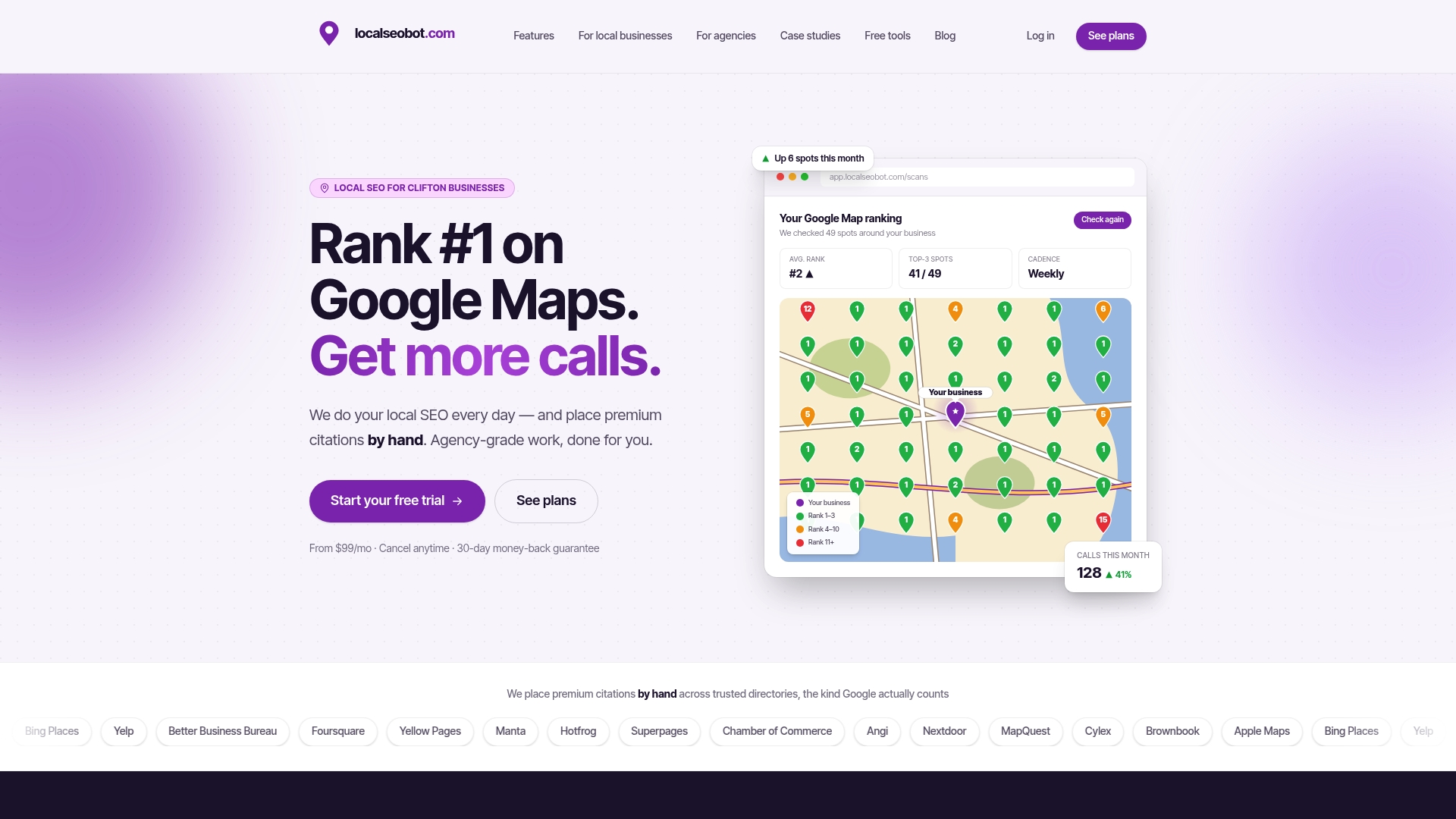
If the citation audits and ongoing upkeep above sound like more than your team has time for, that’s exactly the gap our Google Maps SEO services are built to close, with manual premium citation building instead of automated blasts, plus review generation and rank tracking through Maprank to show what’s actually moving.
- Multi-location brands get consistent citations and listings without assigning staff to chase each directory by hand.
- Businesses in competitive categories get review workflows and rank tracking running in the background instead of as an afterthought.
- Agencies get white-label access to resell the same managed workflow under their own name.
Our Foundation plan starts at $99 per month per location, with Growth and Pro tiers available as your needs scale. Check current pricing to find the right fit.
FAQ
Does Apple Maps do route optimization?
Apple Maps provides turn-by-turn navigation and real-time routing for drivers, cyclists, and pedestrians, similar to other major mapping apps. It is a consumer navigation feature rather than a business-facing route optimization tool for fleets or deliveries.
Is it true that Apple Maps will have ads?
Apple Maps already supports ads in the United States and Canada through Apple Business, where businesses set their own monthly budget and can start or stop campaigns anytime. Expansion to other markets hasn’t been announced.
What search algorithm does Apple Maps use?
Apple hasn’t published a detailed ranking algorithm, but its documentation points to relevance, distance from the searcher, and engagement signals like taps and direction requests as the main factors behind what surfaces in a search. A complete, accurate place card with specific categories tends to match more relevant searches.
Where does Apple Maps get business information from?
Apple Maps draws primarily from listings businesses claim and manage directly through Apple Business, supplemented by data from third-party aggregators and partner feeds. Claiming your own listing gives you more direct control over what searchers see than relying on secondhand data alone.