Audit First Directory Submissions for Local Businesses: 30–50 Listings
Published August 31, 2026
Audit First Directory Submissions for Local Businesses: 30–50 Listings

Manual directory submissions still move the needle in local search, but only when you treat them as premium citations tied to one canonical NAP record rather than a bulk-submission checklist. Your first move isn’t finding hundreds of directories. It’s locking your business name, address, and phone into a single master format, then auditing your Tier 1 platforms before you touch anything else. Fix duplicates and conflicting listings first; expand to aggregators and niche directories second.
TL;DR:
- Prioritizing direct claim and verification of Tier 1 platforms like Google Business Profile and Yelp offers more ranking impact than bulk-directory submissions.
- Consistency in NAP formatting and early correction of duplicates are more valuable than simply increasing citation volume across low-authority sites.
- Submissions to data aggregators such as Data Axle or Neustar Localeze significantly amplify the reach of corrections, but updates can take several weeks to influence rankings.
- Ongoing citation maintenance, including quarterly audits and prompt updates for changes, is crucial for preserving ranking stability and avoiding ranking drops.
- Effective review management and responses directly support local SEO by reinforcing positive signals and flagging suspicious reviews in a timely, organized manner.
Table of Contents
- What Are Directory Submissions in SEO, and Why Does Quality Matter?
- Which Directories Should You Claim First?
- How Do You Run a Manual Citation Audit and Submission Workflow?
- How Long Until Directory Submissions Affect Rankings?
- What Mistakes Should You Avoid, and How Often Should You Maintain Citations?
- How Directory Submissions Actually Influence Local Rankings
- How Do You Write Business Descriptions That Stay Consistent Across Directories?
- Are Free Directories Worth It, or Should You Pay for Listings?
- How Should You Monitor and Respond to Reviews on Directory Listings?
- What Actually Separates Good Citation Work From Wasted Effort?
- Get Your Citations Fixed Without the DIY Guesswork
- Where to Go Next for Citation Audits and Aggregator Access
- Sources
What Are Directory Submissions in SEO, and Why Does Quality Matter?
Manual local citation building means submitting and managing business listings, name, address, phone, category, and description, across directories by hand, with NAP consistency as the goal rather than an afterthought. This is different from generic web directory link building. In local SEO, a citation is a trust signal: Google, Bing, and increasingly AI-driven answer engines cross-reference these listings to verify that your business exists, operates where you say it does, and answers the phone at the number you list.
Structured citations (formatted fields on platforms like Yelp or Data Axle) and unstructured mentions (a chamber of commerce write-up, a local news feature) both feed this verification layer. Local citations function as a trust layer that AI systems scrape alongside maps and directories, so inconsistent data doesn’t just hurt your map pack ranking, it can knock you out of AI-generated local recommendations entirely.
Volume alone doesn’t win here. A few things matter more than a long list:
- Industry-specific directories (think legal or medical verticals) carry more relevance weight than generic listing sites.
- One inconsistent phone number across 40 directories does more damage than 40 correct listings do good.
- Aggregator accuracy determines how fast and how far your corrections spread.
Which Directories Should You Claim First?
Not every listing deserves equal attention. Working through directories in the wrong order wastes time and can actually create new conflicts if aggregators push outdated data back onto platforms you just fixed.
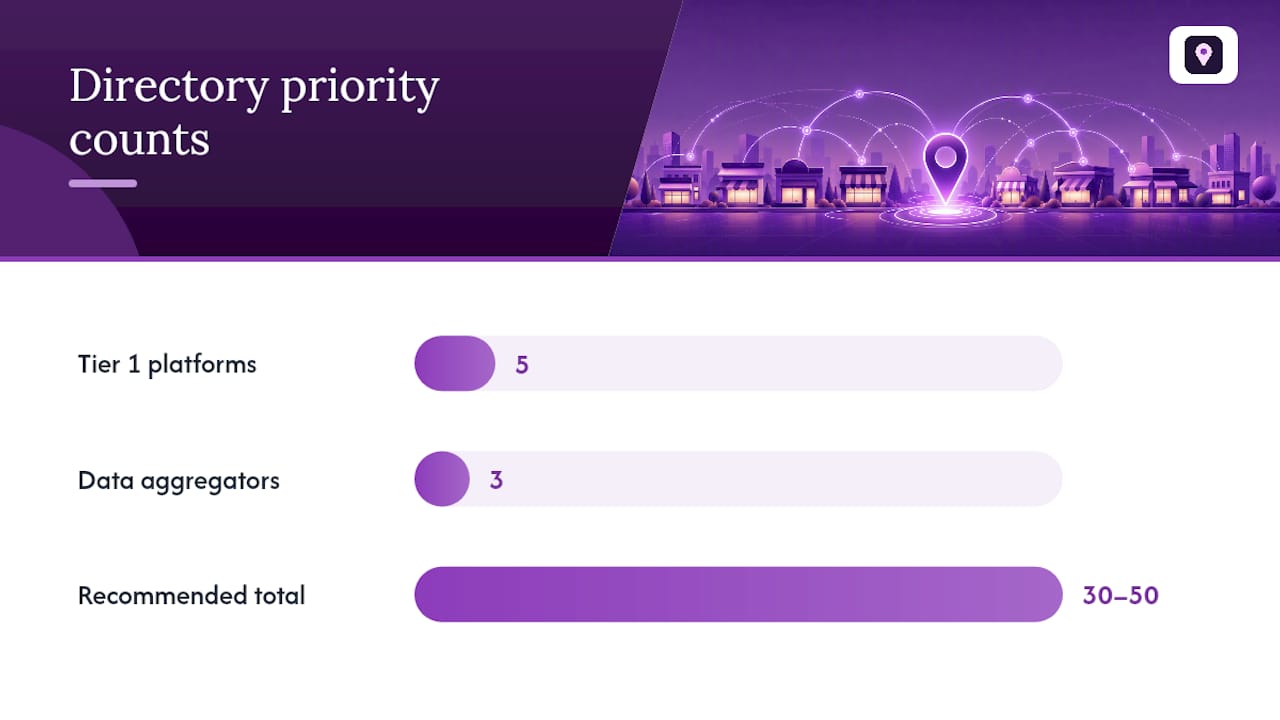
- Data aggregators. Submit your canonical NAP to Data Axle, Neustar Localeze, and Foursquare. These feed hundreds of smaller directories downstream, so one clean submission here does more work than fifty scattered manual entries elsewhere.
- Niche and local directories. Once Tier 1 and aggregators are locked, add industry-specific sources (a lawyer directory, a contractor trade association) and regional ones (your local chamber of commerce). A baseline of 30 to 50 quality listings covering these three tiers outperforms hundreds of generic submissions.
Pro Tip: Claim Tier 1 platforms yourself even if you also use an aggregator service. Some platforms, Yelp especially, ignore aggregator overwrites entirely and require direct account verification to reflect changes.
The Local Citation Finder is built for exactly this triage. It scans your existing footprint and flags which tier you’re missing before you waste hours guessing.
How Do You Run a Manual Citation Audit and Submission Workflow?
A clean process protects you from the single biggest cause of citation problems: doing the work out of order.
- Build a NAP master document. Decide once how you’ll format your suite number, street abbreviations, and phone number, then treat that document as the single source of truth for every submission.
- Run an audit. Combine a citation tool scan with manual searches of your business name plus city to surface duplicates, old addresses, and abandoned profiles. Duplicate listings split review equity and confuse ranking algorithms, so merging or removing them restores signal strength.
- Claim and verify Tier 1 listings yourself. This step can’t be outsourced to an aggregator feed. Verify ownership directly on each platform.
- Submit aggregator corrections. Push your NAP master to Data Axle, Neustar Localeze, and Foursquare, then follow up to confirm downstream sites picked up the change.
- Add niche directory listings manually. Write out descriptions for each relevant vertical or regional directory rather than pasting the same boilerplate everywhere.
This order isn’t arbitrary. An audit-first approach that fixes the worst errors on major platforms before touching aggregators consistently outperforms bulk submission tactics, mainly because bulk submissions tend to bake in the same phone number typo or old suite number across every single listing.
A few things trip up even careful teams during QA:
- Screenshot or save verification confirmations; some platforms revoke ownership if you can’t prove the claim later.
- Recheck aggregator-fed sites two to three weeks after submission, not immediately.
- Never leave a “pending” status untouched for more than a month.
How Long Until Directory Submissions Affect Rankings?
Direct edits to Google Business Profile often show up within days. Aggregator-fed corrections move slower. Data pushed through Data Axle or Neustar Localeze can take several weeks to propagate as downstream sites re-crawl and update their records, so don’t expect a citation cleanup to show results overnight.
What to track: Google Business Profile search impressions and call volume, your Google Maps ranking position across a geo-grid, and overall visibility scores. Movement in the map pack typically lags citation cleanup by several weeks to a couple of months, not days.
If you’ve fixed Tier 1 listings and submitted aggregator corrections but see zero movement after two full months, something else is likely wrong. Category selection, review volume, or on-page signals are worth checking next. If you’re working with a provider, this is the point where a money-back guarantee should mean something.
What Mistakes Should You Avoid, and How Often Should You Maintain Citations?
The biggest trap is paying for services promising thousands of directory submissions fast. Bulk services rarely verify data accuracy, and a single wrong digit copied across hundreds of low-value sites creates more cleanup work than it saves.
Watch for these specific failure points:
- Duplicate listings from old business names, moved locations, or previous owners.
- Formatting inconsistencies (Street vs. St., Suite 100 vs. Ste. 100) that look identical to a human but read as conflicting data to an algorithm.
- Unverified third-party edits, some directories let users “suggest” changes that overwrite your accurate data without your approval.
Pro Tip: Set a recurring calendar reminder for quarterly audits of your major listings, and check aggregator data at least twice a year. Update every platform immediately whenever your core NAP changes, moving, renaming, or a new phone line, rather than waiting for the next scheduled review.
The Citation Consistency Analyzer can flag drift between scheduled audits, which matters because small inconsistencies tend to compound quietly until a ranking drop forces you to notice.
How Directory Submissions Actually Influence Local Rankings
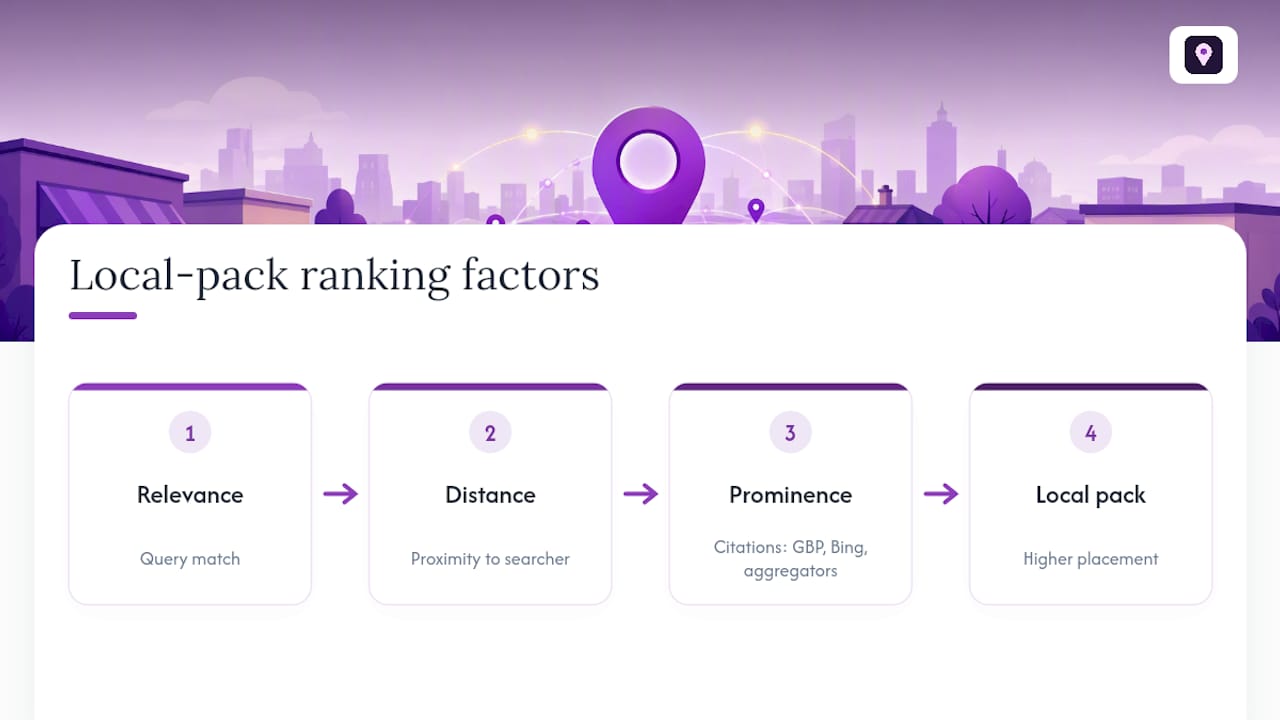
Google’s local algorithm weighs three core factors: relevance, distance, and prominence. Citations feed prominence directly. When your NAP matches exactly across Google Business Profile, Bing Places, and major aggregators, Google gains confidence that your business data is real and stable, which supports higher placement in the local pack.
The effect compounds rather than acting as a single ranking switch. One accurate listing on Yelp does little alone. Multiple accurate, consistent listings spanning Tier 1 platforms, aggregators, and relevant niche directories build a pattern of confirmation that’s harder for any algorithm to ignore. This is also why a single wrong address propagated across fifty directories can suppress rankings even when your website and reviews look strong; the algorithm sees conflicting proof of where you actually operate.
Citations also influence review visibility indirectly. A consolidated, non-duplicated listing concentrates your review count and rating in one place instead of splitting it across three versions of the same business. That concentration itself affects prominence, since review volume and rating are separate ranking inputs Google weighs alongside citation accuracy.
None of this replaces on-page SEO or review generation. It’s a foundation layer, get it wrong and everything built on top of it, ads, content, reviews, performs below its potential.
How Do You Write Business Descriptions That Stay Consistent Across Directories?
Every directory asks for a business description, and the temptation is to write one version and paste it everywhere. That works fine for consistency but poorly for relevance, since different directories serve different search contexts and audiences.
Start with a locked 150 to 200 word “master description” that covers what you do, who you serve, and your primary service area in plain language, no marketing fluff, no keyword stacking. This becomes your base text, similar in spirit to the NAP master you built for contact details.
From there, adapt length and emphasis per platform rather than rewriting from scratch:
- Google Business Profile: Lead with your primary service and city; Google’s algorithm weighs the opening sentence more heavily than the rest.
- Yelp: Slightly more conversational tone works better since Yelp’s audience browses more casually.
- Niche directories: Swap general language for the vertical’s terminology (a roofing directory expects “GAF certified,” not “quality materials”).
Keep your business name, address format, and phone number identical across every version, only the descriptive language flexes. And resist listing every service you offer in every description; a directory description that tries to cover everything ends up ranking for nothing specific.
Are Free Directories Worth It, or Should You Pay for Listings?
Free directories dominate by sheer number, but their SEO value varies enormously depending on domain authority and how tightly Google trusts the platform. A free Google Business Profile listing carries far more ranking weight than a free listing on an obscure generic directory nobody has heard of.
Paid directories fall into two honest categories: legitimate industry associations (a paid membership in a trade organization that includes a directory listing) and pay-to-play generic sites that promise ranking benefits they can’t actually deliver. The first category is often worth the cost because the directory itself carries topical authority. The second rarely justifies the price tag.
A useful rule: pay for a listing when the directory serves real customer traffic or industry credibility, not because a salesperson claims it will boost your rankings. Local citations remain valuable for small businesses largely because of this trust and referral effect, not because directory volume alone moves rankings.
Free Tier 1 platforms, Google Business Profile, Bing Places, Apple Business Connect, should always come first regardless of budget. Paid niche directories come next, and only after your free foundation is solid. Spending on paid generic directory packages before fixing free Tier 1 listings is backwards, and it’s one of the more common budget mistakes small businesses make.
How Should You Monitor and Respond to Reviews on Directory Listings?
Reviews live on the same platforms as your citations, and neglecting them undercuts the ranking benefit you just built through accurate NAP data. Google Business Profile, Yelp, and Facebook each surface review counts and ratings as separate signals from citation accuracy, but the two work together.
Set a weekly check across your top three to five review platforms rather than waiting for a customer to mention a bad review sat unanswered. Most review platforms send email or app notifications, but don’t rely solely on those, algorithms occasionally bury notifications during high-volume periods.
When responding, keep replies specific rather than generic. A templated “thank you for your feedback” reads as automated and doesn’t reassure future customers reading the thread. Address the specific service mentioned, and for negative reviews, acknowledge the issue plainly before explaining what you did or will do differently.
Negative reviews on directories with weak moderation sometimes violate platform policy (fake reviews, competitor sabotage, reviews from someone who was never a customer). Flag these through the platform’s official reporting process rather than arguing in the public reply thread. Document your flagging attempts; some platforms take weeks to act, and persistence matters more than a single report.
What Actually Separates Good Citation Work From Wasted Effort?
Most local SEO advice treats citations as a checkbox: submit to enough directories and rankings follow. That framing is outdated and, honestly, a little lazy. The businesses that see real movement in Google Maps rankings are the ones that treat their NAP master document with the same seriousness they’d give their tax filings, because that’s essentially what it is: the single record every algorithm and AI system checks before trusting you.
What’s underappreciated is how much duplicate cleanup matters compared to new submissions. Adding a new niche directory feels productive. Merging three duplicate Yelp listings from a decade of business changes feels tedious. The tedious work is almost always the higher-leverage move, because duplicates actively confuse ranking systems rather than simply failing to help them.
Local SEO Bot builds its entire approach around this distinction: manual premium citations across high-authority directories, tied to one NAP source of truth, audited quarterly rather than submitted once and forgotten. Clients have reported meaningful jumps in Google Maps position and increased customer calls after this cleanup and tiered submission process, results that track closely with the audit-first pattern described throughout this guide. Because the approach is deliberate rather than automated bulk submission, Local SEO Bot backs it with a 30-day money-back guarantee if a business doesn’t see a ranking increase.
— Local
Get Your Citations Fixed Without the DIY Guesswork
Doing this manually, tier by tier, aggregator by aggregator, takes real hours most small-business owners don’t have between running the actual business. Local SEO Bot handles the manual premium citation work directly: locking your NAP master, claiming Tier 1 platforms, submitting aggregator corrections, and picking niche directories that actually serve your customers, all tracked with quarterly audits instead of a one-time submission and a shrug.
If you’d rather check your own footprint first, the Local Citation Finder and Citation Consistency Analyzer are free starting points that show you exactly where duplicates and formatting conflicts live before you spend a dollar. When you’re ready for the manual, hands-on version of everything covered here, the Local Citations Services page walks through what’s included and backs it with the same 30-day money-back guarantee mentioned above. Start with an audit, then decide how much of the cleanup you want to hand off.
Where to Go Next for Citation Audits and Aggregator Access
For deeper reading and hands-on tools, LocaliQ’s citation guide breaks down Tier 1 priority in more depth, while Moz’s overview covers the 30 to 50 listing baseline. For multi-location businesses, Local SEO Bot’s guide on NAP management across locations and the beginner-friendly types of local citations guide fill in the gaps this article didn’t have room for.
Sources
- WordStream — Local citations guide
- Moz — Local citations overview
- ListingBott — Local business listing management 2026