FTC Review Guidelines: What Local Businesses Must Know
Published October 31, 2026
FTC Review Guidelines: What Local Businesses Must Know

The FTC’s review guidelines come from two sources: the Endorsement Guides (16 CFR Part 255) and the Consumer Reviews and Testimonials Rule (16 CFR Part 465), which has been in effect since October 21, 2024. In practice, you can ask every customer for a review, you can reply to any review, and you can offer a thank-you for honest feedback. You cannot fake reviews, buy positive ones, hide your ties to a reviewer, or pressure people into taking down negative ones.
This guide walks through what each rule says, what it means for a business collecting Google reviews, and a checklist you can apply this week. It is general information, not legal advice. If you are unsure about a specific practice, such as a rewards program or a review-gating setup, ask an attorney who handles advertising law.
TL;DR
- The Reviews Rule took effect on October 21, 2024, and the FTC can seek civil penalties for violations.
- Fake reviews, bought reviews, undisclosed insider reviews, and review suppression through threats are all prohibited.
- You may ask all customers for reviews and may offer incentives, as long as the incentive is not tied to a positive review and is disclosed where required.
- Staff, owners, and relatives who review your business must disclose the connection, and managers must tell them to.
- Write review requests that go to everyone, reply honestly to criticism, and keep records of how you collect reviews.
Table of Contents
- The two layers: Endorsement Guides and the Reviews Rule
- What the Reviews Rule prohibits
- Can you ask for reviews? Yes, and here is how
- Incentives: what is allowed
- Prohibited practices at a glance
- What happens if you get it wrong
- A compliance checklist for local businesses
- Replying to negative reviews without crossing the line
- Our perspective
- Keeping reviews on track without the manual work
- FAQ
- Sources
The two layers: Endorsement Guides and the Reviews Rule
People search for “FTC review guidelines” and usually find two different things mixed together. They work differently, so it helps to separate them.
The Endorsement Guides are administrative interpretations of Section 5 of the FTC Act. The Guides themselves say they help advertisers and endorsers comply voluntarily, but practices inconsistent with them may lead to enforcement under the FTC Act. The FTC finalized an updated version in June 2023, the first revision since 2009, to reflect how reviews and endorsements work online.
The Consumer Reviews and Testimonials Rule is a binding trade regulation. The FTC finalized it in August 2024 to curb certain unfair or deceptive uses of reviews, and it became effective on October 21, 2024. Because it is a rule, the FTC can seek civil penalties for violations.
| Endorsement Guides (16 CFR 255) | Reviews Rule (16 CFR 465) | |
|---|---|---|
| Type | Guidance on how the FTC Act applies | Binding trade regulation |
| Focus | Honesty, disclosure of material connections, typical results | Fake reviews, purchased reviews, insider reviews, review suppression, fake social media indicators |
| Penalty route | Enforcement under Section 5 of the FTC Act | Civil penalties for knowing violations |
| Who it mostly targets | Advertisers and endorsers | Business conduct, not ordinary consumers |
For a local business, the useful reading is simple: the Guides tell you how to be honest in the way you use endorsements, and the Rule draws bright lines around the worst behavior.
What the Reviews Rule prohibits
The Rule covers several categories. Here is each one in plain terms.
Fake or false reviews
Under 16 CFR 465.2, a business cannot write, create, or sell reviews or testimonials that materially misrepresent the reviewer’s existence, use of the product, or actual experience. It also cannot buy a review or share a testimonial it knew or should have known was materially false.
That includes:
- Reviews you write yourself and post under a made-up name.
- Reviews written by a vendor for people who never used your service.
- Copying reviews from another business or another location and posting them as yours.
- Reviews generated by AI that present a fictional customer experience as real.
The last point matters for anyone using automation. An AI tool that drafts a reply to a real customer is fine. A tool that invents a customer and a story is not.
Buying positive or negative reviews
The FTC’s Q&A guidance says businesses may offer incentives for reviews as long as nothing requires the review to be positive. It also states that businesses cannot pay for 5-star reviews on third-party platforms, even with a disclosure added. If you have ever seen an offer of “$10 off for a 5-star review,” that is the pattern the Rule targets.

The same logic applies in reverse. Paying someone to leave a negative review of a competitor is also prohibited.
Insider reviews
Owners, employees, and relatives often have good things to say about a business. Under 16 CFR 465.5, officers or managers must disclose material connections in their own reviews, and businesses must disclose insider testimonials when required. If a manager solicits reviews from employees, agents, or immediate relatives, the manager must instruct them to disclose the relationship.
A manager violates the section when solicited reviews from employees or relatives lack disclosure and the manager encouraged nondisclosure, failed to instruct disclosure, or failed to fix a known omission.
Practical translation: if your cousin leaves a review, either skip the request or tell them to say they are related. Better still, keep family and staff out of your review count.
Suppressing negative reviews
The FTC’s guidance says generalized solicitations are allowed. What is not allowed is using unfounded legal threats, physical threats, intimidation, or knowingly or recklessly false accusations to get reviews removed or changed. It also prohibits company-controlled sites from misrepresenting that they present independent reviews.
That last item catches businesses that run a “reviews” page on their own website and filter it to show only five-star feedback while implying it is a neutral rating. If you display reviews on your site, call them what they are, for example “selected customer reviews,” and do not present a curated set as a complete independent picture.
If you want to challenge a review that breaks a platform’s policy, the legitimate route is the platform’s own reporting process. Our guide on Google review rules for businesses covers what Google actually removes and how to flag it.
Can you ask for reviews? Yes, and here is how
The most common worry we hear is whether asking customers for reviews is allowed at all. It is. The FTC’s guidance permits generalized review solicitations to past customers, and simply hosting reviews on your website is also fine.
What keeps a request compliant is that it is neutral. Compare these two messages:
| Compliant | Risky |
|---|---|
| “Thanks for choosing us. If you have a minute, we would appreciate an honest review on Google.” | “If you loved our service, leave us a review on Google. If not, reply to this email instead.” |
| Sent to every customer after a job | Sent only to customers who scored high on a private survey |
| Same link and wording for everyone | Unhappy customers diverted away from the public review page |
The right-hand column is often called review gating: screening customers by sentiment and only sending happy ones to the public platform. It also conflicts with Google’s own policies, which prohibit selective solicitation of positive reviews. Whether a specific gating setup crosses the FTC’s line depends on the facts, so the safe design is to send the same request to everyone.
For templates that stay neutral, see our walkthrough of FTC-compliant review request emails.
Incentives: what is allowed
Incentives are the gray area most owners ask about. The short version from the FTC’s Q&A:
- You may offer an incentive for a review if you do not condition it on the review being positive.
- Failing to disclose an incentive can still violate the FTC Act.
- You may not pay for 5-star reviews on third-party platforms, with or without a disclosure.
A workable approach for a local business is to avoid review-linked rewards altogether. A flat entry into a monthly draw for anyone who leaves feedback, regardless of rating, is a closer call and should be run past counsel. Skipping incentives costs you nothing legally and removes the question.
A related rule in the Guides: advertisers need adequate substantiation for claims made through endorsements, under 16 CFR 255.2. If a testimonial describes unusual results, such as a law firm client describing a large settlement, the ad should clearly and conspicuously disclose what consumers generally achieve.
Prohibited practices at a glance
The categories above show up in practice like this. If you want another overview of how prohibited review practices connect to search visibility, this article on review practices the FTC rule prohibits goes through them from an SEO angle.
- Writing your own reviews. Prohibited.
- Buying reviews from a vendor or a “review club.” Prohibited.
- Paying for 5-star ratings on any third-party platform. Prohibited, even with disclosure.
- Staff or family reviews without disclosure. Prohibited when the connection is material and not disclosed.
- Legal threats to remove honest negative reviews. Prohibited when unfounded.
- Generalized request to all customers. Allowed.
- Replying publicly to criticism. Allowed, and good practice.
- Reporting policy-violating reviews to the platform. Allowed.
What happens if you get it wrong
The FTC says courts may impose civil penalties for knowing violations, and that staff guidance is not a safe harbor: some practices may also violate the FTC Act on top of the Rule. Ordinary consumers cannot be held liable under the Rule, which primarily targets business conduct.
The dollar figure is not small. In December 2025 the FTC sent warning letters to ten companies and noted civil penalties of up to $53,088 per violation. That amount is adjusted periodically for inflation, so check the FTC’s current figure. The letters were not formal findings of violations, but they show the agency is paying attention to fake reviews and incentives for 5-star ratings.
For a small business, the practical risk is less about a headline fine and more about a complaint, a letter, or a platform removing your reviews and suspending your listing. Clean practices avoid all three.
A compliance checklist for local businesses
Use this list as a quarterly review:
- Audit your Google reviews. Look for reviews from staff, relatives, or vendors. Flag anything you cannot tie to a real customer.
- Standardize your request. Same message, same link, every customer.
- Remove rating conditions. No wording that links rewards, discounts, or favors to a positive rating.
- Tell staff the rule. Employees should disclose their employment if they post, and managers should instruct them to.
- Check your website. If you show reviews, do not imply they are a complete independent sample when you have filtered them.
- Handle negatives in public. Reply, fix the problem, and ask for removal only through the platform’s process.
- Keep records. Save your request templates, send dates, and any vendor contracts. They show how you collect reviews.
- Vet vendors. Ask any review provider how they source reviews, and walk away from anyone promising a set number of 5-star ratings.
Replying to negative reviews without crossing the line
Suppression is the part of the Rule that surprises owners most, because the instinct after a bad review is to make it disappear. The compliant path is to respond. A calm, specific reply shows future customers how you handle problems, and it is entirely allowed.
Keep replies factual: acknowledge the issue, state what you will do, and offer an offline channel. Do not threaten legal action unless you have a real legal basis, and do not accuse the reviewer of lying without evidence. Our negative review response examples and the guide on how to respond to negative reviews have wording you can adapt. If a review plainly violates Google’s policies, such as spam or a conflict of interest, the Google review removal page explains the reporting process.
Our perspective
We build software that touches reviews every day, so we have a stake in getting this right. Our view is that the Rule did not change what good review practice looks like. It made the downside of cutting corners concrete.
Three things we hold to:
- Automation should handle real interactions only. Sending requests to real customers and drafting replies to real reviews is useful work. Manufacturing feedback is not, and no tool should offer it.
- Neutral requests are also the better strategy. A steady flow of honest reviews from all customers, including the occasional three-star one, looks more credible to shoppers and to Google than a wall of perfect scores.
- Human oversight matters. Replies to sensitive reviews, such as a safety complaint or a legal dispute, deserve a person’s judgment before they go public.
If your current review process depends on screening, rewards for stars, or a vendor you cannot explain, fix that first. Everything else in local SEO builds on trust, and reviews are where customers check it.
— Devyn H
Keeping reviews on track without the manual work
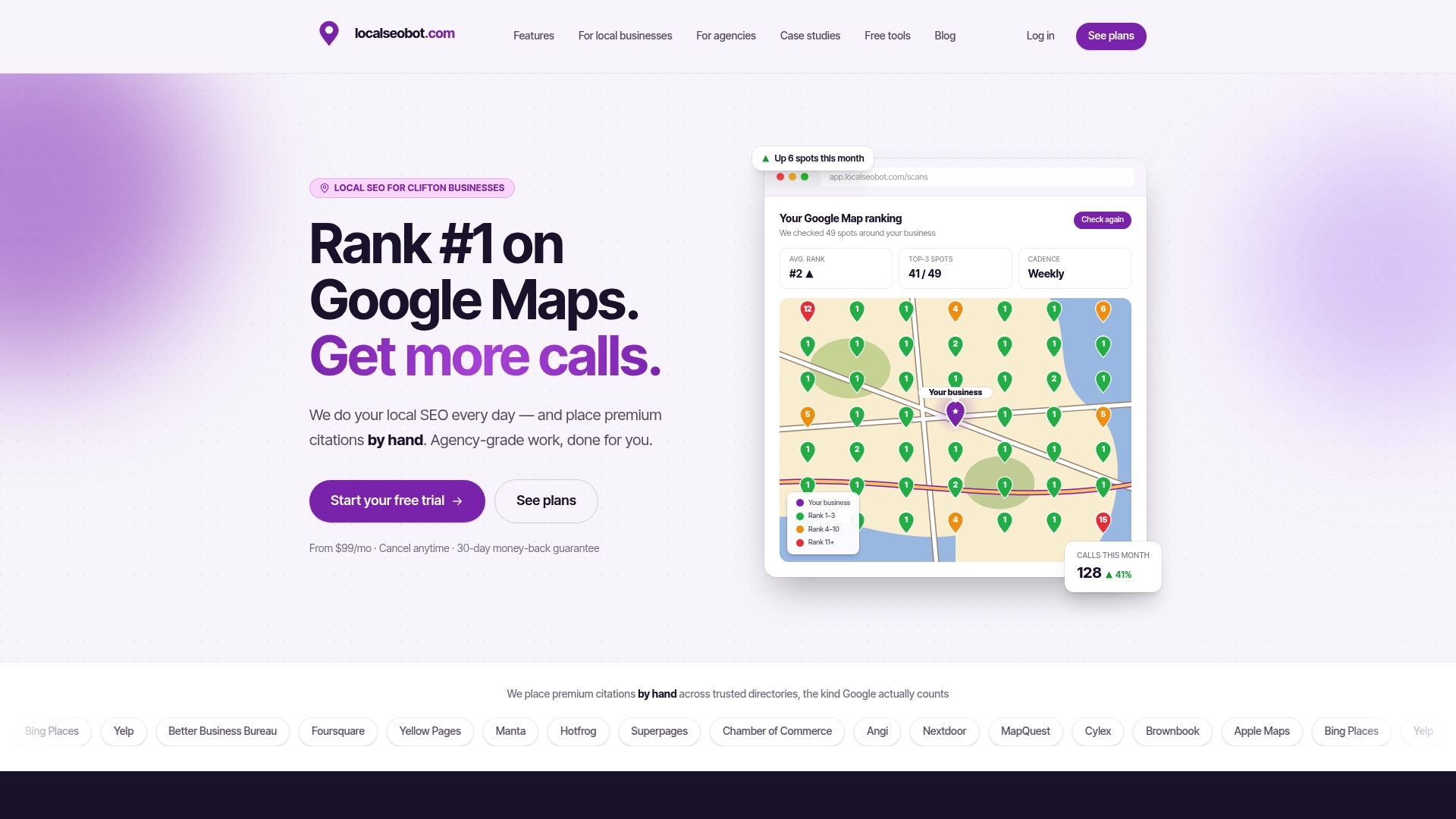
Once your process is compliant, the challenge is consistency: asking every customer, replying on time, and tracking what it does for your Maps rankings. Local SEO Bot handles review requests, AI-drafted replies to real reviews, Google Business Profile posting, and map grid rank tracking for each location, with plans starting at $99 per month per location. You can see the Foundation and Growth plans or read how our Google Business Profile reviews management tool works. We also offer a 30-day money-back guarantee if you do not see a ranking increase.
Agencies managing reviews for clients can look at the Pro plan and white-label options.
FAQ
Are the FTC Endorsement Guides legally binding?
The Guides are interpretations of Section 5 of the FTC Act rather than a regulation. The FTC says they help advertisers comply voluntarily, but practices inconsistent with them may still lead to enforcement. The separate Reviews Rule is binding and carries civil penalties.
Can I offer a discount for leaving a Google review?
The FTC allows incentives for reviews only when they are not conditioned on the review being positive, and an undisclosed incentive can still violate the FTC Act. Paying for 5-star reviews on third-party platforms is prohibited even with a disclosure. The simplest safe choice is to skip rewards and just ask.
Do my employees have to disclose that they work for me when they review my business?
Yes, when the connection is material. Under 16 CFR 465.5, a manager who solicits reviews from employees or relatives must instruct them to disclose the relationship, and cannot encourage them to leave it out. Many owners avoid the issue by not asking staff or family to review at all.
Can I ask a customer to remove a negative review?
You can reply publicly, resolve the problem, and politely ask if the customer would update their review. You cannot use unfounded legal threats, intimidation, or knowingly false accusations to force a change. For policy-violating reviews, use Google’s reporting process instead.
Can regular consumers be fined under the Reviews Rule?
No. The FTC states that ordinary consumers cannot be held liable under the Rule, which is aimed at business conduct. The risk sits with the businesses that write, buy, or suppress reviews.
Sources
- eCFR: 16 CFR 255.0, Purpose and definitions
- eCFR: 16 CFR 255.2, Consumer endorsements
- FTC: Updated Advertising Guides press release, June 2023
- Federal Register: Trade Regulation Rule on the Use of Consumer Reviews and Testimonials
- eCFR: 16 CFR 465.2, Fake or false consumer reviews
- eCFR: 16 CFR 465.5, Insider consumer reviews
- FTC: The Consumer Reviews and Testimonials Rule, Questions and Answers
- FTC: Warning letters to businesses on the Consumer Review Rule, December 2025