Best White Label SEO Software for Agencies in 2026
Published August 12, 2026
Best White Label SEO Software for Agencies in 2026

For agencies and SaaS providers that need genuine white-label depth plus local SEO muscle, Localseobot is the recommended platform to pilot first. It combines manual premium citation building with a fully branded agency dashboard, geo-grid rank tracking, and automated Google Business Profile tools — a combination most reporting-first platforms don’t offer.
Here’s the shortlist by role:
- Local SEO specialist with branded portal: Localseobot — manual citations, geo-grid tracking, white-label dashboard, review automation, and a 30-day money-back guarantee
- AI reporting-first platform: SE Ranking — strong white-label reporting suite with business-outcome framing and AI-assisted content tools
- Enterprise-grade client portal: AgencyAnalytics — deep client portal customization, custom domain, and multi-channel reporting automation
- Backlink and audit powerhouse: Ahrefs — authoritative data for agencies that lead with technical audits and link analysis
- Local citation and GBP management: BrightLocal — citation tracking, GBP audits, and review management built for local-first agencies
- AI visibility and GEO tracking: LLM Pulse — monitors brand mentions across AI answer engines (ChatGPT, Perplexity, Gemini) alongside traditional rank tracking
Start with a trial of Localseobot’s white-label local SEO software if your agency manages local clients and needs citation quality that automated tools can’t match. The comparison table below breaks down each platform across the dimensions that matter most for reseller decisions.
Key Takeaways
The strongest white-label SEO platforms in 2026 combine genuine branding depth (custom domain, client portal, no vendor footprint) with accurate, frequently refreshed data — and for local SEO agencies, manual citation quality remains the clearest differentiator between platforms that move rankings and platforms that just report them.
| Point | Details |
|---|---|
| White-label depth is the first filter | Prioritize platforms where no vendor branding appears in any client-facing screen, including the portal, reports, and email delivery. |
| Data accuracy requires active verification | Cross-check rank data against Google Search Console during every trial; discrepancies that appear in a pilot will persist in production. |
| Per-location pricing suits local agencies best | Billing that scales with client locations keeps costs predictable and margins stable as you grow. |
| Manual citations outperform bulk automation | Automated citation tools submit to hundreds of directories; manual building on high-authority directories produces measurably better Google Maps ranking outcomes. |
| Localseobot is the recommended pilot for local SEO agencies | Geo-grid tracking, manual citation building, and a 30-day money-back guarantee make it the lowest-risk starting point for agencies focused on Google Maps visibility. |
Table of Contents
- How does white label SEO software compare across core dimensions?
- Detailed reviews: which platform fits your agency?
- How do you choose the right white-label SEO platform?
- What do white-label SEO pricing models actually cost?
- How should you test a white-label SEO platform before committing?
- When should you adopt white-label SEO software vs. other options?
- How Localseobot’s white-label local SEO approach works
- Which platform should you pilot first, by agency profile?
- Localseobot gives agencies a white-label local SEO engine worth piloting
- Sources
How does white label SEO software compare across core dimensions?
The table below covers the platforms most relevant to agencies and SaaS resellers. Columns reflect the buying criteria that determine whether a platform actually supports a branded client experience — not just whether it slaps a logo on a PDF.
| Platform | Best for | White-label depth | Reporting automation | Data sources | Integrations/API | Pricing model | AI features | Local SEO features | Security/compliance |
|---|---|---|---|---|---|---|---|---|---|
| Localseobot | Local SEO agencies, multi-location resellers | Full branded portal, custom domain, agency dashboard | Automated monthly reports, PDF/HTML | Manual citations, geo-grid rank tracking, GBP data | API access, multi-location management | Per-location/month | AI review replies, automated GBP posting | Citation building, GBP optimization, review automation | Data ownership, GDPR-aware |
| SE Ranking | Mid-size agencies needing full SEO suite | White-label reports, client portal, custom domain | Scheduled PDF/HTML reports, white-label dashboards | Rank tracking, backlinks, site audit, GSC/GA | API, Zapier, integrations | Per-seat, tiered | AI content tools, keyword clustering | Local rank tracking | SOC2 in progress |
| AgencyAnalytics | Agencies prioritizing client-facing dashboards | Full client portal, custom domain, white-label emails | Drag-and-drop report builder, automated scheduling | 80+ channel integrations, GSC, GA4, social | API, Zapier, direct integrations | Per-campaign/client | AI report summaries | Local SEO widgets | GDPR, SOC2 |
| Ahrefs | Technical SEO and link-building agencies | White-label reports (limited portal depth) | Scheduled reports, PDF export | Industry-leading backlink index, rank tracking, audits | API (advanced plans) | Per-seat | AI content grader | Basic local features | Enterprise-grade |
| BrightLocal | Local-first agencies and franchises | White-label reports, client access | Automated local reports, scheduled delivery | Citation tracking, GBP audits, review data | API, limited integrations | Per-location or per-report | Limited | Citation building, GBP management, review monitoring | GDPR |
| Semrush | Full-service agencies needing broad data coverage | White-label PDF reports, client portals via Agency Growth Kit | Scheduled reports, My Reports builder | Largest keyword database, backlinks, site audit, traffic | API, integrations | Per-seat, tiered | AI writing assistant, content optimization | Local SEO add-on | SOC2, GDPR |
| WebCEO | Agencies reselling SEO as a managed service | Full white-label platform, custom domain, client logins | Automated report scheduling, branded templates | Rank tracking, audits, backlinks, social | API, white-label API | Per-seat, tiered | AI content suggestions | Local rank tracking | GDPR |
| Sitechecker | Agencies focused on site audits and monitoring | White-label reports, client portal | Automated monitoring alerts, scheduled reports | Site audit, rank tracking, backlinks, GSC | API, integrations | Per-seat | AI recommendations | Basic local features | GDPR |
| Swydo | Reporting-only agencies and PPC/SEO hybrid shops | White-label report builder | Fully automated, scheduled, multi-channel | 30+ data connectors, GSC, GA4, Ads | API, direct connectors | Per-report/client | AI report narrative | Limited | GDPR |
| DashThis | Agencies needing fast, branded multi-channel dashboards | White-label dashboards, custom domain | Automated dashboard delivery, PDF snapshots | 40+ integrations, GSC, GA4, social, Ads | API, direct connectors | Per-dashboard | AI narrative summaries | Limited | GDPR |
| Whatagraph | Mid-to-large agencies with complex multi-client reporting | White-label reports and dashboards, custom domain | Fully automated, multi-client scheduling | 80+ integrations, cross-channel data blending | API, direct connectors | Per-source/user | AI-generated summaries | Limited | GDPR, SOC2 |
| LLM Pulse | Agencies tracking AI answer-engine visibility | White-label reporting for AI mentions | Automated AI visibility reports | ChatGPT, Perplexity, Gemini, Google AI Overviews | API (varies by plan) | Per-brand/location | Core product is AI visibility tracking | AI search presence | GDPR-aware |
A few notes on trials and pilots:
- Localseobot offers a 30-day money-back guarantee, making it a low-risk pilot for local SEO agencies.
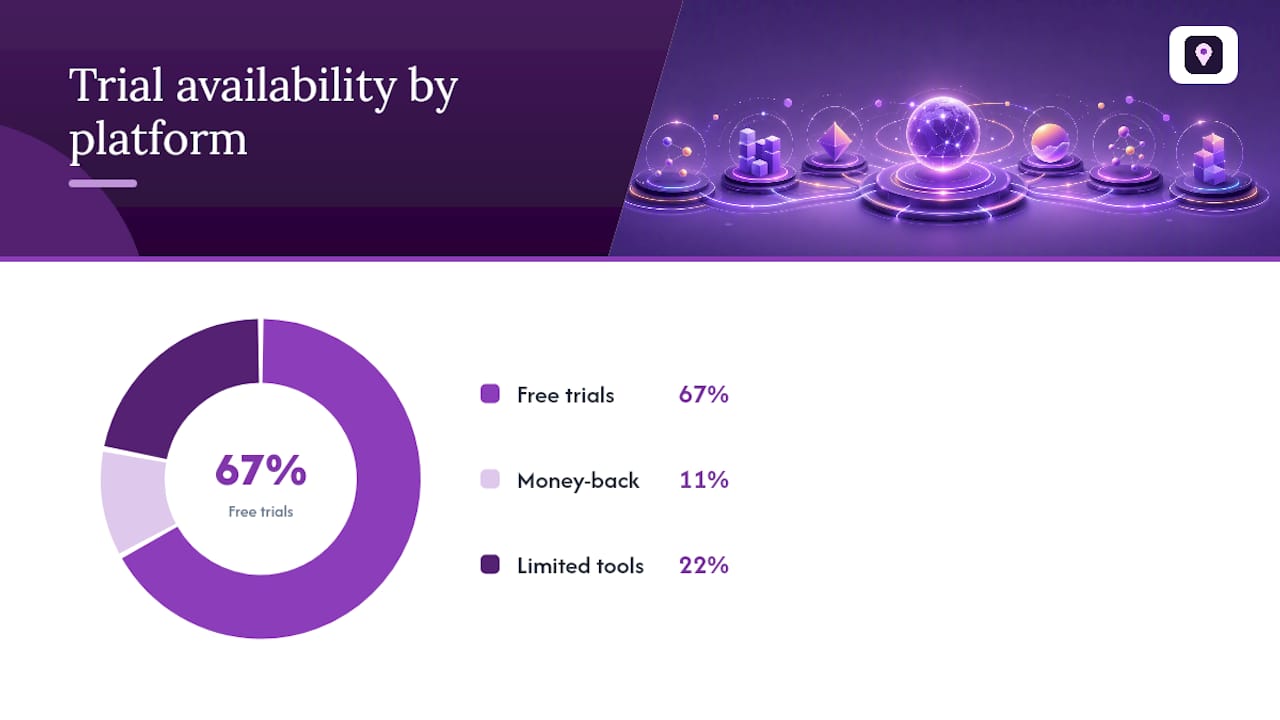
- AgencyAnalytics, SE Ranking, and Sitechecker offer free trials (typically 7–14 days) with white-label features accessible during the trial period.
- BrightLocal offers a 14-day free trial with full access to local reporting tools.
- Swydo and DashThis offer free trials focused on report building.
- Ahrefs and Semrush offer limited free tools but require paid plans for full white-label and API access.
When reading this table, prioritize the “White-label depth” and “Local SEO features” columns first if your agency’s core product is local SEO. If you’re a SaaS provider embedding reports into a client product, the “Integrations/API” column is your decision driver. Run a pilot with your actual client data — not demo data — before committing to any platform.
Detailed reviews: which platform fits your agency?
Localseobot
Localseobot is built specifically for agencies that sell local SEO as a core service. Where most platforms automate citation submissions and call it done, Localseobot manually builds premium citations across high-authority directories — a meaningful quality difference that shows up in Google Maps rankings. The white-label agency dashboard lets you present geo-grid rank tracking, GBP optimization, review automation, and citation reports entirely under your brand.
Best for: Local SEO agencies, multi-location resellers, and SaaS providers serving small businesses.
Core white-label capabilities: Branded agency dashboard, custom domain support, per-location client management, automated monthly reporting, white-label review widgets, and automated GBP posting.
Integrations and data sources: Google Business Profile data, geo-grid rank tracking, multi-directory citation management, and review platform integrations.
AI features: AI-driven review reply generation, automated local content posting.
Pros:
- Manual citation building delivers higher directory quality than automated bulk submissions
- Geo-grid rank tracking gives clients a visual, location-specific ranking picture
- 30-day money-back guarantee reduces pilot risk
- Per-location pricing scales predictably as you add clients
Cons:
- Narrower feature set for agencies that also need enterprise backlink analysis or PPC reporting
- Best suited to local SEO; less relevant for agencies focused purely on national/enterprise SEO
Typical pricing shape: per-location, per-month subscription with agency plan tiers scaling to 99+ locations.
SE Ranking
SE Ranking’s white-label suite covers the full SEO stack: rank tracking, site audits, backlink analysis, keyword research, and client reporting. Its documentation frames white-labeling not as cosmetic branding but as a way to connect SEO activity to business outcomes — a useful philosophy for agencies that need to justify recurring fees. The client portal runs on a custom subdomain, and reports carry your logo, color scheme, and domain throughout.
Best for: Mid-size agencies that want a single platform covering audits, rank tracking, and branded reporting.
Core white-label capabilities: Custom domain client portal, white-label PDF/HTML reports, branded dashboards, and client logins.
AI features: AI-powered content editor, keyword clustering, and automated content suggestions.
Pros:
- Broad SEO feature coverage in one platform
- Strong report customization with business-outcome framing
- Competitive pricing for the feature depth offered
Cons:
- Local SEO features are present but not as deep as local-specialist platforms
- API access requires higher-tier plans
Typical pricing shape: per-seat, tiered monthly plans.
AgencyAnalytics
AgencyAnalytics leads on client-facing dashboard depth. The drag-and-drop report builder connects to 80+ data sources — Google Analytics 4, Google Search Console, social platforms, Google Ads, and more — and delivers them inside a fully white-labeled portal on your custom domain. Automated report scheduling means clients receive branded reports without any manual export work.
Best for: Agencies managing multi-channel clients who need polished, automated client dashboards.
Core white-label capabilities: Full client portal, custom domain, white-label email delivery, branded report templates.
AI features: AI-generated report summaries and narrative text.
Pros:
- Best-in-class client portal customization
- 80+ integrations cover nearly every channel an agency touches
- Automated scheduling eliminates manual reporting work
Cons:
- Per-campaign pricing can escalate quickly at scale
- Local SEO features are widget-based, not a core specialization
Typical pricing shape: per-campaign/client, tiered monthly plans.
Ahrefs
Ahrefs holds one of the largest backlink indexes in the industry, and its rank tracker and site audit tools are the reference point most technical SEO agencies use. White-label reporting is available, though the client portal experience is less deep than AgencyAnalytics or SE Ranking. Agencies that lead with link analysis and technical audits will find Ahrefs’ data accuracy hard to match.
Best for: Technical SEO agencies and link-building specialists who need authoritative data above all else.
Core white-label capabilities: White-label PDF reports, scheduled report delivery; limited branded portal depth.
AI features: AI content grader integrated into the content explorer.
Pros:
- Industry-leading backlink data and site audit depth
- Rank tracking with SERP feature detection
- Trusted data source for client-facing deliverables
Cons:
- White-label portal depth is limited compared to reporting-first platforms
- API access requires enterprise-level plans
- No local SEO specialization
Typical pricing shape: per-seat, tiered monthly plans.
BrightLocal
BrightLocal is the clearest local SEO specialist in this shortlist. Citation tracking, GBP audit tools, review monitoring, and local rank tracking are its core products — and all of them can be delivered under a white-label wrapper. The per-location or per-report pricing model suits agencies with a variable client roster.
Best for: Local-first agencies, franchise groups, and multi-location businesses.
Core white-label capabilities: White-label local reports, client access logins, branded report delivery.
AI features: Limited; the platform focuses on data accuracy over AI-generated content.
Pros:
- Deep local SEO data: citations, GBP, reviews, local rank tracking
- Flexible per-location or per-report pricing
- 14-day free trial with full feature access
Cons:
- Limited integrations outside the local SEO stack
- Not suited for agencies that also need national SEO or PPC reporting in the same platform
Typical pricing shape: per-location or per-report, tiered plans.
Semrush
Semrush’s keyword database is the largest available, and its Agency Growth Kit adds white-label client portals, lead generation tools, and a CRM layer on top of the core SEO suite. For full-service agencies that need breadth — keyword research, competitor analysis, content optimization, backlinks, and local SEO — Semrush covers more ground than any other platform here.
Best for: Full-service agencies that need a single data platform across SEO, content, and competitive intelligence.
Core white-label capabilities: White-label PDF reports via My Reports builder, client portals via Agency Growth Kit add-on.
AI features: AI writing assistant, content optimization recommendations, and keyword clustering.
Pros:
- Largest keyword and traffic data coverage
- Local SEO add-on available for agencies with local clients
- Strong competitive intelligence tools
Cons:
- Agency Growth Kit is a paid add-on, which raises the effective cost
- White-label portal depth is less polished than AgencyAnalytics
- Per-seat pricing at scale can be expensive
Typical pricing shape: per-seat, tiered monthly plans; Agency Growth Kit priced separately.
WebCEO
WebCEO positions itself as a full white-label SEO platform for agencies that want to resell SEO as a managed service. The platform supports custom domains, client logins, and a branded interface throughout — not just on reports. Its white-label API lets SaaS providers embed WebCEO data into their own products.
Best for: Agencies reselling SEO as a managed service and SaaS providers embedding SEO data.
Core white-label capabilities: Full white-label platform, custom domain, client logins, white-label API.
AI features: AI content suggestions and keyword recommendations.
Pros:
- One of the deepest white-label implementations in the market
- White-label API is a genuine differentiator for SaaS use cases
- Covers rank tracking, audits, backlinks, and social in one platform
Cons:
- Interface feels less modern than newer platforms
- Local SEO features are present but not a specialization
Typical pricing shape: per-seat, tiered monthly plans.
Sitechecker
Sitechecker focuses on site audit and monitoring, with rank tracking and backlink data added to the core. Its white-label client portal and automated monitoring alerts make it practical for agencies that sell ongoing site health monitoring as a service.
Best for: Agencies that lead with technical audits and site monitoring as a recurring deliverable.
Core white-label capabilities: White-label reports, client portal, automated monitoring alerts.
AI features: AI-powered recommendations within audit results.
Pros:
- Strong site audit depth with real-time monitoring
- Clean client portal with automated alerts
- Competitive pricing for audit-focused agencies
Cons:
- Backlink data is less comprehensive than Ahrefs or Semrush
- Limited local SEO features
Typical pricing shape: per-seat, tiered monthly plans.
Swydo, DashThis, and Whatagraph
These three platforms share a common purpose: automated, branded multi-channel reporting. None of them are SEO data sources — they pull data from connectors (Google Analytics 4, Google Search Console, Google Ads, social platforms) and present it inside white-labeled dashboards or reports. The distinction matters: if your agency needs SEO data collection plus reporting, you’ll need a separate data platform alongside one of these.
Swydo suits agencies running PPC and SEO together, with 30+ connectors and a per-report pricing model that keeps costs predictable.
DashThis is the fastest to set up, with 40+ integrations and a clean drag-and-drop dashboard builder. Custom domain support and automated PDF snapshots make client delivery straightforward.
Whatagraph targets mid-to-large agencies with complex multi-client reporting needs. Its cross-channel data blending and AI-generated summaries are the strongest of the three, and SOC2 compliance makes it viable for enterprise clients.
Pros (shared): Fast setup, strong multi-channel coverage, automated scheduling, GDPR compliance.
Cons (shared): No native SEO data collection; dependent on third-party connectors for accuracy.
Typical pricing shape: per-dashboard, per-report, or per-source/user, tiered monthly plans.
LLM Pulse
LLM Pulse tracks brand and keyword mentions inside AI answer engines — ChatGPT, Perplexity, Gemini, and Google AI Overviews. As clients increasingly ask “are we showing up in AI answers?”, this kind of generative engine optimization (GEO) tracking becomes a legitimate agency deliverable. White-label reporting for AI visibility is the platform’s core product, not a feature bolted onto a traditional rank tracker.
Best for: Forward-looking agencies adding AI visibility reporting to their service stack.
Core white-label capabilities: White-label AI visibility reports, branded delivery.
AI features: The entire product is AI-visibility tracking; it monitors how often and how favorably a brand appears in AI-generated answers.
Pros:
- Addresses a reporting gap no traditional rank tracker covers
- Useful differentiator for agencies pitching AI-era SEO services
Cons:
- Narrow scope; not a replacement for traditional rank tracking or site audit tools
- Relatively new category with evolving data methodology
Typical pricing shape: per-brand or per-location, tiered plans.
White-label capabilities at a glance:
Pro Tip: During a demo, ask the vendor to show you a live client portal — not a screenshot. If they can’t give you a sandbox login within 24 hours, the portal depth is likely shallower than their marketing suggests.
How do you choose the right white-label SEO platform?
The decision framework starts with one question: what does your client actually see? A platform that produces beautiful internal dashboards but delivers a generic PDF to the client is not truly white-labeled. Prioritize white-label depth first, then data accuracy, integration coverage, scalability, security, and support — in that order.
The 10 questions to ask every vendor
- Can you host the client portal on our subdomain? (e.g., reports.youragency.com) — If the answer requires a paid upgrade, factor that into the total cost.
- Does any vendor branding appear in the client-facing view? — “Powered by [vendor]” footers are a red flag for resellers.
- How do you reconcile rank data against Google Search Console? — Vendors that can’t explain their GSC integration clearly often have data lag or discrepancy issues.
- What is the data refresh frequency for rank tracking? — Daily tracking matters for clients in competitive local markets.
- What API rate limits apply at our expected volume? — Undisclosed rate limits are one of the most common hidden constraints for SaaS builders.
- What happens to our client data if we cancel? — Data portability and export rights should be in the contract, not just promised verbally.
- What SLA do you offer for uptime and support response? — A platform with no published SLA is a risk for agencies with client-facing portals.
- Can we see a sample client portal login, not a demo video? — Live access reveals UI quality, load speed, and branding fidelity that screenshots hide.
- Are there setup fees, per-report fees, or overage charges not listed on the pricing page? — Ask for a written summary of all fees before signing.
- Do you offer managed fulfillment, or is this a self-serve platform only? — Some agencies need a vendor that also delivers the SEO work, not just the software.
Red flags to watch for
- Vendor logo or branding visible in any client-facing screen
- API documentation that is incomplete or behind a sales call
- Rank data that can’t be cross-checked against GSC during a trial
- No published uptime SLA or security certification
- Pricing pages that omit overage fees or per-report charges
- Support that routes to a community forum rather than a dedicated account manager
Trust signals to request
- A written SLA covering uptime (99.9% is the standard floor) and support response times
- Case studies with named clients and measurable outcomes
- A sandbox or pilot environment using your own client data
- Published G2 or Capterra reviews — check for recurring complaints about data accuracy or support responsiveness, as user reviews on platforms like G2 surface patterns that vendor demos never show
- GDPR or SOC2 documentation on request
Copy this checklist into your vendor evaluation form and score each vendor before your first demo call. It will save you from a three-month pilot that ends in a contract dispute.
What do white-label SEO pricing models actually cost?
Understanding the billing models
White label SEO software for agencies comes in four main billing structures, and each suits a different agency size and client mix.
- Per-seat: You pay for each user (team member) who accesses the platform. Works well for small agencies with a fixed team but can become expensive as headcount grows.
- Per-location: You pay for each client location managed. Predictable for local SEO agencies; scales directly with client revenue.
- Per-report or per-dashboard: You pay for each report or dashboard delivered. Suits reporting-only platforms (Swydo, DashThis) and agencies with variable client loads.
- Tiered client bundles: A fixed monthly fee covers up to a set number of clients or locations, with the next tier kicking in at a defined threshold. Common in mid-market platforms.
Typical cost ranges by agency size
Note: These ranges reflect typical published pricing shapes and publicly available plan structures. Actual costs vary by feature tier, add-ons, and negotiated discounts. Always request a written quote for your specific client volume.
A practical cost example
Say your agency manages 15 local business clients, each with a single location. On a per-location model at $30/location/month, your platform cost is $450/month. If you charge each client $500/month for local SEO services, your gross margin on the software alone is $7,050/month before labor. That math is why per-location pricing is the preferred model for local SEO agencies: cost scales with revenue, not with headcount.
Localseobot’s agency pricing follows this per-location model and scales to 99+ locations, which means the math stays predictable as you grow.
Scaling tips
- Start on the lowest plan that covers your current client count, not the one you expect to need in 12 months. Most platforms allow mid-cycle upgrades.
- Negotiate annual billing discounts before signing — most vendors offer 15–20% off for annual commitments, though this is rarely advertised.
- For multi-location deployments (franchises, chains), ask specifically about bulk-location pricing. Vendors often have unpublished tiers for 50+ or 100+ locations.
- White-label partnerships can cost roughly 40–60% less than building equivalent SEO capabilities in-house, which makes the platform cost easier to justify to agency principals who are weighing a build-vs-buy decision.
How should you test a white-label SEO platform before committing?
A vendor demo shows you the best-case scenario. A trial with your own client data shows you the truth. Run this protocol during any free trial or pilot period.
The testing protocol
- Set up a real client account — not a demo account with pre-loaded data. Use an actual client location with a live Google Business Profile.
- Run a baseline rank check and record the results. Then cross-check the same keywords in Google Search Console for the same date range. Note any discrepancies in position or impression data.
- Check rank data refresh frequency — confirm whether the platform updates daily, weekly, or on demand. For competitive local markets, anything slower than daily is a limitation worth flagging.
- Test the geo-grid rank tracking (if applicable) — verify that the grid accurately reflects position variance by distance from the business address.
- Pull a backlink report and compare a sample of 20–30 links against a control set from a known-accurate source. Flag any links that appear in the platform but are clearly dead or irrelevant.
- Generate a white-label report and review it as if you were the client. Check that no vendor branding appears, that the custom domain loads correctly, and that all data matches what you see in the platform dashboard.
- Test report scheduling — set up an automated report delivery and confirm it arrives on time, formatted correctly, and with accurate data.
- Measure API latency (for SaaS builders) — run a sample API call at your expected volume and record response time. Repeat at different times of day to check for consistency.
Metrics to record during the trial
- Time-to-sync: how long after a ranking change does the platform reflect it?
- Data lag: what is the gap between a GSC data point and the platform’s equivalent?
- PDF/report fidelity: does the exported report match the on-screen dashboard exactly?
- API response time: average and peak latency under realistic call volumes
- Support response time: how quickly does the vendor respond to a test support ticket?
Reporting fidelity is a primary trust signal that agencies should demand from any white-label platform — clients who receive reports that don’t match what they see in Google Analytics lose confidence quickly, and that confidence is hard to rebuild.
Deciding whether to extend the pilot
Document your trial results in a simple scorecard: data accuracy (rank vs GSC), report fidelity, API reliability, support responsiveness, and white-label completeness. If any category scores below your minimum threshold, that’s a disqualifier — not a negotiation point. Platforms that fail data accuracy checks during a trial rarely improve after you’ve signed a contract.
When should you adopt white-label SEO software vs. other options?
Not every agency is ready for a full white-label platform. The decision depends on client load, recurring revenue, internal bandwidth, and margin goals.
Readiness checklist
Before committing to a white-label platform, confirm:
- You have at least 5 recurring SEO clients (fewer than that, and the platform cost may not be justified)
- You have a defined monthly recurring revenue (MRR) from SEO services that covers the platform cost with margin to spare
- You have internal bandwidth to handle client questions about the branded portal
- You have a clear margin target for your SEO service (most agencies target 50–70% gross margin on software-delivered services)
- You need a branded client experience, not just internal reporting
The decision flow
- Fewer than 5 clients, variable revenue: Use a managed white-label service or reseller arrangement. You pay for fulfillment, not software, and avoid fixed platform costs. Managed white-label services are the right starting point here.
- 5–20 clients, stable MRR: Buy a white-label platform. The per-location or per-seat cost is justified, and you gain control over the client experience.
- 20+ clients, complex reporting needs: Buy a platform and consider adding a reporting layer (Whatagraph, DashThis) on top for multi-channel client dashboards.
- SaaS product team embedding SEO data: Evaluate platforms with a white-label API (WebCEO, SE Ranking) or consider a build-your-own approach if your data requirements are highly specific.
Rollout timeline for a piloted deployment
- Week 1–2: Trial setup with 1–2 real client accounts; run the testing protocol above.
- Week 3–4: Evaluate trial results; negotiate contract terms and SLA.
- Month 2: Onboard 5–10 clients; configure white-label portal, custom domain, and report templates.
- Month 3: Full rollout to all clients; train internal team on platform workflows.
- Month 4+: Review data accuracy quarterly; renegotiate pricing at renewal if client volume has grown significantly.
When alternatives are preferable
- Reseller/managed service: Best when you want to offer SEO without managing the delivery. You white-label the output, not the platform.
- Reporting-only white-label: If your clients already have SEO tools and just need branded reporting, Swydo or DashThis may be sufficient without a full SEO platform.
- Build-your-own: Viable only for SaaS teams with engineering resources and a specific data use case that no existing platform covers. The cost and timeline are almost always underestimated.
How Localseobot’s white-label local SEO approach works
Localseobot is built around a premise that most white-label SEO platforms skip: citation quality matters more than citation quantity. Automated bulk citation tools submit business data to hundreds of directories, but many of those directories carry little authority and some actively harm local rankings. Localseobot’s team manually builds citations on high-authority directories — a process that takes more time but produces the kind of directory presence that moves Google Maps rankings.
What agencies get with Localseobot’s white-label offering:
- Branded agency dashboard with per-location client management
- Geo-grid rank tracking that shows position variance across a geographic area, not just a single average rank
- Automated Google Business Profile optimization and posting
- AI-driven review reply generation and review request automation
- Business listing management across multiple high-authority directories
- Monthly white-label SEO reports delivered under your brand
- Review widgets embeddable on client websites
- Automated local content tools
Key differentiators:
- Manual citation building vs. automated bulk submission — the quality gap is measurable in ranking outcomes
- Geo-grid tracking gives clients a visual map of where they rank, not just a number
- 30-day money-back guarantee if rankings don’t improve — a commitment most platforms don’t make
- Per-location pricing that scales predictably from boutique agencies to 99+ location deployments
What to expect from onboarding:
Most agencies complete initial setup within the first week. The white-label dashboard is configured with your branding, client locations are added, and the first geo-grid rank reports are generated within days. Citation building begins immediately and typically shows measurable directory presence within the first 30 days.

Pro Tip: When pitching Localseobot’s white-label service to clients, lead with the geo-grid rank report — it’s the most visually compelling proof of local ranking position that most clients have never seen before. It converts skeptics faster than any keyword ranking table.
Which platform should you pilot first, by agency profile?
The right starting point depends on what your agency actually sells, not on which platform has the longest feature list.
Boutique local SEO specialists — agencies with 5–25 clients focused on Google Maps rankings, citation building, and GBP management — should pilot Localseobot first. The manual citation quality and geo-grid tracking are purpose-built for this work, and the 30-day guarantee makes the pilot low-risk. If your clients are asking “why aren’t we showing up on Google Maps?”, this is the platform that answers that question with data and action.
Scaled multi-location resellers — agencies managing 25+ locations across franchises or chains — should evaluate Localseobot’s agency pricing for multi-location deployments alongside SE Ranking for agencies that also need a full technical SEO suite. The per-location pricing model at scale is where Localseobot’s cost structure becomes particularly competitive.
SaaS product teams embedding SEO data into their own platform should start with WebCEO’s white-label API or SE Ranking’s API documentation, then run a parallel evaluation of Localseobot’s API capabilities if local SEO data is part of the product scope.
During any demo, ask to see the client portal live — not a recorded walkthrough. Watch specifically for load speed, how the vendor’s branding is handled (or not), and whether the report data matches what you’d expect from a real client account. A vendor that can’t show you a live sandbox within 24 hours of your request is telling you something about their support model before you’ve even signed up.
Localseobot gives agencies a white-label local SEO engine worth piloting
Most white-label SEO platforms give you a branded wrapper around the same automated data every other agency is using. Localseobot takes a different approach: manual premium citation building on high-authority directories, geo-grid rank tracking that shows clients exactly where they stand across their service area, and a fully branded agency dashboard that carries your name throughout the client experience.
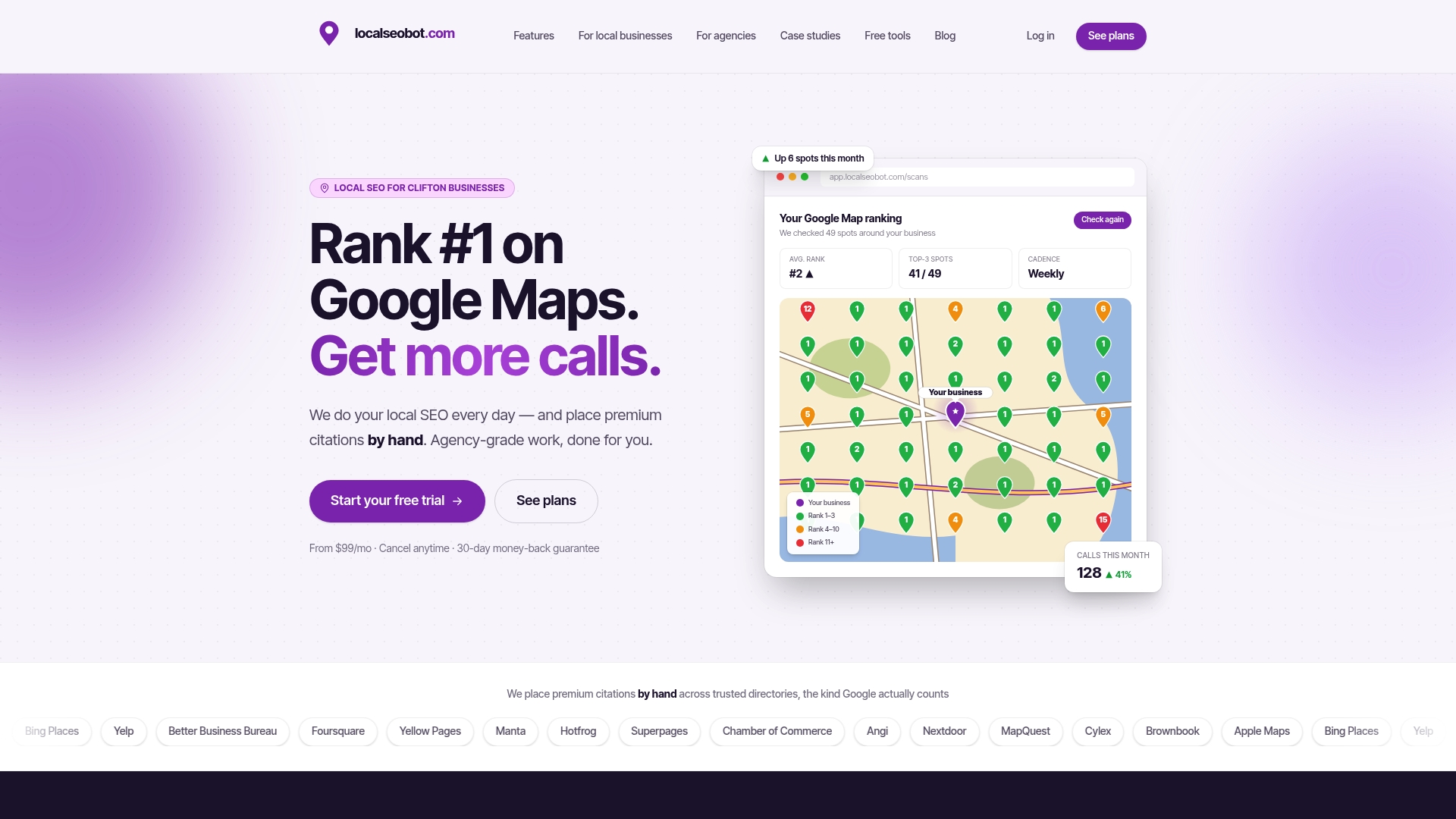
For agencies that sell local SEO as a core service, the difference between automated and manual citation quality shows up in rankings — and rankings show up in client retention. Localseobot’s white-label local SEO platform is available on a per-location subscription with a 30-day money-back guarantee, so you can run a real pilot with actual client data before committing to a full rollout. Onboarding typically takes less than a week, and the geo-grid reports are ready to share with clients within the first 30 days.
Start your pilot at Localseobot and see the ranking difference manual citation building makes.
Sources
The following sources were used to build this guide for feature signals, pricing context, white-label capability examples, and reporting guidance.
- Why Measure SEO Performance for Agencies