Premium Citations: 6 Steps to Boost Maps Rankings for Local Businesses
Published September 19, 2026
Premium Citations: 6 Steps to Boost Maps Rankings for Local Businesses

Premium citations are manually created, high-authority directory listings that prove your business is real to Google and to the AI systems now shaping local search. They boost Google Maps prominence more reliably than bulk automated submissions because they carry verified, consistent NAP data (name, address, phone). The first move isn’t building new ones; it’s auditing your existing NAP data and fixing errors on the major aggregators before you add anything new.
TL;DR:
- Building and verifying high-authority listings on Tier 1 platforms like Google, Yelp, and Apple is essential for establishing a reliable local presence and improving prominence.
- Auditing and fixing existing NAP data at the aggregator level before adding new listings prevents recurring errors that can undermine ranking efforts.
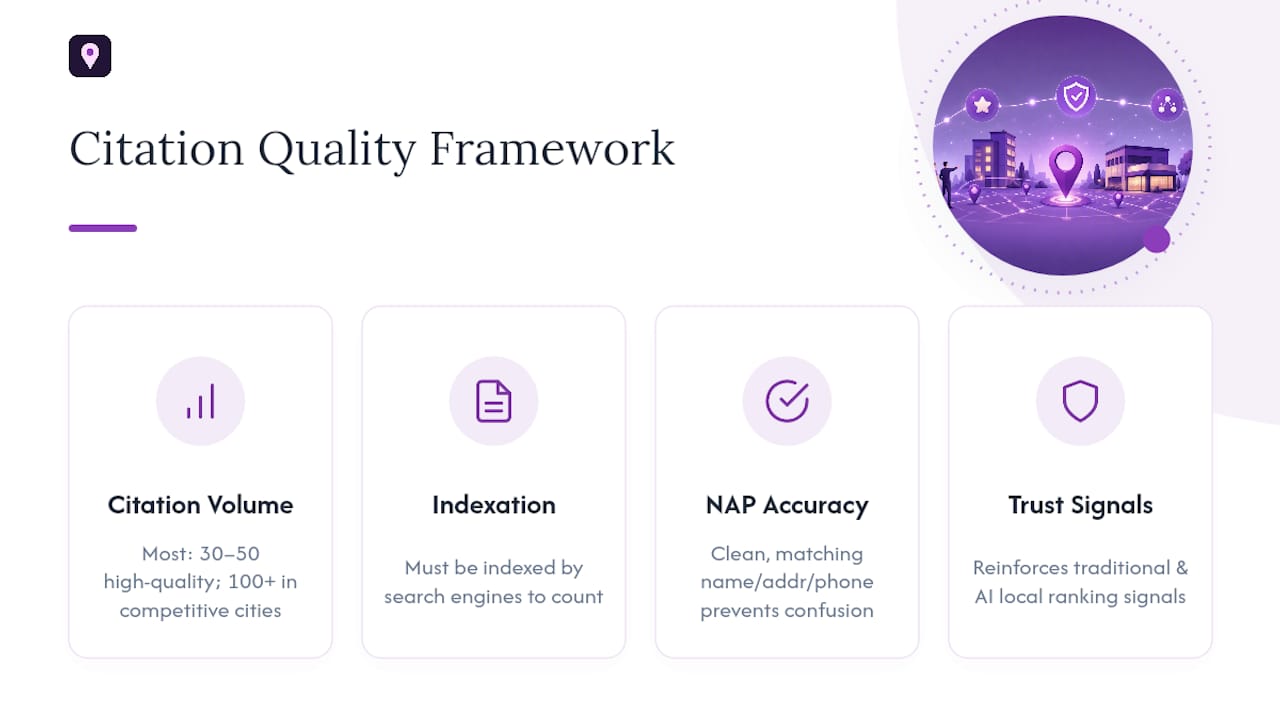
- Most businesses find that 30 to 50 high-quality citations suffice for local SEO success, while competitive markets might require over 100 citations.
- Manual review and claim-handling are required for Tier 1 profiles, but automation can manage ongoing maintenance for lower-priority directories efficiently.
- Using a structured sequence—audit, fix, claim, and monitor—is key to building a resilient citation profile that consistently boosts Google Maps rankings.
Table of Contents
- What Are Premium Citations, and Why Does Manual Beat Bulk?
- How Do Premium Citations Affect Google Maps Rankings?
- How Do You Actually Build a Premium Citation Profile?
- What Should You Demand From a Citation Checklist or Vendor?
- When Should You Go Manual, Automated, or Hybrid?
- How Local SEO Bot Handles Premium Citations for You
- Where to Verify This Yourself
- Sources
- FAQ
What Are Premium Citations, and Why Does Manual Beat Bulk?
In this context, premium citations mean manually built, high-authority directory listings, not academic reference citations and not paid legal-protection services. Each one repeats your business name, address, and phone number on a platform Google already trusts, which reinforces that your business exists at a specific place and does what you say it does.
Not all citations carry equal weight. They break into rough tiers based on authority and how much scrutiny Google gives them:
- Tier 1: Google Business Profile, Apple Business Connect, Bing Places, and Yelp. These platforms are foundational, and a missing Tier 1 profile is a red flag to local algorithms.
- Tier 2: Data aggregators like Data Axle, Neustar Localeze, and Foursquare, which feed data downstream to hundreds of smaller sites.
- Tier 3: Major general directories such as Better Business Bureau and Yellow Pages.
- Tier 4: Niche and local directories specific to your industry or city, like a regional chamber of commerce or a trade association.
A hundred sloppy, inconsistent listings do less for you than 30 accurate ones. Modern local ranking systems, including the AI models increasingly summarizing local results, weigh entity corroboration heavily. That means multiple independent, high-authority sources agreeing on who you are and where you operate outweighs sheer directory count.
How Do Premium Citations Affect Google Maps Rankings?
Google Maps ranks businesses on three factors: relevance, distance, and prominence. Citations feed almost entirely into prominence, which measures how well-known and well-documented your business appears across the web. A business with clean, matching listings on Google Business Profile, Yelp, and the major data aggregators reads as more established than one with scattered or conflicting information, even if both offer identical services.
The effects show up two ways. Directly, consistent citations help your listing surface in the local pack and in Maps search results for relevant queries. Indirectly, citations on high-traffic directories like Yelp or a local chamber site generate their own referral clicks and calls, independent of any ranking bump. Some high-authority directories use nofollow links, meaning they don’t pass traditional link equity, but they still drive real traffic and reinforce the entity signals search engines use to verify your business, and certain chamber-of-commerce or local media links do pass equity on top of that.
Indexation and accuracy matter as much as placement. A citation search engines haven’t indexed, or one with a wrong phone number, does nothing for you and can actively confuse ranking systems. This is why citation quality and NAP consistency now function as core trust signals for both traditional rankings and AI-generated local answers. Most local businesses see solid results from 30 to 50 high-quality citations, though competitive urban markets often require 100 or more to keep pace.
How Do You Actually Build a Premium Citation Profile?
Treat this as a sequence, not a shopping list. Skipping steps is the most common reason citation campaigns underperform.
- Audit first. Search your business name and phone number in quotes to surface every existing listing, including old or duplicate ones from a previous address or ownership. Tools like Local SEO Bot’s Local Citation Finder speed this up by scanning niche and general directories at once.
- Fix the aggregators before adding anything new. Data Axle, Neustar Localeze, and Foursquare push your data to hundreds of downstream sites. Correcting errors at the aggregator level first prevents you from fighting the same mistake across dozens of new listings later.
- Claim and complete every Tier 1 profile. Google Business Profile, Apple Business Connect, Bing Places, and Yelp each need full category selection, real photos, accurate hours, and a verified phone number. Budget 2 to 4 hours per Tier 1 profile if you want it done properly, not just filled in.
- Move to niche and local directories. Industry associations, local chambers, and city-specific business directories round out your Tier 4 presence and often carry more relevance weight per listing than another generic national directory.
- Decide where automation earns its place. Manual work is close to mandatory for Tier 1 profiles because they require human judgment on categories and imagery. Once your core listings are clean, automated tools can handle ongoing maintenance and lower-priority Tier 3/4 submissions, as long as you spot-check the output.
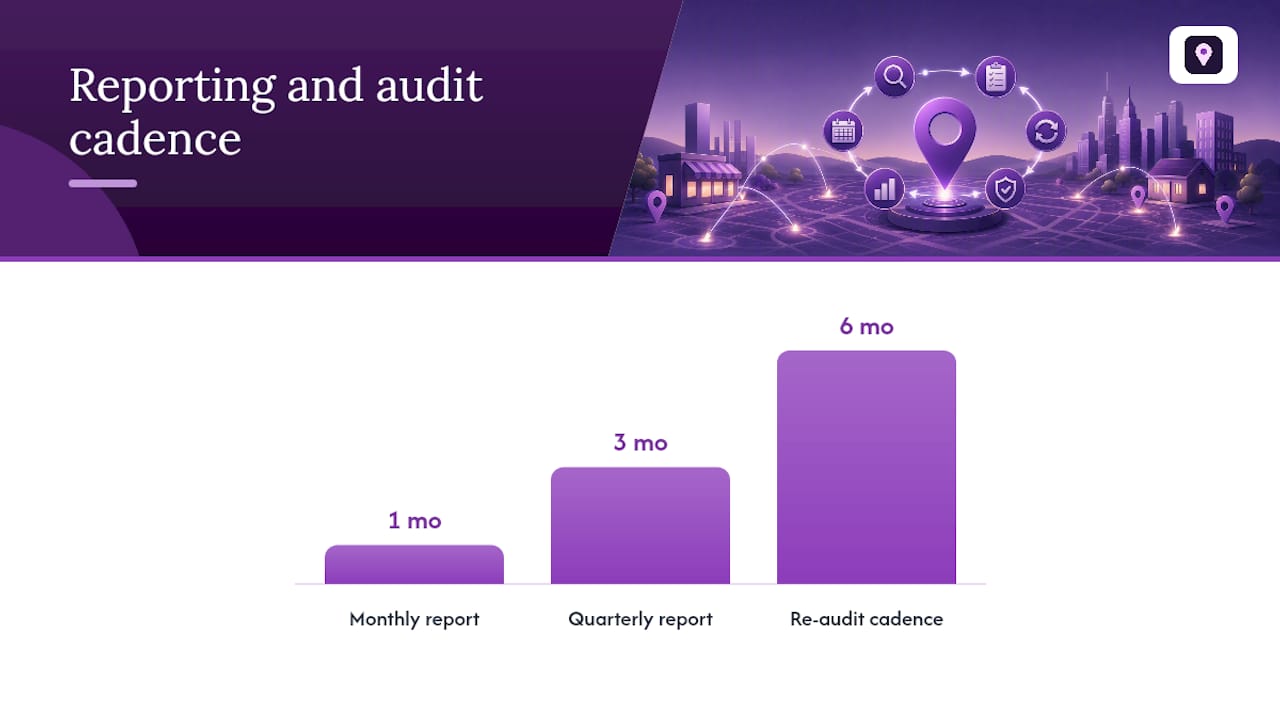
- Track and re-audit. Keep a spreadsheet with columns for URL, submission date, verification status, and last-checked date. Set a recurring re-audit every six months, since directories change ownership, redesign, or quietly drop listings.
Pro Tip: Screenshot your submission confirmation for every Tier 1 and Tier 2 listing. If a directory loses your data during a platform migration, that proof speeds up the correction dramatically.
What Should You Demand From a Citation Checklist or Vendor?
Before anyone touches a directory, lock down your canonical NAP: the exact business name, address format, and phone number you’ll use everywhere, plus basic schema markup on your website and a set of approved photos and service categories. Inconsistency at this stage guarantees inconsistency downstream.
For each submission, confirm the business name matches your canonical version exactly, the category selection fits how customers search, and the listing gets verified, not just submitted. A pending, unverified listing on a major directory does close to nothing.
If you’re hiring a service instead of doing this yourself, insist on deliverables you can independently check:
- Login credentials or ownership access for every platform, not just a summary report.
- Direct profile URLs for each completed listing.
- Proof-of-submission files or screenshots for aggregator-level fixes.
- Evidence the listing is indexed and appearing in search, not just live on the directory itself.
| Deliverable | Why It Matters |
|---|---|
| Platform logins | You keep ownership if you switch vendors |
| Profile URLs list | Lets you verify every listing independently |
| Indexation proof | Confirms the listing actually helps rankings |
| Monthly or quarterly report | Tracks new listings and flags NAP drift |
Common failure points include inconsistent NAP formatting across listings, skipping the initial audit entirely, and relying on cheap bulk submission services that prioritize volume over verification. Set your re-audit cadence at six months and treat any vendor unwilling to hand over logins as a red flag.
When Should You Go Manual, Automated, or Hybrid?
Single-location businesses and tightly defined niches almost always benefit most from a manual-first cleanup. There’s less data to reconcile, and the accuracy gained from human review on Tier 1 profiles pays off fast, particularly for businesses trying to establish local relevance in a competitive category.
Automation earns its place once your foundation is solid. It’s built for scale and ongoing distribution, not for the judgment calls Tier 1 platforms demand. A hybrid model, manual core plus automated maintenance, is the practical default for most businesses we work with, and it’s the same sequencing this article has walked through.
— Local
How Local SEO Bot Handles Premium Citations for You
Building this out manually is doable, but it eats a weekend, easily. Some services run a managed premium citation service that follows this sequencing: audit first, fix aggregators, hand-build Tier 1 and niche listings, then monitor for drift.
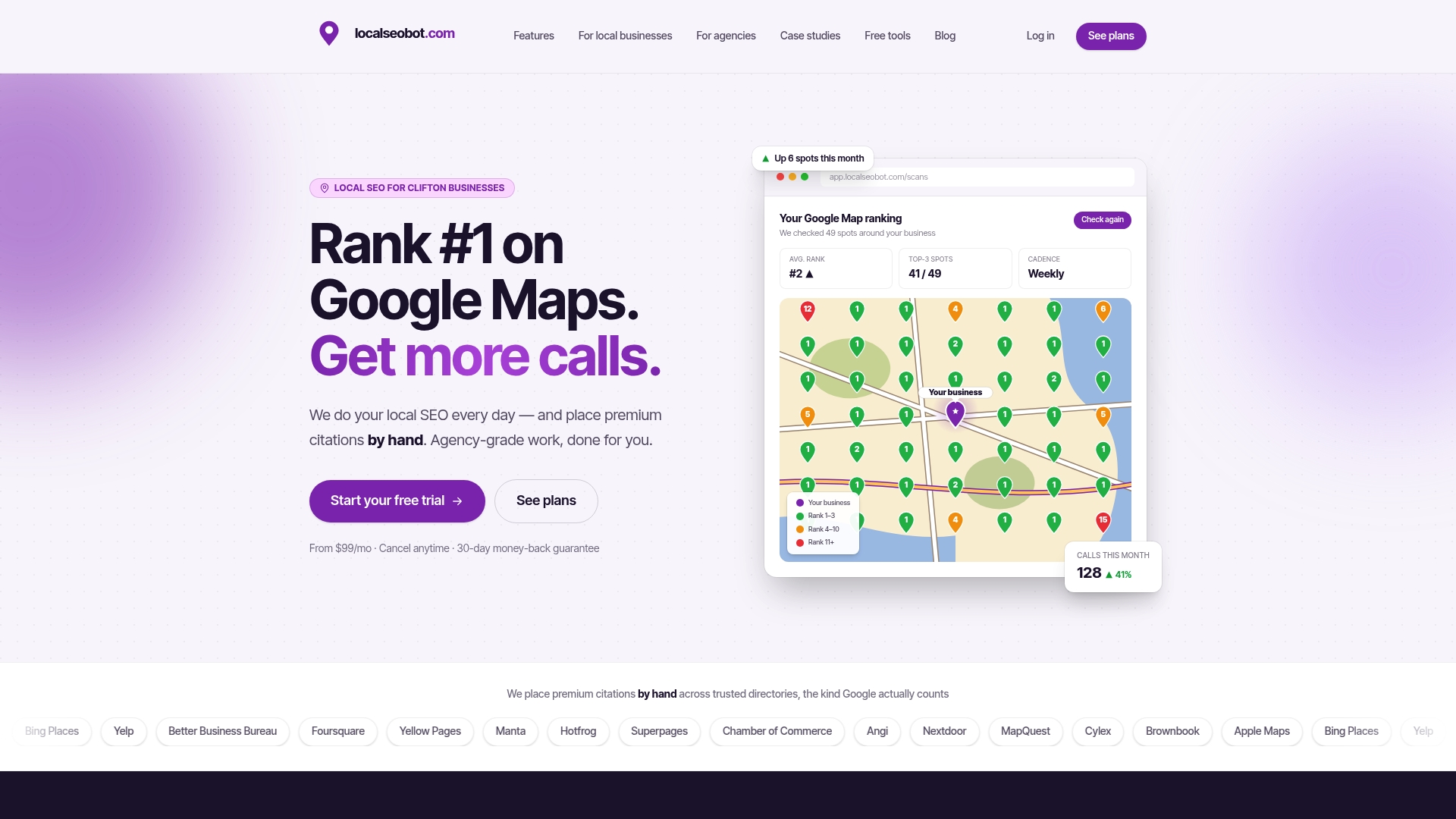
Onboarding starts with a NAP consistency audit using the Citation Consistency Analyzer, followed by discovery of relevant directories through the Local Citation Finder. From there, the team manually claims and verifies your Tier 1 and Tier 2 profiles, tracks indexation, and reports on it monthly. Every plan, Foundation, Growth, and Pro, backs this work with a 30-day money-back guarantee if your Google Maps rankings don’t improve. Agencies managing multiple locations can review white-label options on the agency pricing page. Check current plans and get your NAP audit started today.
Where to Verify This Yourself
Cross-check aggregator behavior on WordStream’s citation guide, review directory priority in Local SEO Bot’s citations list, and confirm accuracy with the NAP consistency audit guide.
Sources
- Local citations — WordStream
- Local Directory Submissions for SEO: Which Ones Matter
- Citation Building for AI Local SEO: The Systematic Approach to Maximizing AI Citations
- Manual vs. Automated Citation Building: An AI-First Comparison | AI Search Rankings
FAQ
What Counts as a Premium Citation?
A premium citation is a manually created, verified business listing on a high-authority directory, such as Google Business Profile, Yelp, or a data aggregator like Data Axle. It’s distinct from a bulk, automated listing because a person confirms the category, photos, and NAP accuracy before submission.
How Many Citations Does a Small Business Actually Need?
Most local businesses see meaningful results from 30 to 50 high-quality citations. Businesses in dense, competitive markets often need 100 or more to stay visible against local competitors.
Should I Fix Existing Listings Before Building New Ones?
Yes. Correcting aggregator data first matters because Data Axle, Neustar Localeze, and Foursquare push information to hundreds of downstream directories, so an error there multiplies instead of getting fixed once.
Is Manual Citation Building Worth the Extra Time?
For Tier 1 platforms, yes. Manual builds require human judgment for categories and verification and take roughly 2 to 4 hours per profile done properly, but a hybrid approach lets automation handle maintenance once that core is solid.
How Much Does Local SEO Bot’s Citation Service Cost?
Localseobot’s plans start at Foundation for $99 per month per location, with Growth and Pro tiers available for businesses and agencies needing more coverage. Every plan includes a 30-day money-back guarantee if your Maps rankings don’t improve.