Proximity Spam Names: 5 Checks Local Businesses Need Before Reporting
Published October 14, 2026
Proximity Spam Names: 5 Checks Local Businesses Need Before Reporting

Proximity spam names are misleading business names on Google Maps that tack extra keywords, phone numbers, taglines, store codes, or location text onto a real-world name. Verify the listing first. If the name clearly breaks Google’s naming guidelines, use “Suggest an edit” for simple fixes and the Redressal Form for persistent misuse. We also track local rankings across your service area.
TL;DR:
- A profile name must match branding used on signage, the website, and stationery; keywords, phone numbers, taglines, store codes, and extra locations can trigger suspension.
- Use Suggest an edit for simple keyword insertions or typos; file the Redressal Form when edits are reversed or abuse appears coordinated.
- Confirm the profile is verified before reporting, then collect dated screenshots, signage photos, website branding, and a count of each reverted edit.
- Match your profile name to signage, stationery, and website branding, then keep your name, address, and phone number consistent across directories.
Table of Contents
- What counts as a proximity spam name?
- How can you spot proximity spam names on nearby listings?
- Why do proximity spam names matter to your business?
- What should you do when you find a proximity spam name?
- How do you protect your own listing from name spam?
- How has proximity spam enforcement on Google Maps evolved?
- What are the consequences of proximity spam beyond suspension?
- What does a successful recovery from proximity spam look like?
- Why proactive monitoring and documented evidence matter
- Want hands-off detection and cleanup? Here is how we help
- FAQ
- Sources
What counts as a proximity spam name?
A proximity spam name is a Business Profile name that no longer matches how the business presents itself in the real world. Google’s rule is direct: the name should reflect the real-world name used consistently on the storefront, website, and stationery. According to Google’s business name guidelines, marketing taglines, phone numbers, store codes, and service or location keywords do not belong in it, and adding them can lead to suspension.
The same guidance gives clean examples. “Subway” is acceptable. “Subway, America’s Favorite Sandwich Shop” and “Subway - 1234” are not, because each adds text that is not part of the name. The guidelines for representing your business also warn against special characters and extra location information, unless that exact form appears consistently in real-world branding.
A scope note: in this article, “proximity spam names” means only misleading business names on nearby Google Maps listings. The test is simple. Strip the extras and compare what remains with the signage. If they differ, the name is a problem.
How can you spot proximity spam names on nearby listings?
Start with the name itself, then cross-check it against the real world. A scan of your service area can help surface suspicious listings.
Name signals to scan for:
- Service or keyword additions, such as “Emergency Plumber” attached to a company name
- Phone numbers, URLs, or store codes inside the name field
- Promotional text like “Cheapest in town” or “Free estimate”
- Names written in all caps to stand out
- Repeated transliterations of the same name in several scripts or languages
- Extra neighborhood or city names that are not part of the brand
Cross-check steps:
- Look at the storefront or street view and compare the signage with the listed name.
- Visit the business website and check which name its own branding uses.
- Check the verification status of the profile. Google’s policy overview notes that verification affects whether updates and appeals are accepted.
- Search for duplicate profiles at the same address.
- Compare name, address, and phone number across directories for consistency.
Behavioral red flags matter too. Edits that keep getting reversed, or a batch of similarly structured names in one area, point to coordinated spam rather than an honest mistake. If you want a faster way to compare nearby listings, our guide on comparing competitor Google Business Profiles walks through the process.
Pro Tip: Screenshot every suspicious listing the day you find it, with the date visible. Names change, and a dated record is what turns a hunch into a case.
Why do proximity spam names matter to your business?
They hurt you in three ways: enforcement risk, lost customers, and a distorted map.
First, enforcement. Google moderates profiles that break its rules, and its appeal documentation describes content and profile restrictions that can follow guideline violations. A profile that uses a spammy naming habit to compete may face restrictions, so copying what competitors appear to get away with carries risk.
Second, trust. Google treats fake and misleading content as a serious threat to Maps reliability. When a name misrepresents who a business is, searchers click the wrong result, call the wrong number, or give up. That traffic often comes out of the real business’s pocket.
Third, competition. A cluster of keyword-heavy names can crowd a local pack and change which businesses searchers see first. You may be doing everything right and still lose visibility to listings that shouldn’t be there.
What should you do when you find a proximity spam name?
Work from the lightest fix to the heaviest, and keep records at every step.
- Verify. Check the signage, the business website, and citation consistency, then confirm the listing’s verification status.
- Try a quick fix. Use “Suggest an edit” in Google Maps for simple cases such as an obvious keyword insertion or typo. Google’s removal guidance points to this route for simple issues.
- Escalate. If edits are reverted, the name looks fraudulent, or abuse appears coordinated, fill out the Google Business Profile Redressal Form. Google’s Maps help page says to supply detailed evidence, including how many times your edits were reverted.
- Track and follow up. Save every confirmation and screenshot, and use Google’s appeal process if a decision goes against you.
Evidence worth collecting:
- Photos of the real signage next to a screenshot of the listing name
- Screenshots of reverted edits, with dates
- A count of how many times the name was changed back
- The business’s own website showing its actual name
How do you protect your own listing from name spam?
Consistency is your best defense. Use the exact real-world name on your storefront, stationery, and website, and make sure your Business Profile matches it, as the naming guidelines require.
Controls to put in place:
- Keep your profile verified and limit account access to people you trust.
- Make sure any agency or representative has your consent and follows the rules in Google’s eligibility and ownership guidelines.
- Keep your name, address, and phone number identical across directories.
- Choose the fewest accurate categories, and never use the name or category fields to stuff keywords. Our post on avoiding keyword stuffing in Google Business Profile shows what that looks like in practice.
- Keep content accurate and complete. Google’s additional terms note that it may choose not to display content it considers inaccurate.
If you want help turning those controls into a routine, our Google Business Profile Optimizer checks your fields against Google’s guidance. For learning the wider craft, the Local SEO Academy from BabyLoveGrowth is a useful complement.
Pro Tip: Put a quarterly map audit on your calendar. Clusters of spammy names rarely appear overnight, and an early scan lets you document them before they settle in.
How has proximity spam enforcement on Google Maps evolved?
Google has never published a dated timeline of how it polices proximity spam, so we stick to what its current documentation shows rather than guess at specific milestones. What the documentation does show is a layered system: published naming rules, edit moderation, verification checks, and manual review channels.

The naming rules say what a name may contain. Edit moderation means Google may reject edits that significantly change the nature of a business, and it compiles profile data from several sources, so an owner’s input is not the only input. Verification adds another gate, since it affects whether updates and appeals are accepted at all.
The reporting paths have also split by severity. Simple problems go through “Suggest an edit,” while fraud and persistent abuse go through the Redressal Form, where a person investigates. The reporting options differ by case: repeated or fraudulent name manipulation can be reported with supporting evidence through the Redressal Form.
For owners, the takeaway is practical. Enforcement rests on documented policy, so the strongest position is always the one that matches the policy and can prove it.
What are the consequences of proximity spam beyond suspension?
Suspension is the visible penalty, but the quieter costs add up first.
Customers lose trust. A listing whose name reads like an ad looks less credible, and the misleading content Google warns about undermines confidence in the whole results page. That can mean fewer calls and direction requests for honest businesses nearby.
Visibility shifts. When keyword-padded names crowd a local pack, legitimate listings get pushed down or overlooked. Google also says it may choose not to display content it deems inaccurate, so a listing with a distorted name or data can lose placement even without a formal suspension.
Recovery takes work. An edit rejected or reversed means rebuilding the evidence trail. Unverified profiles may have content that doesn’t appear across Google, which compounds the problem for newer listings.
We don’t have a sourced figure for how much traffic a spammy cluster steals, and any number you see quoted without a study behind it should be treated skeptically. The reliable approach is to measure your own rankings across your service area over time. Grid scans, like those in our Google Maps rank tracker, show where you appear block by block, so you can see whether visibility dropped near a suspicious cluster.

What does a successful recovery from proximity spam look like?
We can’t point to a named, published case study with verified results, so we won’t invent one. What we can describe is the pattern that the official process rewards, framed as an illustrative scenario.
Say a landscaping company finds a competitor listed as the competitor’s name plus a service keyword and a city. The owner follows the sequence from earlier. They confirm the signage and website show only the plain name. They submit a “Suggest an edit,” and it gets reverted. They then log each reversion with a date, collect photos of the storefront sign, and file the Redressal Form with that evidence, as Google’s guidance asks.
What makes that path work is not cleverness but documentation. The count of reverted edits shows persistence. The signage photos show the real name. The website confirms it. A support reviewer can use the evidence to assess the report.
The same logic applies if the spammy name is yours by accident, perhaps added by a former agency. Revert it to the real-world name, keep your citations consistent, and note the change. Fixing your own listing before a competitor reports it is the cheapest recovery there is.
Why proactive monitoring and documented evidence matter
Most disputes I see described come down to paper trails. The owner who wins is rarely the loudest. It is the one who noticed early and kept dated screenshots, signage photos, and a tally of reverted edits in one folder.
My view is that reporting is the easy half. The hard half is noticing, because spam rarely announces itself. Scanning your service area, even manually, can help you notice issues before rankings slip. Automated monitoring plus clean, consistent citations makes any appeal faster to file and harder to dismiss.
— Devyn H
Want hands-off detection and cleanup? Here is how we help
We track local rankings across your service area. Our Maprank grid scans track your rankings across your service area, so you can see when visibility drops near a suspicious cluster. Our AI agent optimizes your Google Business Profile and posts regularly, and our team builds premium citations by hand.
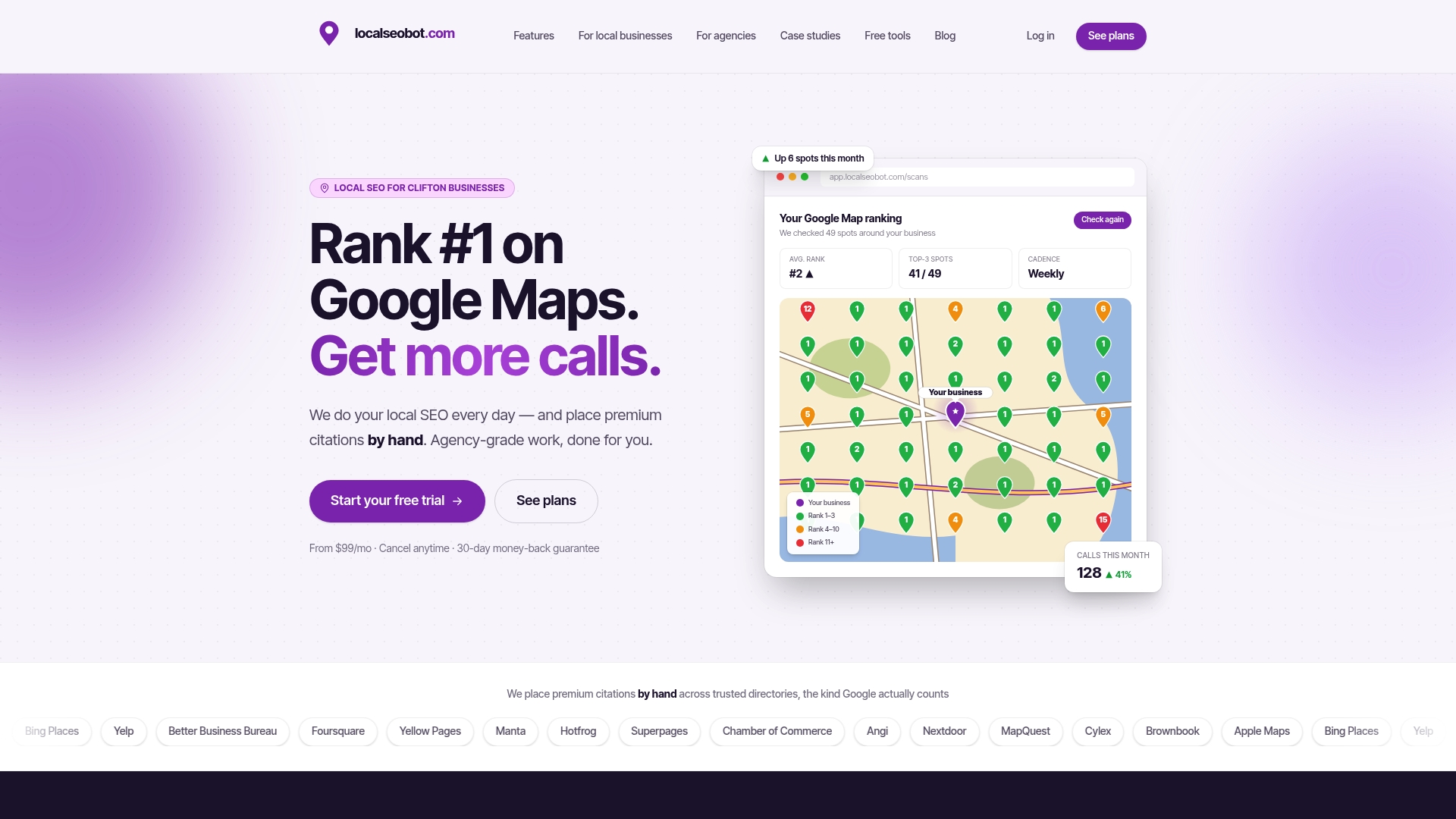
This is an optional route for owners short on time. Plans run $99 per month per location for Foundation and $199 for Growth, with details on our pricing page. Start there, or read our Google Maps SEO overview first.
FAQ
What is a proximity spam name?
It is a Google Maps business name padded with extras such as keywords, phone numbers, taglines, or location text. Google’s guidelines say the name should match the real-world branding.
How do I report a spammy business name?
Use “Suggest an edit” in Google Maps for simple cases. For persistent or fraudulent cases, file the Business Profile Redressal Form, as Google’s Maps help describes.
What evidence should I include in a report?
Include signage photos, the business website, and screenshots of reverted edits. Google’s guidance asks you to record how many times edits were reversed.
Can a spammy name get a profile suspended?
Yes. Google says unnecessary additions like taglines, phone numbers, or store codes can result in profile suspension, per its business name guidelines.
Does verification affect disputes?
Yes. Google’s policy overview says verification status affects whether updates and appeals are accepted.