Local Businesses: FTC Compliant Review Request Emails That Convert
Published September 29, 2026
Local Businesses: FTC Compliant Review Request Emails That Convert

The best review request email is short, personal, asks for one thing, and lands at the right moment after a purchase or service. It comes from a real person, links to a frictionless review form, and if any incentive is offered, discloses it clearly. Everything else, from subject lines to follow-up timing, exists to support that single formula.
TL;DR:
- Send review requests a few days after delivery for search goods, within a couple of days for experience-based services, and up to two weeks after complex projects are completed.
- Use a clear, single ask in the email body from a named person or business, with one button linking directly to the review form, avoiding bundled requests or vague CTA phrases.
- Keep the email short with a specific subject line related to the transaction, and include a light preview text that references the order or appointment without urgency language.
- Offer incentives like sweepstakes or discounts only with full disclosure, ensuring no condition ties rewards to positive reviews to stay compliant with FTC rules.
- Test one variable at a time, such as subject lines or send timing, and track open, click-through, and review conversion rates to optimize response rates over time.
Table of Contents
- The anatomy of a review request that gets opened and clicked
- When to ask for a review and how to structure follow-ups
- Subject lines and CTA wording that earn the click
- Copy-ready email templates for common scenarios
- Incentives and legal compliance: what you can and can’t offer
- Testing and optimizing your review request campaign
- Tracking the metrics that show whether it’s working
- Where Local SEO Bot’s experience comes in
- Handling negative feedback inside a review request flow
- Legal considerations beyond FTC rules: privacy and data handling
- What actually moves the needle
- Let Local SEO Bot handle review collection and reputation for you
- Sources
- FAQ
The anatomy of a review request that gets opened and clicked
A review request email has six moving parts, and each one either helps a customer act in ten seconds or gives them a reason to close the tab.
The subject line and preview text set expectations before the email is even opened. Keep both specific to the transaction (“How was your visit last Tuesday?”) rather than generic (“We’d love your feedback”), since specificity signals a real message instead of a mass blast.
The sender matters more than most businesses assume. An email from “Sarah at [Business Name]” or the technician who did the work outperforms a generic “no-reply” address because it reads like a person asking, not a system nagging. Personalize with the order number, service date, product name, or staff member involved wherever your platform allows it.
The ask itself should be a single sentence with no hedging: “Would you leave us a quick review on Google?” Avoid bundling in a survey, a referral request, and a review ask in the same email. Each dilutes the others and cuts completion rates on all three.
Layout and length follow the same logic. Three to five short sentences, one visual element at most, and one button. A wall of text or a row of five different review-site logos forces the reader to decide, and decisions kill clicks.
- Subject line: specific to the transaction, never generic
- Sender: a named person or the business, never “no-reply”
- Personalization: order, service date, or staff name where possible
- The ask: one clear sentence, no bundled requests
- CTA: a single button linking directly to the review form
- Social proof: an optional line or star graphic, only if it doesn’t crowd the ask
Social proof, like a line noting your current star rating, can help when trust is the barrier (a new customer relationship, a higher-ticket service). Skip it for repeat customers who already trust you: it just adds visual noise to an email that should take five seconds to read.
Pro Tip: Put the review link in the button and as a plain-text URL underneath. Some email clients strip button links, and you don’t want a broken CTA to be the reason someone doesn’t review you.
When to ask for a review and how to structure follow-ups
Timing is where most review request programs lose the most ground, and it’s fixable with a few rules.
Asking too early is the most common mistake. A request sent the moment an order ships, before the customer has even used the product, produces thin, generic reviews or no response at all. Field experiments on review timing found that immediate reminders aren’t always the strongest option: asking too soon can hurt both response rates and review quality, while waiting too long hurts recall. The right buffer depends on the product.
- Search goods (something simple and easy to judge, like a phone case or a book): send the request a few days after delivery, once the customer has had a normal chance to use it.
- Experience goods (a restaurant visit, a haircut, a consulting session): send within a couple of days, while the experience is still fresh.
- Complex services (home renovation, a multi-week project, an onboarding process): wait until the deliverable is complete and the customer has had a few days to live with the result, often about one to two weeks out.
From there, a simple three-message cadence covers most businesses: an initial request at the timing above, a reminder 5 to 7 days later for non-responders, and a final, shorter nudge after another week, then stop. Continuing to email non-responders past that point mostly earns spam complaints, not reviews.
SMS or in-app nudges work well alongside email, particularly for mobile-first customers who rarely open a promotional inbox but will tap a text link within minutes. Businesses running compliant SMS review requests alongside email as a second channel tend to catch customers who’d otherwise be missed entirely, provided the same disclosure rules apply to both channels.

Subject lines and CTA wording that earn the click
The subject line’s only job is to get the email opened without overpromising. Specificity and a light personal touch outperform generic requests almost every time.
- “How did we do, [First Name]?”
- “Quick favor? 30 seconds of your time”
- “You tried [Product], what did you think?”
- “[First Name], got a minute for a quick review?”
- “Your visit on [Date]: how was it?”
- “One quick question about your order”
- “We’d love to hear from you”
- “Loved your stay? Tell us (and future guests)”
- “60 seconds to help other [customers/diners/patients]”
- “How’s the [Product] working out?”
- “A quick thank-you (and a small ask)”
- “Was everything up to standard?”
Preview text should extend the subject line, not repeat it. Reference the specific order, appointment, or product, and lean on a light time estimate (“Takes less than a minute”) rather than urgency language, which feels out of place in a feedback request.
CTA button text should name the action and signal how small it is: “Leave a quick review,” “Rate your experience,” or “Share your thoughts (1 min).” Avoid vague buttons like “Submit” or “Click here,” which give no sense of what happens next.
Worth testing over time: subject line personalization (name vs. no name), sender name (business vs. individual), and CTA phrasing (time-based vs. action-based). Run one variable at a time so you know what actually moved the number.
Copy-ready email templates for common scenarios
These templates are built to be pasted into an email service provider and customized with merge tags. Each includes a subject, a short body, a CTA, and when to send it.
-
Post-delivery product review Subject: “How’s your [Product Name] working out?” Body: “Hi [First Name], your [Product Name] should have arrived a few days ago. We’d love to know how it’s going, and a quick review helps other shoppers decide.” CTA: “Leave a quick review” Timing: a few days after delivery.
-
Post-service review Subject: “Thanks for visiting us, [First Name]” Body: “It was great having you in on [Appointment Date]. If you have a minute, a short review helps us keep improving and helps other customers find us.” CTA: “Rate your experience” Timing: within a couple of days after the appointment.
-
Google-specific review request Subject: “Would you share your experience on Google?” Body: “Hi [First Name], thanks again for choosing [Business Name]. If you were happy with the service, a quick Google review would mean a lot and takes less than a minute.” CTA: “Leave a Google review” Timing: a few days after service, depending on product type. For a copy-and-paste starting point, see this Google review template.
-
First reminder (non-responders) Subject: “Quick reminder: how did we do?” Body: “Just following up in case our last note got buried. If you have 30 seconds, we’d still love your feedback on [Product/Service].” CTA: “Share your feedback” Timing: several days after the first request.
-
Final nudge Subject: “Last quick favor?” Body: “No worries if now’s not the time. If you ever get a spare minute, we’d appreciate a short review, it really does help.” CTA: “Leave a review” Timing: about a week after the first reminder, then stop.
-
Re-engagement for past customers Subject: “It’s been a while, how are you enjoying [Product]?” Body: “Hi [First Name], it’s been a few months since your last order. If [Product] is still working well for you, a review would help other customers make the call.” CTA: “Write a quick review” Timing: several weeks to a few months after purchase, for products with a longer usage curve.
- Use order number or appointment date tokens so the email reads as specific rather than template.
- Swap product name and staff name tokens for service businesses where a technician or stylist did the work.
- Keep one template per scenario rather than one generic template for every customer type: the timing and wording each need to match the transaction.
For businesses building out a dedicated Google review workflow, a ready-to-use Google review request template covers the compliance language alongside the copy.
Incentives and legal compliance: what you can and can’t offer
Offering something for a review feels like an easy way to boost volume, but the rules are specific and violating them puts your reviews, and your account, at risk.
The FTC’s Consumer Reviews and Testimonials Rule prohibits conditioning any incentive on a positive review, and requires clear disclosure whenever an incentive is offered at all. Selectively asking only customers you expect to be happy, while skipping ones who complained, can also be treated as manipulation under the same guidance.
What’s compliant:
- A sweepstakes entry offered for leaving any review, positive or negative, clearly disclosed in the invitation.
- A small discount code offered for writing a review, again regardless of sentiment, with disclosure language like “We’ll send you a 10% off code once you submit your review, no matter what you say.”
- Asking your full customer list to review, not just the ones who left a five-star support ticket.
What crosses the line:
- Offering a reward only if the review is positive, or promising a better outcome for a five-star rating.
- Asking happy customers for public reviews while routing unhappy ones to a private feedback form only, a pattern regulators view as manipulating the visible rating.
Platforms add their own layer on top. Google’s content policy for user-contributed reviews prohibits promotional content and purchase links inside reviews, so don’t ask customers to include discount codes or links in the review text itself. The FTC’s guide for platforms also draws a distinction between open review systems and verified-purchase systems, both of which carry their own fake-review risks that platforms actively police.
Disclosure of incentives, whether by public rule or platform policy, is not optional. Skipping it risks review removal, account penalties, or FTC scrutiny.
Testing and optimizing your review request campaign
Small changes compound. A structured test plan beats guessing at what’s wrong with a low-converting sequence.
- Test one variable per send: subject line, sender name, CTA wording, or send time, never all four at once.
- Segment by product category, customer lifetime value, or recency so a request for a $20 impulse buy doesn’t read the same as one for a $2,000 service.
- Authenticate your sending domain (SPF, DKIM, DMARC) and keep your list clean; poor deliverability quietly caps every other metric you’re trying to improve.
- Let a test run long enough to reach a meaningful sample before declaring a winner, then apply the result and move to the next variable.
Segmentation matters beyond personalization. A customer who’s ordered five times and never complained is a very different ask than a first-time buyer, and treating them identically wastes the goodwill of your best customers.
Pro Tip: Test in small increments, one variable, two or three weeks, then stop. Chasing a dozen simultaneous variables just produces noise you can’t act on.
Tracking the metrics that show whether it’s working
Four numbers tell you almost everything about a review request program: open rate, click-through rate, review conversion rate (clicks that become published reviews), and the resulting average rating.
- Open rate reflects subject line and sender strength.
- Click-through rate reflects the ask and CTA clarity.
- Review conversion rate reflects how frictionless the review form itself is.
- Average rating reflects the underlying customer experience, not the email.
To estimate payoff, a simple worksheet works: multiply monthly requests sent by your click rate, then by your conversion rate, to get monthly reviews added. From there, track whether the added review volume correlates with a change in map pack or search visibility over the following weeks.
| Metric | What it measures | Where to look for a problem |
|---|---|---|
| Open rate | Subject line and sender strength | Rewrite subject, test sender name |
| Click-through rate | Ask clarity and CTA wording | Simplify the ask, tighten the button text |
| Review conversion rate | Friction in the review form | Reduce steps, deep-link to the review box |
| Average rating | Underlying customer experience | Fix service issues, not the email copy |
Where Local SEO Bot’s experience comes in
Local SEO Bot works on local visibility and reputation for small businesses every day, which puts review collection squarely in its lane.
- The company builds manual premium citations on high-authority directories rather than automated blasts, the same attention to detail it applies to review and reputation programs.
- Clients have reported improved Google Maps positions and more customer calls after cleaning up citations and reputation signals together.
- A 30-day money-back guarantee applies if Google Maps rankings don’t improve, reflecting confidence in the underlying method.
- Businesses looking for a deeper dive on SMS-based review collection can review the compliant SMS review request case study for implementation detail.
Handling negative feedback inside a review request flow
A review request email will occasionally surface an unhappy customer before they post publicly, and that’s a feature, not a failure.
Build a soft branch into your flow: after the initial ask, a simple “Was everything up to standard?” question with a low-friction way to say no routes dissatisfied customers to a private resolution path instead of a public review, as long as you aren’t hiding this option only from customers you predict will complain. The FTC’s own guidance draws a line here: routing all customers to the same choice is fine, but selectively steering only likely detractors away from public review while pushing happy customers toward it can count as manipulating the visible rating.
When a negative review does land, respond publicly, briefly, and without defensiveness. Acknowledge the issue, state what you’re doing about it, and take the detailed back-and-forth offline. A calm, specific public reply often matters more to future customers reading the thread than the original complaint does.
Never ask a customer to remove or edit a negative review in exchange for anything: that crosses directly into the same incentive-for-sentiment territory the FTC prohibits, regardless of how the request is worded.
Legal considerations beyond FTC rules: privacy and data handling
Review request programs run on customer data (email addresses, order history, sometimes phone numbers for SMS), which means privacy law applies even though the emails themselves feel low-stakes.
If you have customers in the European Union or the United Kingdom, GDPR governs how you store and use their contact details for marketing purposes, including automated review request emails, and requires a lawful basis for that processing along with an easy way to opt out. Businesses in the United States should check state-level privacy laws where they operate, since requirements around consent and data handling vary rather than falling under one federal standard.
Practically, that means every review request email needs a visible unsubscribe link, a clear record of where the email address came from (a completed transaction, not a purchased list), and a retention policy for the customer data used to send it. If you’re using SMS for review requests, confirm you have the right opt-in on file before sending, since text messaging carries its own consent rules separate from email. None of this is exotic, but skipping it turns a simple review ask into unnecessary legal exposure.
What actually moves the needle
The single biggest lever is unglamorous: get the timing right and ask for exactly one thing. Programs that pile on referral asks, surveys, and reviews in one email consistently underperform simple, well-timed single-CTA requests. The most common mistake seen across small business programs is sending the request too early, off the order date instead of the delivery or service date, which quietly caps response rates before a single word of copy is even tested. Expect review volume to build gradually over a few months, not overnight, as your sequence and timing settle into a rhythm.
— Local
Let Local SEO Bot handle review collection and reputation for you
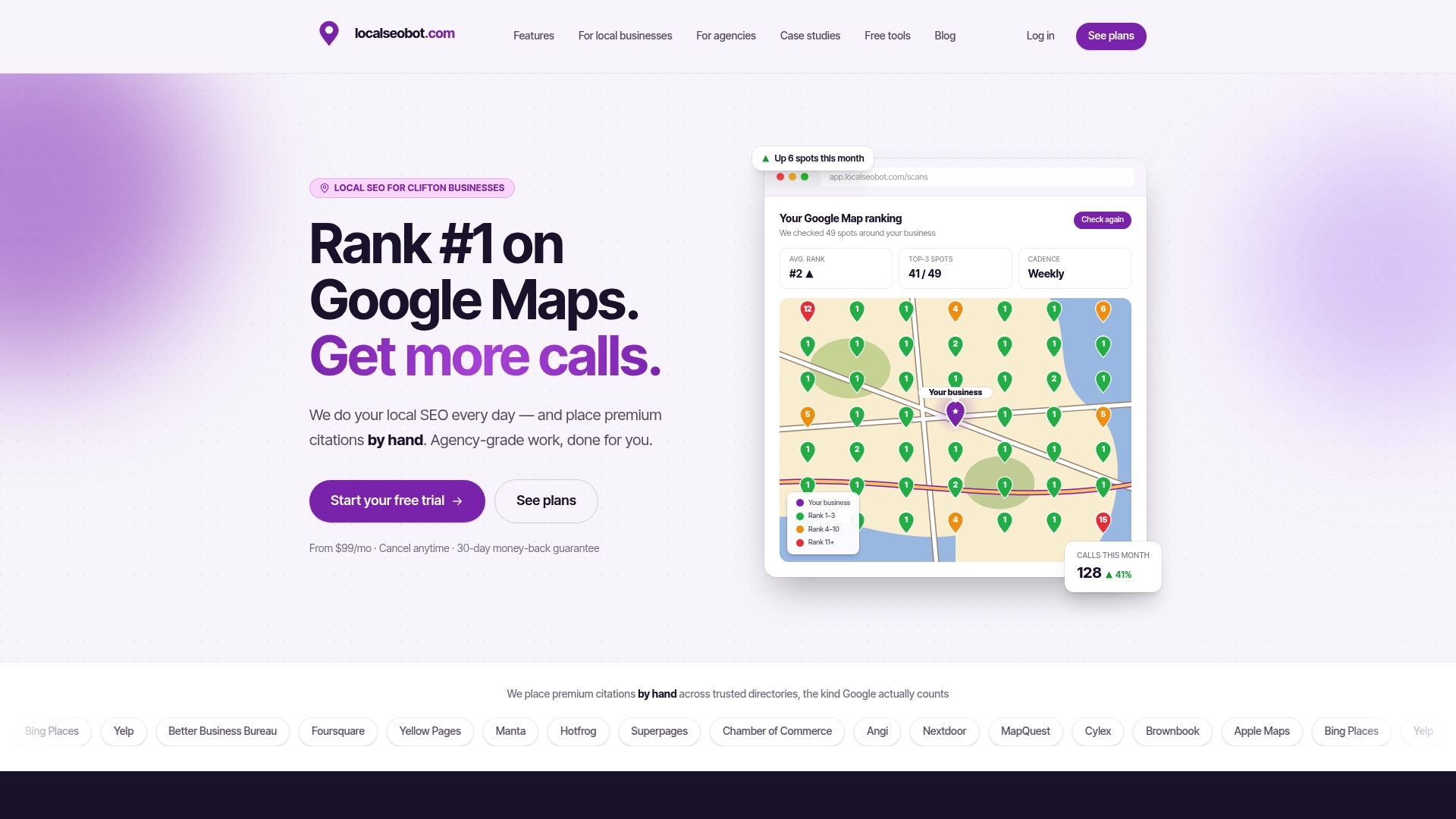
Building and testing a full review request sequence takes ongoing attention: timing rules, compliance language, follow-up cadence, and tracking, on top of everything else running a local business demands. Local SEO Bot’s automated review generation and AI-driven review replies handle that sequence for you, paired with review widgets that display your ratings directly where customers are deciding whether to call.
- Automated review request sequences that follow the timing and compliance rules covered above.
- AI-assisted review replies so negative feedback gets a timely, consistent public response.
- Review widgets that surface your ratings on your own site, not just on third-party platforms.
Because incentive rules and platform policies shift, a managed service that keeps the compliance language current removes one more thing to track yourself. Plans start with Foundation at $99 per month per location, with Growth at $199 per month per location for businesses that want more automation depth, both on the pricing page. Agencies managing multiple client locations can review the white-label Pro plan on the agency pricing page.
Sources
- Consumer Reviews and Testimonials Rule: Questions and Answers | Federal Trade Commission
- Timing is everything: What’s the best time to ask for reviews
FAQ
How do you politely ask for a good review?
Keep the request short, come from a named person rather than a generic address, and ask for one clear action, such as “Would you leave us a quick review on Google?” Send it at the right moment (shortly after service or a few days after delivery) rather than immediately after purchase, and never tie any reward to a positive outcome.
What is a good sample review message?
A strong message names the transaction, keeps the ask to one sentence, and links directly to the review form: “Hi [First Name], thanks for choosing us on [Date]. If you have a minute, we’d love a quick review, it really helps other customers find us.” Templates for specific scenarios like post-delivery or post-service requests each adjust the timing and wording slightly.
How do I send an email for review?
Use your email service provider to send a short, personalized message with a single call-to-action button linking to your review page, timed from a few days up to about two weeks after the purchase or service depending on the product type. Follow up once or twice for non-responders, spaced about a week apart, then stop.
How do I ask for a review without sounding desperate?
Send only one initial request and at most two follow-ups, and keep the tone matter-of-fact rather than apologetic or urgent. Avoid stacking multiple asks (reviews, referrals, surveys) in the same email, since that reads as a scramble for engagement rather than a simple, confident request.