Weekly Automated Local Content for Local Businesses With Human Review
Published September 26, 2026
Weekly Automated Local Content for Local Businesses With Human Review

Automated local content is a repeatable, template-driven way to publish location-specific updates and pages that keep your local presence fresh. When paired with human editorial review, it saves time on repetitive publishing tasks and increases local engagement. Done carelessly, it can also trigger search penalties or legal exposure, so the process matters as much as the output.
TL;DR:
- Automated local content relies on real, specific data such as addresses, job details, or dates to avoid search penalties and maintain relevance.
- Implementing a workflow with data collection, templates requiring local fields, human review, and scheduled publishing ensures quality and reduces risks of generic or inaccurate posts.
- Monitoring key metrics like post views, clicks, calls, and map rankings over set periods helps evaluate content effectiveness and identify when templates need updating.
- Automation must include human oversight, especially for fact-checking and adding unique local details, to prevent thin, generic pages that search engines may penalize.
- Use of free native scheduling tools exists for basic posting, but effective workflows often require paid tools for data integration, templates, and ranking tracking, with a minimal team set-up.
Table of Contents
- What automated local content looks like in practice
- Build the workflow: data, template, review, publish
- How to measure success and set a posting cadence
- Avoid the two traps: scaled content abuse and fake reviews
- Tools, templates, and the minimum team to run this well
- Why human-in-the-loop automation beats either extreme
- Let Local SEO Bot run the automated content workflow for you
- Sources
- FAQ
What automated local content looks like in practice
The best examples share one trait: they turn operational data you already have into something a local customer or reader can use. Automation works when it fills in details, not when it fakes them.
- Google Business Profile posts: updates, offers, and events scheduled ahead of time to keep a listing active without daily manual work, following Google Business Profile posts guidance on formats and cadence.
- Job-to-city pages: a completed roofing job in one neighborhood becomes a city-specific landing page, pulling from job records instead of generic copy.
- Update and announcement templates: hours changes, seasonal menu swaps, or holiday closures pushed out through a standard format so nothing gets forgotten.
- Newsroom robot texts: data-driven local summaries, like weather recaps or school sports results, drafted automatically then edited and bylined by a reporter. An approach publisher case studies show works best with human edits added before publishing.
Each format depends on a real, specific detail: an address, a job type, a date, a score. Strip that out and you’re left with a template with nothing to say.
Build the workflow: data, template, review, publish
A workflow keeps automated content from turning into repetitive filler. The order matters: skipping the review step is where most local content programs get into trouble.
- Collect reliable data sources. Pull from job records, inventory feeds, staff schedules, or promotional calendars, not guesswork.
- Build templates with mandatory local fields. Require a neighborhood name, a specific service detail, or an owner’s actual comment, so no two pages read the same.
- Add an editorial QA step. Someone checks facts, adds an author byline, and confirms the local detail is accurate before anything goes live.
- Batch draft, then schedule natively. Write a batch of posts or pages at once, then use the platform’s own scheduling tools, such as the GBP calendar, to release them on a set cadence.
Pro Tip: Keep one field in every template that a template cannot fill on its own, like a specific customer detail or a staff comment, so a human always has to touch the draft before it publishes.
This sequence turns automation into a time-saver rather than a shortcut around quality. A five-minute review step per post is a small cost against the risk of publishing something inaccurate or generic at scale.
How to measure success and set a posting cadence
Automated local content earns its keep when you can point to a metric that moved. Watching the right numbers also tells you when a template has gone stale.
- Offer views and clicks on Google Business Profile posts show whether an update is getting seen.
- Calls and direction requests tied to a specific post or page indicate real customer action.
- Local map-grid rank, tracked through a geo-grid tool, shows whether visibility is improving across a service area.
A practical cadence, drawn from workflows built around a 30-day content calendar, is weekly posting for Google Business Profile, a monthly review of what performed, and a quarterly audit of templates and older pages, based on GBP automation guidance that recommends a monitoring routine to catch posts that were rejected or archived without notice.
Expect different timelines for different results. Engagement signals like clicks and calls often shift within three months, while map ranking tends to compound over a year of consistent posting and citation work. Test one variable at a time, such as posting frequency or offer type, rather than changing everything in a single cycle.

Avoid the two traps: scaled content abuse and fake reviews
Automation carries two specific risks, and both have official guidance behind them. Ignoring either can undo months of work.

Google’s own position is that automation is not the problem: Google Search Central states that using automation to generate content is not against policy on its own. The test is whether the content is people-first rather than built purely to manipulate rankings. The catch is enforcement. Reporting on scaled content abuse shows Google has penalized high-volume, low-value automated pages, and recovery usually means consolidating pages and adding real editorial value back in.
The second trap is reviews. The FTC’s final rule on consumer reviews and testimonials prohibits creating or buying fake reviews, misrepresenting who wrote an endorsement, or suppressing negative feedback. Automated review requests are fine; automated or purchased fake reviews are not.
Content generated at scale to game search rankings, without adding real value for people, is treated as spam regardless of the method used to produce it.
Practical checks: require a byline on every automated piece, mandate one unique local fact per page, cap the number of near-duplicate pages published per week, and set a trigger to pause and audit if traffic or rankings drop sharply. Bring in legal or PR counsel before launching any automated review request program.
Tools, templates, and the minimum team to run this well
Running automated local content responsibly does not require a large staff, but it does require the right categories of tools and at least one person accountable for quality.
- A GBP scheduler for posting updates, offers, and events on a set calendar.
- A templating engine with required local fields built in, so drafts cannot publish without a unique detail.
- Data connectors that pull from job records, inventory, or scheduling systems automatically.
- An editorial QA interface where a reviewer approves or edits drafts before they go live.
- A geo-grid rank tracker, such as Maprank, to see how visibility changes across a service area over time.
A workable minimum team is one owner or editor who sets standards, plus a part-time reviewer or a managed agency that handles the review step on a schedule. Tools like the Local SEO Content Idea Generator and a Local Keyword Generator can seed drafts faster, but they still need a human to check local accuracy before publishing. Manual premium citation building and automated content work together well: citations establish consistent business information across directories, while automated posts and pages keep that presence active and current.
Why human-in-the-loop automation beats either extreme
Full automation without review produces thin, repetitive pages that search engines are actively penalizing. Full manual work without automation cannot keep pace with weekly posting demands. The approach behind Local SEO Bot combines manual premium citation building on high-authority directories with automated Google Business Profile posting and review management, using human oversight at each publishing step. Local SEO Bot offers a 30-day money-back guarantee if Google Maps rankings do not improve. Run automation in-house if you have a dedicated editor; hire managed help if your team cannot commit to weekly review cycles.
— Local
Let Local SEO Bot run the automated content workflow for you
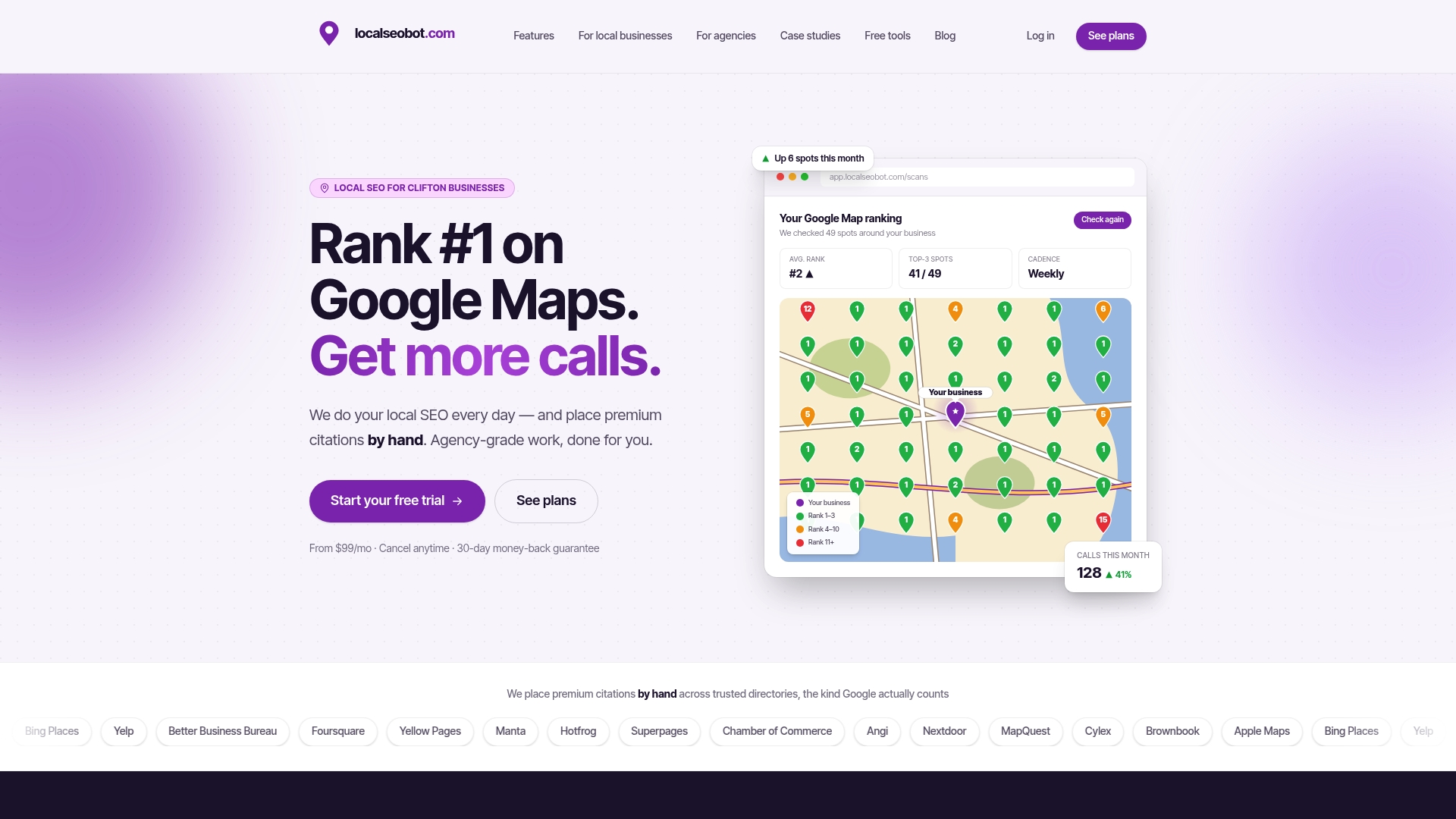
If the workflow above sounds right but the weekly upkeep feels like more than your team can commit to, Local SEO Bot handles the automation and the editorial review together. That means Google Business Profile posting, automated review requests with AI-assisted replies, and geo-grid rank tracking through Maprank, paired with manually built premium citations rather than automated citation blasts. Clients look for steadier Maps visibility and more inbound calls, and the 30-day money-back guarantee applies if rankings do not improve.
Check current plans and pricing or start with Maprank to see where your Maps rankings stand today.
Sources
- Google Search Central — Google Search and AI content
- Federal Register — Trade Regulation Rule on the Use of Consumer Reviews and Testimonials
- Scaled content abuse: Google’s AI page crackdown (Digital Applied)
- Google Business Profile posts — Help Center
FAQ
What are five examples of automation for local content?
Common examples include scheduled Google Business Profile posts, job-to-city landing pages, automated hours or menu update templates, data-driven newsroom summaries edited by reporters, and automated review request messages. Each still needs a human check before or shortly after publishing.
How do I make AI-generated content that follows Google’s rules?
Follow Google Search Central’s guidance, which states automation is acceptable when the content is people-first and not built mainly to manipulate rankings. Add a unique local detail to every piece, assign a byline, and have someone review each draft before it publishes.
Is there a free version of local content automation?
Free options exist for individual tasks, such as basic Google Business Profile scheduling built into the platform itself, but full workflows combining templating, data connectors, and rank tracking are typically paid. Local SEO Bot offers paid plans starting at $99 per month per location, with pricing details available.
Is there any free automation tool for Google Business Profile posts?
Google Business Profile includes native, free scheduling for posts, offers, and events directly in its own interface. Third-party tools that add templating, batch drafting, or geo-grid rank tracking on top of that usually require a paid subscription.
How often should I post automated local content?
A practical cadence is weekly for Google Business Profile posts, a monthly review of what performed, and a quarterly audit of older templates and pages. This schedule, drawn from common GBP automation practice, balances consistency with enough time to catch rejected or underperforming posts.