Review Response Policy: A Template Small Businesses Can Use
Published November 13, 2026
Review Response Policy: A Template Small Businesses Can Use

A review response policy is a short written document that tells everyone who touches your Google Business Profile who replies to reviews, how fast, in what tone, and when a complaint moves off the public page. The best policy is one that actually gets followed every week, which is why we built our review replies to run on a set routine rather than on whoever has a spare minute. This guide gives you the policy, the reasoning behind each rule, and the sources to back it up.
TL;DR
- Reply to every review, positive and negative. Aim for 24 hours on complaints, and keep replies short, personal and calm.
- Never argue in public. Apologize for the experience, state the fix, and move the details to a phone call or email.
- Report only reviews that break Google’s rules (spam, harassment, off-topic content). A review you simply dislike gets a reply, not a report.
- Keep private details out of every reply, and write down who is allowed to post on the business’s behalf.
- Our Local SEO Bot plans automate review replies and review requests, so the policy runs without your daily attention.
Table of Contents
- Why a written policy beats good intentions
- What a review response policy should contain
- Response times: how fast is fast enough
- Replying to positive reviews
- Replying to negative reviews
- What never goes into a public reply
- When to report a review to Google
- Escalation: the reviews that need more than a reply
- Who replies, and how they are trained
- Measuring whether the policy works
- The policy, ready to adapt
- Our perspective
- Put the policy on autopilot
- FAQ
- Sources
Why a written policy beats good intentions
Most owners reply to reviews in bursts. A bad one arrives, the owner is angry, and the reply gets written at 11 p.m. Three weeks of silence on the good reviews follow. A policy fixes both problems because the decisions are made once, calmly, instead of in the moment.
There is a business reason as well. The Better Business Bureau notes that prospective customers treat the newest reviews as the most relevant and may read a lack of response as disinterest. It cites a BrightLocal survey in which more than 80 percent of people thought reviews older than three months were irrelevant, and about 60 percent of 18 to 34-year-olds only consider reviews from the past two weeks. Recent activity on your profile, including your replies, is what a shopper sees first.
A peer-reviewed study of review data from 2001 to 2016, published in 2024, adds the revenue angle. It found that more responses to positive reviews increased later ratings and revenue, while more responses to negative reviews lowered ratings in the short term and improved them over the long term. In plain terms: replying to the happy customers pays off right away, and replying to the unhappy ones pays off if you keep doing it and do it well. A policy keeps you doing it.
If you want more on how reviews tie to revenue, this overview of online reviews and revenue growth covers the marketing side.

What a review response policy should contain
One page is enough. Cover these eight items and you have a working policy.
- Scope. Which platforms the policy covers. For most local businesses that starts with Google Business Profile, then Facebook, Yelp and any industry directory you actively use.
- Owner. One named person who is accountable, and one backup. Everyone else gets “draft only” access or none.
- Response times. A target for each rating tier (see the table below).
- Tone and voice. Three or four rules on how you sound.
- Escalation. What happens when a review mentions injury, safety, discrimination, a legal threat or a fraud claim.
- Privacy rules. What never appears in a public reply.
- Reporting rules. When a review is reported to Google, and who does it.
- Review and update. A monthly or quarterly check that the policy is being followed.
The rest of this guide takes them in turn.
Response times: how fast is fast enough
The BBB advises businesses to aim to reply within 24 hours, especially on public platforms such as review sites. That is a sound default for complaints, because a public grievance left unanswered for days is the version most future customers read.
Here is a practical tier structure you can paste into your policy and adjust to your staffing:
| Review type | Target reply time | Who replies | Tone |
|---|---|---|---|
| 5 stars, with text | Within 2 business days | Owner or trained staff | Warm, specific, short |
| 5 stars, no text | Within 3 business days | Anyone on the approved list | Brief thanks |
| 4 stars | Within 2 business days | Owner or trained staff | Thankful, ask what would earn the fifth star |
| 3 stars | Within 24 hours | Owner | Appreciative, curious, offer to talk |
| 1 to 2 stars | Within 24 hours | Owner only | Calm, accountable, move offline |
| Safety, legal or discrimination claim | Same day, no public detail | Owner plus counsel as needed | Neutral and minimal |
The exact numbers are your choice. What matters is that each tier has a number and a name next to it.
Replying to positive reviews
Positive reviews are the easy ones, which is why they get skipped. The Australian government’s small business guidance says to acknowledge and respond to every review and to thank positive reviewers promptly. Your policy should make that routine.
Three rules keep positive replies from sounding like a form letter:
- Use the reviewer’s first name and mention one detail they gave you: the technician who showed up on time, the dish they loved, the same-day fix.
- Keep it to two or three sentences. Long replies to praise read as self-promotion.
- Do not paste the identical line on every review. Prospective customers read your replies in a row, and repetition shows.
A reply that works: “Thanks, Maria. Glad the team could get your water heater running the same day. We appreciate you taking the time to leave this.” It names the job, thanks the person and stops.
Replying to negative reviews
This is where the policy earns its keep. Write the sequence down so no one improvises.
The five-step sequence
- Pause before posting. The policy can say “no reply within the first hour of reading a 1-star review” so the first draft is never the posted draft.
- Check the facts. Pull the job record, invoice or booking so you know what happened.
- Thank and apologize for the experience. The BBB’s guidance is to stay calm, apologize for the inconvenience and get on the way to resolving the problem.
- State the next step in one sentence. Give a name, a phone number or an email for the follow-up.
- Move the details offline. For complex issues the BBB recommends inviting the customer to contact you by phone or email so the exchange does not turn into a long back-and-forth online.
One law firm’s guidance on responding to negative posts suggests keeping replies to about fifty words, introducing yourself, addressing the author by name and offering to follow up by email or direct message. The same guidance says to avoid arguing, offering contrary evidence, using canned responses, and using sarcasm or humor. Those are good rules to copy straight into the policy’s tone section.
A negative reply template
Hi Jordan, this is Sam, the owner. I’m sorry your appointment started late and that it wasn’t the experience we want for you. I’d like to understand what happened and make it right. Please call me at [number] or email [address], and I’ll follow up personally.
It is 45 words, names a person, accepts the experience without admitting fault on details, and takes the rest private. For more wording options across different complaint types, see our negative review response examples for small businesses and our guide on how to respond to negative reviews.
What about the reviewer who replies back?
Set a one-exchange rule: you reply once, the customer may answer once, and you respond once more only if there is new information to give. In one public discussion of replying to management responses on reviews, the general consensus was to give each side one opportunity, because anything more lets the thread spiral into an argument. If the customer keeps pushing, the policy should say: call them, and stop posting.

What never goes into a public reply
This section is the one most small business policies leave out, and it is the one that causes real trouble. Write these as hard rules:
- No private details. No order contents, account details, invoice amounts, addresses or appointment history. If the reviewer shared them, you still do not repeat them.
- No confirming the person was a customer when the nature of your work makes that sensitive. Medical, legal, counseling and similar practices should have their compliance lead or attorney approve the privacy section of the policy, because professional privacy rules govern what you can say even when the reviewer has named themselves.
- No accusations. Do not call a review fake, a competitor’s work or a lie in a public reply. If you believe it breaks Google’s rules, report it (see below) and reply to it as though it might be real.
- No threats or talk of legal action. Anything involving a lawyer goes through the owner and the lawyer, not through the review box.
- No offers of money in return for changing or removing a review. The next section explains why this matters.
- No identical replies. The Amundsen Davis guidance already warns against canned responses on negative posts, and the same logic applies to praise.
Do not penalize customers for reviewing
The Maryland State Bar Association notes that under the Consumer Review Fairness Act, it is illegal for a contract to include clauses that penalize customers for posting negative reviews. If your service agreements, intake forms or terms of sale have a non-disparagement line, ask your attorney to review it. Your policy should also say that staff never threaten customers over a review.
When to report a review to Google
Replying and reporting are different tools, and the policy should keep them separate. Google says any review can be reported, but only reviews that violate its policies are eligible for removal. It also says not to report a review simply because you disagree with or dislike it, and that it does not get involved in conflicts between businesses and customers.
The reporting path, per Google’s help page:
- Go to your Business Profile and select Read reviews.
- Next to the review, select Report.
- Choose the reason, such as spam or profanity.
- Select Send report.
Evaluation typically takes several days, and you can track the status in the Reviews Management Tool. If a flagged review does not qualify for removal, Google allows a one-time appeal for up to 10 reviews at a time.
The MSBA summary lists the categories Google’s removal criteria focus on: spam and fake content, off-topic content, restricted content, illegal content, terrorist content, sexually explicit content, offensive content, dangerous and derogatory content, harassment and bullying, hate speech, and impersonation. A rude but honest 1-star review about a late technician fits none of them. A review from someone who never used your service might fit spam or fake content.
Build this into the policy as a short test: “Does the review break a Google content rule? If yes, report it and also post a short neutral reply. If no, reply and do not report.” Our pages on how to delete a Google review and the Google Business Profile reviews management tool walk through the screens.
Escalation: the reviews that need more than a reply
Some reviews should leave the normal queue. List them in the policy with the person who takes over:
- Claims of injury, illness or property damage: owner and insurer.
- Allegations of discrimination or harassment by staff: owner, with HR guidance if you have it.
- Threats of legal action or regulatory complaints: owner and attorney.
- Reviews that appear to come from competitors or former employees: owner, who reports it to Google if a content rule applies.
- Reviews that name a specific employee: owner speaks with the employee before replying.
For each, the public reply stays minimal: acknowledge, give a contact route, say nothing about facts. The investigation happens off the page.
Who replies, and how they are trained
A policy fails when only one person can follow it. Decide these things in writing:
- Approved responders. Name them. Give each access to the profile at the lowest permission level that lets them reply.
- Sign-off. Staff may draft; the owner posts anything under 3 stars.
- Sign-off name. Replies should come from a named person or the owner, not an anonymous “management” label.
- Examples folder. Keep five approved replies for each tier so new staff can see the standard.
- Vacations and busy seasons. A backup who covers when the owner is out, so the 24-hour target holds through your peak weeks.
Measuring whether the policy works
A monthly ten-minute check is enough. Track:
| Metric | What to look for |
|---|---|
| Share of reviews with a reply | Should be at or near 100% |
| Median time to first reply | Inside your tier targets |
| Complaints resolved offline | Count of phone or email follow-ups completed |
| Reported reviews and outcomes | Which were removed, which were not, and why |
| New reviews per month | Is the flow steady, or did it stall? |
If the number of new reviews drops, your policy needs a companion: a simple routine for asking happy customers to leave one. Replies keep the profile fresh, and new reviews give you something to reply to. Our guide to Google review replies and local SEO looks at how reply activity fits with the rest of your profile work.
The policy, ready to adapt
Copy this into a document and fill in the brackets.
Purpose. We reply to every customer review so that people who read our profile can see we listen and act.
Platforms. [Google Business Profile, Facebook, Yelp, other].
Owner of the policy. [Name], with [backup name] as cover.
Response times. Reviews of 3 stars or lower: within 24 hours. All other reviews: within [2] business days.
Tone. Use the reviewer’s first name. Keep replies under about 50 to 75 words. Thank, acknowledge, offer a next step. Never argue, joke at the reviewer’s expense, or paste the same reply twice.
Negative reviews. Apologize for the experience, give a direct contact, and move details to phone or email. One public exchange, maybe two.
Never in a public reply. Personal, financial or health details; accusations; threats; offers of payment for changed reviews.
Reporting. Report only reviews that break Google’s content policies, using the Report option in the profile. Reviews we dislike get a reply, not a report.
Escalation. Injury, discrimination, legal threat or safety claims go to [owner] the same day, and the public reply stays minimal.
Review. [Owner] checks reply rate and response time on the [first] of each month and updates this policy each [quarter].
Our perspective
Every small business we work with already has a review policy. It just lives in the owner’s head and gets forgotten the week a big job lands. The policy only matters if the replies actually go out.
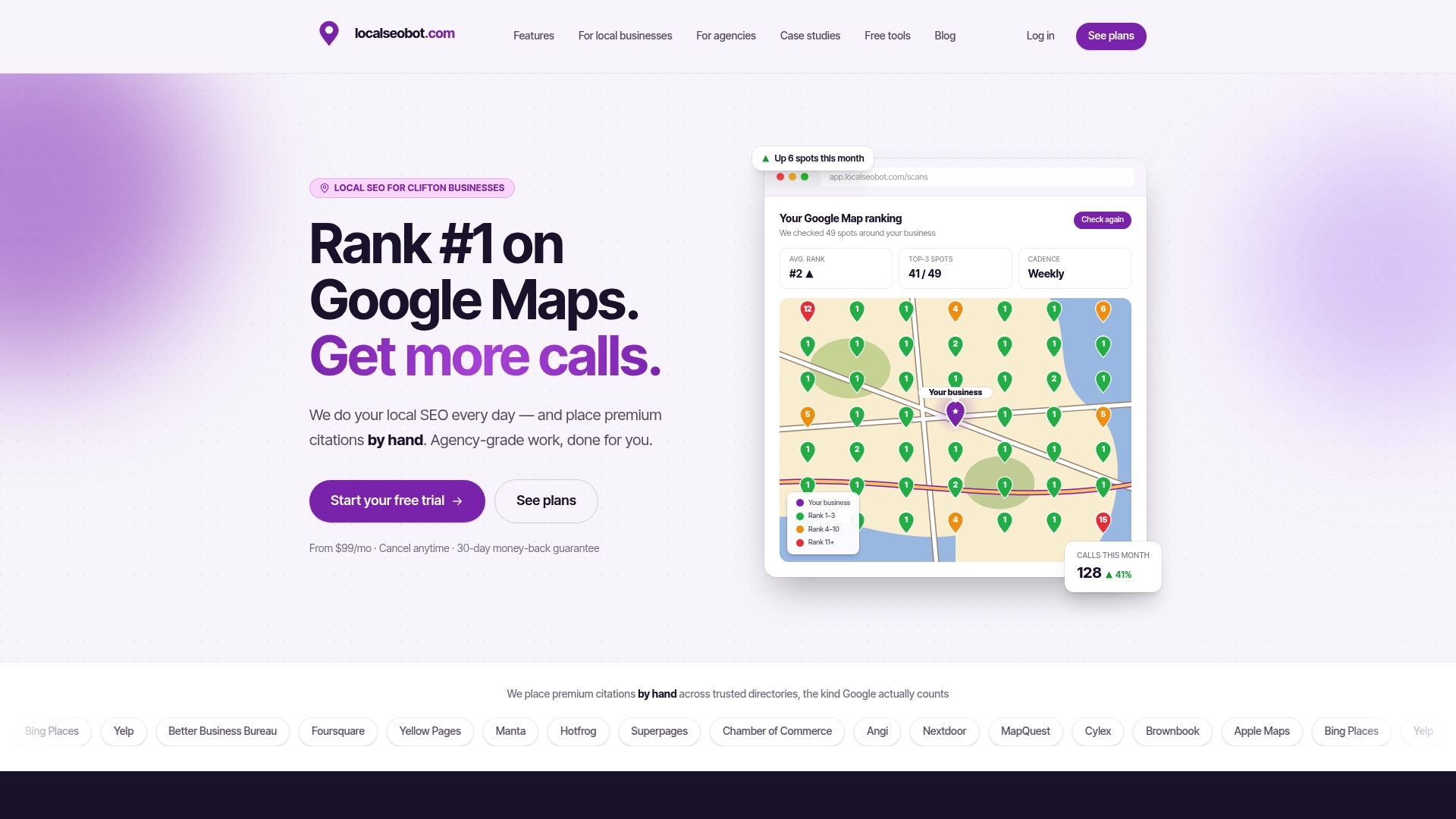
That is why we built review handling into the product itself. Local SEO Bot replies to reviews with AI-driven responses and generates review requests automatically, alongside optimizing the Google Business Profile, publishing regular posts and tracking rankings with map grid scans. A written policy tells the software, and your team, what “good” looks like. The routine does the rest.
Our advice is to write the one-page policy first, then let the routine carry it. Owners who do both get consistency, which is the thing prospective customers can see.
Devyn H
Put the policy on autopilot
If you would rather not reply to reviews by hand every week, Local SEO Bot handles AI-driven review replies and automated review generation as part of the same platform that optimizes your Google Business Profile and posts to it. Plans are billed per location per month: Foundation is $99, Growth is $199, and Pro is $399 for agencies. You can compare them on the pricing page. We back the approach with a 30-day money-back guarantee if you do not see a ranking increase.
Agencies managing several locations can look at the Pro plan and white-label options.
FAQ
How long should a review response policy be?
One page is plenty. It needs a scope, an owner, response times, tone rules, privacy rules, a reporting test and an escalation list. A longer document tends to go unread, and an unread policy does not change how replies are written.
Should I respond to every review?
Yes. Government small business guidance recommends acknowledging every review, thanking positive reviewers promptly and handling negative ones professionally without public argument. Even a one-line thank-you on a star-only review shows you are paying attention.
Can I ask Google to remove a bad review?
Only if it violates Google’s policies, for example spam, fake content or harassment. Google says to report a review for that reason and not because you disagree with it. Use the Report option on the review in your profile and check the status in the Reviews Management Tool.
How long should a reply to a negative review be?
Short. Legal guidance on negative online posts suggests about fifty words: introduce yourself, use the author’s name, offer a follow-up by phone or email and leave the details out of the public thread.
Sources
- Online reviews, business.gov.au
- Soothing the unsatisfied or pleasing the satisfied? Effects of managerial responses to positive versus negative reviews, HKU Business School
- BBB Business Tip: How to handle negative reviews
- BBB Business Tip: How to handle a customer complaint
- Responding to Negative Online Posts about Your Business, Amundsen Davis
- Report inappropriate reviews on your Business Profile, Google
- A Lawyer’s Guide to Removing False Google Reviews, Maryland State Bar Association
- How Online Reviews Drive SMB Revenue Growth