Data Aggregator Submissions: What They Are and Whether to Bother
Published November 5, 2026
Data Aggregator Submissions: What They Are and Whether to Bother

A data aggregator submission means sending your business name, address, phone number and other details to a company that redistributes them to many directories, apps and map platforms. In the U.S., the names that come up most are Data Axle, Foursquare and Neustar Localeze. Search Engine Land describes them as listing information warehouses that push data to directories, separate from the structured citations you build on directories yourself. Do it once, accurately, and then put most of your effort into the listings customers actually see.
TL;DR
- Aggregators feed your business data to many downstream sites. Directory citations are the listings you claim and control directly.
- Search Engine Land calls aggregators a gray area: there is little recent data showing they deliver meaningful results.
- The safe move is to check what Data Axle, Foursquare and Localeze hold about you and correct anything wrong.
- Consistency matters more than volume. Decide on one name, address and phone format and use it everywhere.
- Put your effort first into Google Business Profile, Yelp, Apple Business Connect, Bing Places and YP.com.
Table of Contents
- What data aggregators are and what they collect
- Aggregators vs. citations: the practical difference
- Do aggregator submissions help local SEO and Google Maps rankings?
- Which aggregators matter for U.S. local SEO
- What role Foursquare plays
- How data aggregator submissions work
- How to check and correct inaccurate aggregator data
- Where to put your effort first
- Our perspective
- Let us handle the listings and the Maps work
- FAQ
- Sources
What data aggregators are and what they collect
A local data aggregator compiles business records and licenses or distributes them. Their databases have historically been built from sources such as phone records, utility records and business registrations, and they sell or syndicate that data to other platforms. The business owner is often not the one who supplied it.
The typical record includes:
- Business name
- Street address and suite number
- Primary phone number
- Website URL
- Business category
- Hours of operation
- Sometimes a short description, photos and payment details
That data then flows to GPS apps, smaller directories, voice assistants and search sites. If an aggregator holds an old phone number, that number can reappear on sites you never touched.
Aggregators vs. citations: the practical difference
People often use “citations” for everything, but there are two groups.
| Data aggregators | Directory citations | |
|---|---|---|
| Who you deal with | A data company that distributes records | A directory with a public listing page |
| What customers see | Usually nothing directly | A listing with your details, reviews and photos |
| How it spreads | Pushes data to many downstream sites | Stays on that one site, may feed others |
| Your control | Limited, correction-based | High: you claim, edit and verify |
| Examples of type | Data Axle, Foursquare, Neustar Localeze | Google Business Profile, Yelp, Apple Business Connect, Bing Places, YP.com |
The two work together in one direction. Aggregators supply raw data that can seed or overwrite a downstream listing. Your direct citations are where you override that data with the correct version. If you want a deeper walkthrough of listing types, see our guide to types of local citations.
Do aggregator submissions help local SEO and Google Maps rankings?
Honestly, the evidence is thin. Search Engine Land says there is little recent data that aggregators deliver meaningful results, and that it is more important to have accurate, consistent information on the major directories: Google Business Profile, Yelp, Apple Business Connect, Bing Places and YP.com.
That does not make aggregators irrelevant. Wrong data is the real risk. When an aggregator holds a stale address, it can seed that address into smaller sites and create the kind of mismatch that confuses customers and muddies your footprint. Think of aggregator work as housekeeping that prevents problems, not a ranking lever you pull.
Google Maps position depends mostly on the profile itself, reviews, proximity and the business’s overall prominence. If you want to see how you actually rank block by block, a Google Maps rank tracker with grid scans shows results that no aggregator report will.
If you are weighing how much any single tactic is worth, a framework for judging whether a tactic delivers real results helps you avoid spending on activity that cannot be measured.
Which aggregators matter for U.S. local SEO
Three names come up repeatedly in U.S. local search guidance, and Search Engine Land lists the same three.
Data Axle
Data Axle is a long-standing North American business database, formerly known as Infogroup. Its data supplies directories and marketing platforms. It is the one most likely to hold old records about a business that has moved or changed its phone number, because its history is built on compiled records.
Neustar Localeze
Localeze is a local search data platform built to distribute business information to search engines, navigation tools and directories. It tends to be a managed or paid route for owners, and many small businesses reach it through a service rather than directly.
Foursquare
Foursquare is the unusual one. It works as an aggregator-style data source and also as a consumer app and listing site where you can claim your own page. That means you can do something about it directly, which is not true of every aggregator.
What role Foursquare plays
Foursquare is both a place database and a listing you control. Its support team explains that claiming a listing starts by searching for your business in its business portal, clicking Claim on the right listing and completing a verification form. If someone else has already claimed it, you are told immediately and can follow the dispute path.
For most small businesses, the Foursquare claim is the easiest aggregator-adjacent action available. It takes minutes, and a correct listing there reduces the chance of wrong data spreading to apps that pull from it.

How data aggregator submissions work
The mechanics vary by provider, but the pattern is consistent.
- Search first. Aggregators usually already have a record for your business. Look it up before you submit anything new, to avoid creating a duplicate.
- Claim or update the existing record where the provider allows it, or submit a correction through its business update form.
- Verify. Expect a phone call, text, email or postcard to confirm you own the business.
- Wait for propagation. Changes can take weeks to reach downstream sites, and some sites update on their own schedule.
- Re-check later. Some downstream sites refresh from the old record, so audit again after a few months.
Some providers sell direct submission as a paid service, and others are reachable only through partners that resell the distribution. Agencies and listing services often handle this on the owner’s behalf.
What to prepare before you submit
Gather one master record and use it everywhere:
- Legal or operating name exactly as it appears on your sign and Google Business Profile
- Address in one format (for example, “Suite 200” every time, not “#200” in some places)
- Primary phone number, ideally a local number, with no tracking numbers mixed in
- Website URL with the same protocol and trailing format
- Primary and secondary categories
- Hours, including holiday hours
- A short description with no keyword stuffing
A name that gains a keyword (“Smith Plumbing” becoming “Smith Plumbing Best Plumber Dallas”) is a common cause of mismatches, and can create problems with Google’s own guidelines. Keep it to your real name.
How to check and correct inaccurate aggregator data
Start with a quick audit of how your business appears across the web. Our Citation Consistency Analyzer is built for this: it compares your details across listings so you can spot where a name, address or phone number differs.
Then work through this order:
- Fix your source of truth. Update Google Business Profile first, so the rest of the web has a correct reference.
- Claim Foursquare using the steps above and correct every field.
- Look up your record at Data Axle and Localeze, and submit a correction wherever the portal or a partner allows it.
- Correct the major directories directly: Yelp, Apple Business Connect, Bing Places and YP.com.
- Track the leftovers. If a small site still shows old data weeks later, claim the listing or request the edit there.
- Re-audit after 60 to 90 days.
If you want a map of which sites deserve attention beyond the big names, our priority workflow and 8 core sites breaks it down, and our look at best business directories for small businesses covers the next tier.
Common mistakes
- Submitting a new record instead of correcting the existing one, which creates duplicates
- Using a call-tracking number as the primary phone
- Changing the business name format between sites
- Forgetting to update after a move, rebrand or phone change
- Paying for broad submission bundles without checking what the business actually needs
If you are deciding how many directories are enough, our article on auditing first, then submitting 30 to 50 listings lays out a measured approach.
Where to put your effort first
Search Engine Land’s advice is consistent: accurate, consistent data on the major directories comes before chasing aggregators. A sensible order of operations:
- Google Business Profile: complete, verified, with correct categories and regular updates.
- Apple Business Connect, Bing Places, Yelp and YP.com: claimed and matching.
- Foursquare: claimed, since it is both a listing and a data source.
- Data Axle and Localeze: checked and corrected where possible.
- Niche and local directories relevant to your trade and city.
The point of reputation work is the same: the listings customers see should be accurate and trusted. A broader look at building a strong online reputation explains why prioritizing the main platforms pays off.
Our perspective
We see aggregator submissions as a clean-up job, not a growth strategy. The reasonable goal is that no major data source holds a wrong version of your business, and that is a one-time effort plus periodic checks.
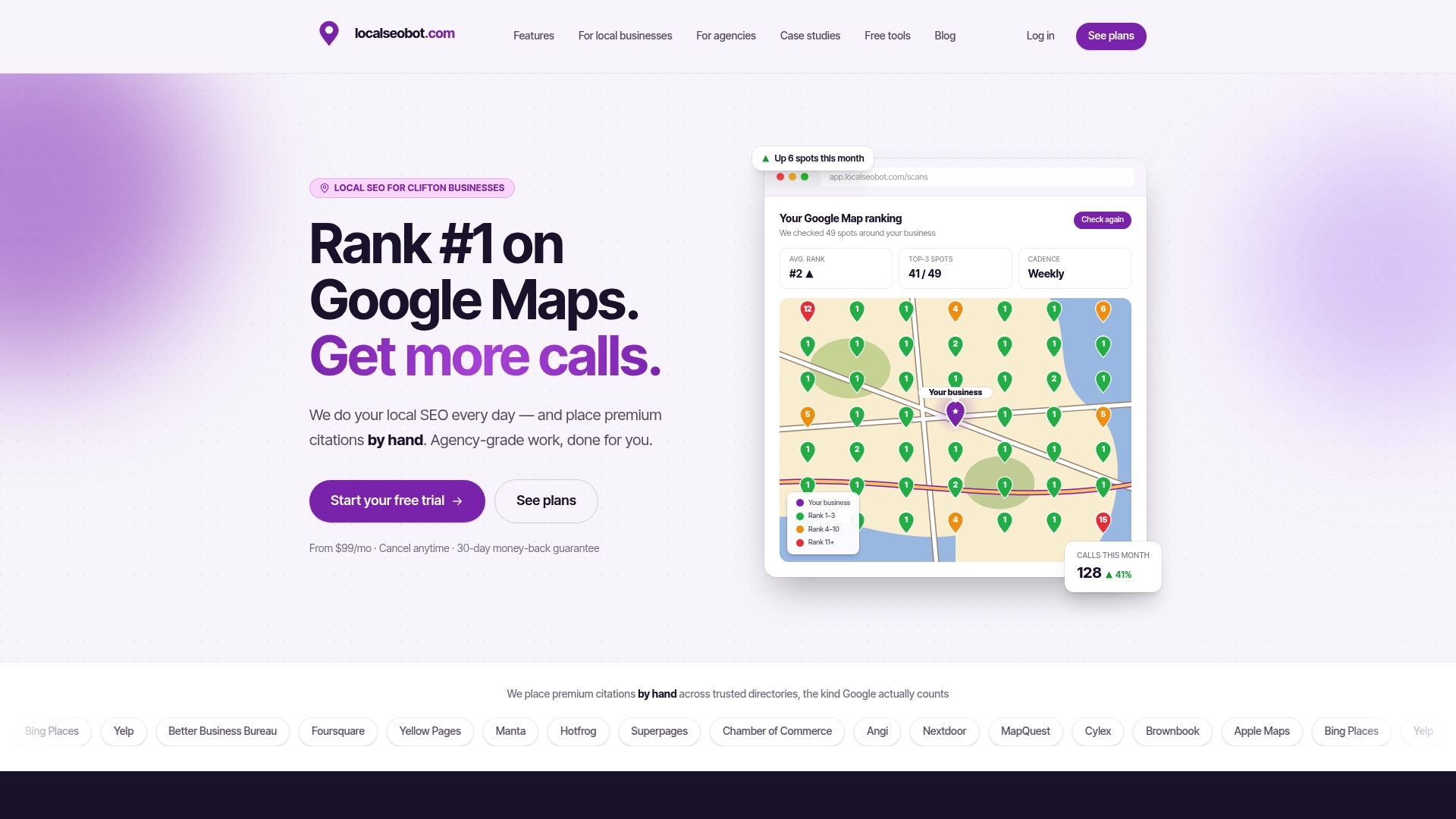
Most tools stop at a report that says your listings are inconsistent. The owner is then left to log into a dozen portals. We built Local SEO Bot to do the work instead: it optimizes your Google Business Profile, publishes regular posts, tracks rankings across your service area with map grid scans and responds to reviews, all on autopilot.
Behind the AI, our team manually builds premium citations on high-authority directories, so the signals your business sends are ones Google trusts. We think that combination of automation plus human oversight is the right way for a busy owner to compete for top Maps positions without hiring an agency.
Devyn H
Let us handle the listings and the Maps work
If you would rather not chase portals, Local SEO Bot handles the citation side and the Google Business Profile work together. Plans are billed per location: Foundation is $99 per month, and Growth is $199 per month, both on our pricing page. Agencies managing client locations can look at Pro at $399 per month on the agency pricing page. We also offer a 30-day money-back guarantee if a business does not see a ranking increase.
Want a look at your starting point first? Our Local Citation Finder shows where your business is listed today, and our local citation services page explains how we build the rest.
FAQ
Do I need to submit to every data aggregator?
No. Check the records at the main U.S. ones, Data Axle, Foursquare and Neustar Localeze, and fix what is wrong. Search Engine Land says there is little recent data that aggregators deliver meaningful results, so accuracy on major directories comes first.
Is Foursquare a data aggregator or a directory?
It is both. It supplies place data to other platforms and also lets owners claim their own listing. Claiming it starts with finding your business in the Foursquare business portal and completing the claim form.
How are aggregator submissions different from citations?
An aggregator redistributes your data to many sites, usually without showing a public page to customers. A citation is a listing on a specific directory that you can claim and edit. Aggregators seed data, and your direct listings are where you correct it.
How long do corrections take to show up?
It varies by site. Allow several weeks for changes to reach downstream directories, then re-check your listings. Some smaller sites update slowly, and you may need to claim them directly.
Sources
- Structured vs Unstructured Citations for Local SEO, Search Engine Land
- Claiming a listing, Foursquare Support
- Local SEO Academy
- Building a Robust Online Reputation